
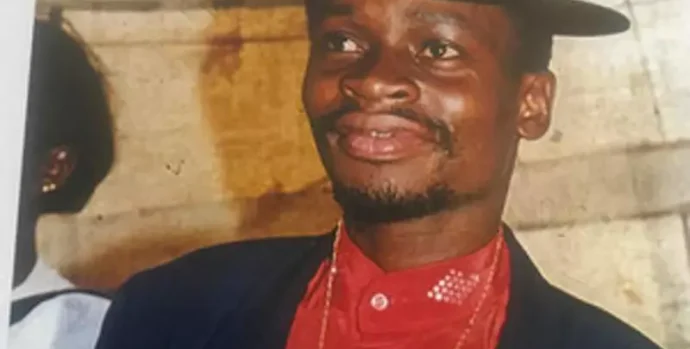
A long-running family controversy surrounding legendary Ugandan musician Prince Job Paul Kafeero has taken a dramatic turn after DNA test results revealed unexpected findings about people claiming to be his children.
The investigation, which involved 25 individuals who believed they were Kafeero’s biological children, concluded that only four were genetically linked to the late musician. The findings have sparked widespread debate across Uganda and reopened unresolved questions about family succession, inheritance, and Kafeero’s personal history.
The controversy has attracted commentary from prominent Ugandan analyst Uncle Kagato, who argues that the family’s ongoing disputes cannot be separated from questions surrounding Kafeero’s origins and the circumstances that followed his death.
According to Kagato, many of the problems stem from unresolved family issues that date back decades. He claimed that a man known as Nagganga, who was widely regarded as Kafeero’s father, reportedly distanced himself from the musician and maintained that Kafeero’s biological father was a Rwandan man who worked on sugarcane plantations.
Kagato believes that this uncertainty contributed to the absence of a clear and universally accepted family structure after Kafeero’s death, creating conditions for the disputes that continue today. He argues that stronger family involvement and clearer succession arrangements might have prevented many of the conflicts currently affecting the family.
However, not everyone agrees with that interpretation.
Kafeero’s widow, Robinah Bisirikirwa, has challenged parts of Kagato’s account. She insists that traditional mourning and family succession procedures were conducted after her husband’s death and that a successor had already been chosen.
That successor was identified as Kafeero Martin. Yet the situation became even more complicated when the recent DNA results reportedly showed that Martin is not one of Kafeero’s biological children.
The revelation has raised new questions about family leadership, inheritance rights, and the future direction of the Kafeero family. Legal experts and social commentators in Uganda suggest that the DNA findings could influence future discussions regarding family representation and the management of the late musician’s legacy.
Prince Job Paul Kafeero remains one of Uganda’s most respected cultural figures, celebrated for his contribution to traditional music and the preservation of Ugandan heritage. Years after his passing, his influence continues to resonate with audiences across generations.
While the DNA investigation has answered some longstanding questions, it has also created new ones. For many observers, the latest developments mark the beginning of a new chapter in a family saga that continues to captivate public attention throughout Uganda and beyond.