Fresh fighting has erupted in eastern Democratic Republic of Congo, with the AFC/M23 coalition accusing forces aligned with the government in Kinshasa of launching coordinated attacks on its positions in North Kivu, while also claiming that the P5 coalition linked to former Rwandan military chief Faustin Kayumba Nyamwasa has entered the conflict in Minembwe, South Kivu.
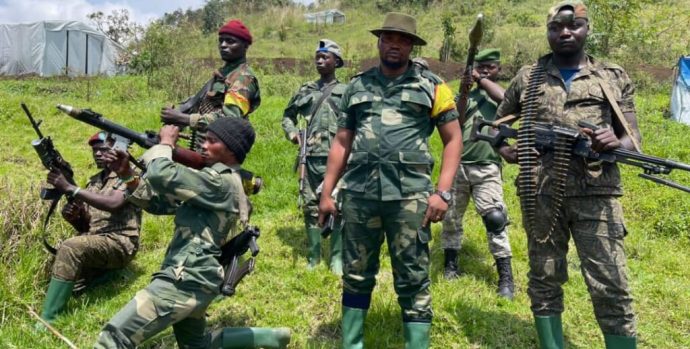
According to AFC/M23, intense clashes took place between June 26 and June 27, 2026, across several areas of Masisi Territory. The group says its positions in Luki, Gasenyi, Nyakigano, Chayi, and Gasake came under attack, triggering heavy fighting along multiple frontlines.
Lawrence Kanyuka, spokesperson for AFC/M23, stated on social media platform X that the attacks targeted areas under the movement’s control and involved coordinated military operations. The group further alleged that some of its positions were burned by Wazalendo fighters operating alongside government-aligned forces.
AFC/M23 also claimed that drones were used during the military campaign and said civilians suffered significant consequences as the conflict intensified. The movement reported deaths, injuries, and new displacement among local residents caught in the violence.
The coalition additionally accused Congolese government forces and their allies of looting and destroying civilian property in Bibwe, Nyabikeri, Longa, and Rwankeri on June 26.
At the time of reporting, no separate statement had been issued by the Armed Forces of the Democratic Republic of Congo (FARDC) responding to the allegations or providing its own account of the incidents reported in Masisi.
The renewed fighting comes amid reports of shifting alliances in eastern Congo’s complex conflict landscape. On June 25, AFC/M23 announced that the P5 coalition had become involved in military operations taking place in Minembwe, a strategically important area in South Kivu Province.
Speaking about the development, Lawrence Kanyuka said: “The Kinshasa government continues to expand its military coalition. Kinshasa has added fighters from the P5 group led by Kayumba Nyamwasa to the FARDC, FDLR, Wazalendo, foreign mercenaries, and the Burundian National Defence Force (FDNB).”
AFC/M23 alleges that P5 fighters are operating alongside FARDC, Burundian forces, Wazalendo groups, foreign mercenaries, and the FDLR. The coalition further claimed that these forces attacked Minembwe General Hospital on the afternoon of June 25, marking the second such attack within a 24-hour period.
According to AFC/M23, the attack resulted in civilian casualties and caused extensive damage to infrastructure and property. The movement said it would continue defending local communities and preventing what it described as efforts to intimidate, displace, or target residents.
P5 is a coalition built around several political organizations opposed to the Rwandan government, including RNC, FDU-Inkingi, PDP-Imanzi, and RUD-Urunana. The alliance was active in eastern Congo in previous years but appeared to weaken significantly following the arrest of some of its key military figures.
One of those figures, Maj. (Rtd) Habib Mudathiru, who played a central role in the coalition’s military activities and recruitment efforts, was arrested in Congo in 2019 and later transferred to Rwanda.
Although the group largely disappeared from public attention afterward, signs of renewed activity emerged during the past year. In November 2025, Alexis Mugisha Nkurunziza, Vice President for Politics, Governance and Diplomacy within MDRP-Twirwaneho, stated that a number of P5 fighters had returned to South Kivu to cooperate with Congolese authorities.
At the time, Nkurunziza claimed that some of those fighters had entered Congo through Burundi and were wearing Burundian military uniforms.
He stated: “Information from reliable sources that monitor this daily indicates that the P5 forces are not very numerous, but they are enough to cause harm. They are in the high mountains wearing Burundian uniforms, while others are being trained in Burundi.”
As armed groups, regional actors, and government forces continue to maneuver across eastern Congo, the conflict appears to be entering a new phase marked by evolving alliances and expanding military operations. Meanwhile, civilians in both North and South Kivu remain among the hardest hit, facing insecurity, displacement, and uncertainty as the fighting continues.