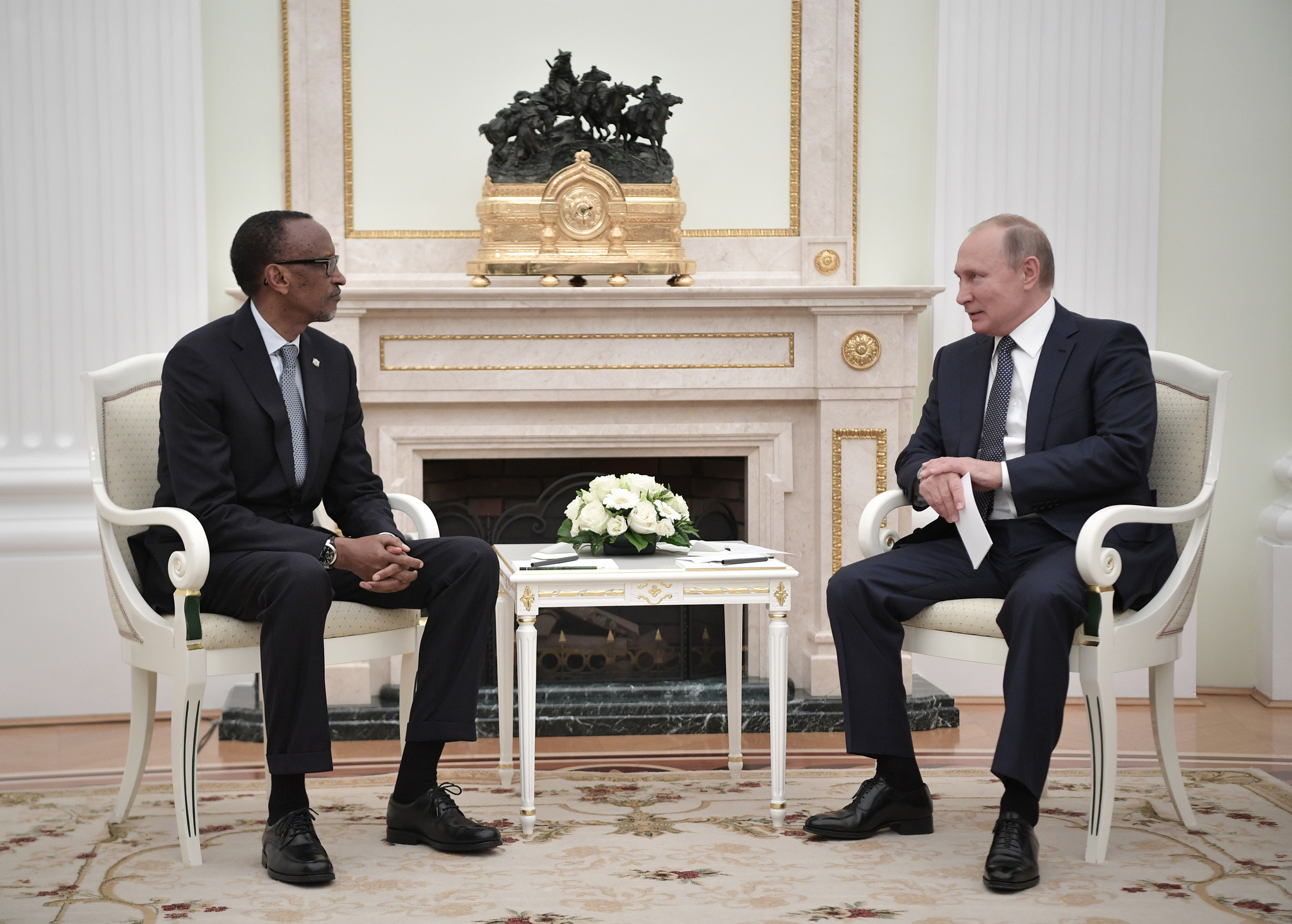
Rwanda has entered a new phase of international cooperation in advanced nuclear technology following the signing of a partnership agreement with Russia aimed at strengthening research, medical applications, and scientific innovation.
The agreement was signed on May 19, 2026, in Kigali during an international conference on nuclear innovation. It marks a significant step in Rwanda’s long-term strategy to expand its scientific and technological capabilities.
The cooperation framework is expected to support multiple areas, including nuclear-based medical applications, training programs for students and experts, and advanced scientific research that could eventually lead to the establishment of a dedicated nuclear science and technology institute in Rwanda.
Government officials say the initiative is part of a broader effort to strengthen domestic expertise in high-level scientific fields with direct benefits to public health and innovation.
Government Spokesperson Yolande Makolo stated that Rwanda is currently conducting feasibility studies for the creation of a nuclear science and technology institute, alongside potential development of Small Modular Reactor (SMR) projects.
SMRs are considered a promising solution for developing countries seeking reliable, scalable, and relatively cleaner energy systems.
Rwanda continues to pursue a multi-partner approach in nuclear cooperation. In addition to Russia, the country has signed agreements with the United States, as well as institutions in South Africa and Austria.
This reflects Rwanda’s broader foreign policy strategy of engaging multiple global partners to accelerate development.
As part of long-term capacity building, several Rwandan students have already been sent to Russia to study nuclear engineering and related technical disciplines.
The goal is to develop a new generation of Rwandan experts who will eventually lead and manage nuclear science initiatives within the country.
Analysts note that such agreements highlight a growing trend among African countries diversifying their international partnerships, moving beyond traditional reliance on Western nations.
Diplomacy expert Professor Macharia Munene observes that many African states increasingly view Russia as a partner offering training and investment with fewer political conditions attached.
While nuclear projects require significant time and investment before yielding tangible results, experts say early engagement signals a strong long-term vision for scientific advancement.
In Rwanda, nuclear technology is expected to contribute primarily to healthcare, scientific research, and the development of skilled professionals.
The initiative aligns with Rwanda’s broader national vision of building a knowledge-based economy and positioning itself as a regional hub for research and innovation in East Africa.