Political tensions in the Democratic Republic of Congo are entering a new phase following remarks by President Félix Tshisekedi suggesting that the country’s 2028 elections may not take place if security challenges in the eastern provinces remain unresolved.
The statement has sparked intense debate across the country and beyond, with supporters describing it as a realistic assessment of the security situation while critics view it as the beginning of a broader discussion about extending political power under extraordinary circumstances.
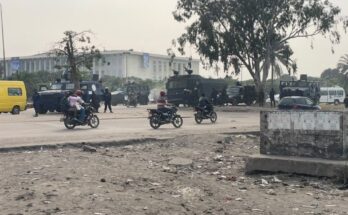
Eastern Congo remains one of Africa’s most volatile conflict zones. Large sections of North and South Kivu have experienced repeated clashes, population displacement, economic disruption, and shifting military control. In this environment, organizing nationwide elections presents significant logistical and security challenges.
Supporters of the government argue that credible elections cannot be conducted in areas where millions of citizens have been displaced and where state institutions struggle to function normally. They insist that restoring stability must come before any electoral process.
Critics, however, see a different picture. Opposition voices argue that prolonged insecurity could gradually become a political justification for postponing democratic processes. They point to previous debates surrounding constitutional reforms and concerns about the concentration of executive power.
These concerns have intensified as AFC/M23 continues consolidating administrative structures in territories under its control. The movement has repeatedly argued that Congo’s crisis cannot be solved exclusively through military means and has called for broader political negotiations.
For AFC/M23, any indication that Kinshasa might delay elections or pursue controversial constitutional changes could become a powerful political argument. The movement could present itself as evidence that the country’s governance crisis extends beyond the battlefield and requires a comprehensive political settlement.
The debate has also been amplified by comments circulating on social media.
Political commentator Dr. Dash claimed that public frustration is growing in Kinshasa and alleged that some citizens oppose efforts to amend the constitution.
Dr. Dash further stated that many people want President Félix Tshisekedi to leave office.
In another post, he wrote: “I hope Kinshasa goes ahead and holds a referendum to change the constitution.”
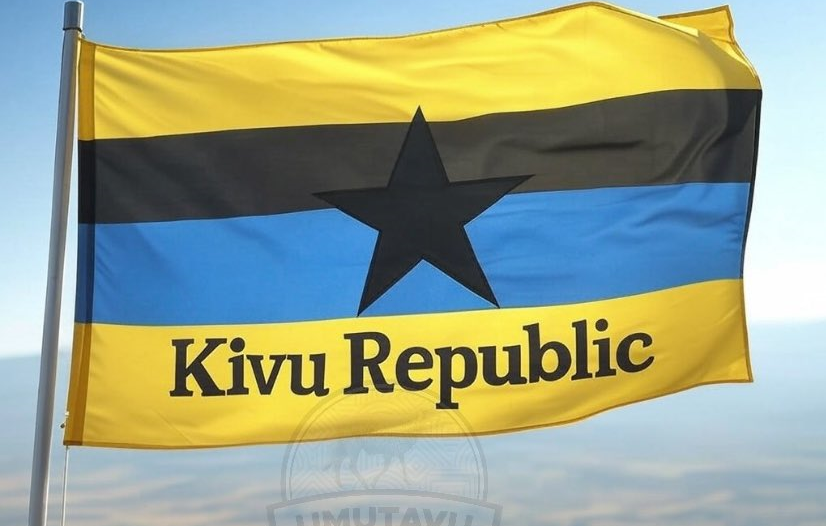
He continued: “Because after the constitutional change without Kivu, under international law, Kivu will automatically become a country of its own!”
He concluded with the phrase: “Republic of Kivu. Will Rwanda, Uganda & Burundi be good neighbours?”
While these comments represent personal opinions rather than established legal conclusions, they have contributed to growing speculation about the political consequences of constitutional reforms that might not involve all regions of the country equally.
Legal and political observers note that any constitutional process conducted while significant territories remain outside the effective control of the central government would likely generate controversy. Questions surrounding representation, legitimacy, and national unity would inevitably emerge.
Some analysts believe AFC/M23 could use such circumstances to strengthen its claim that eastern Congo requires a different political arrangement. The movement has already established various local administrative structures in areas under its authority, a development that supporters view as governance and critics view as parallel administration.
Nevertheless, translating territorial control into internationally recognized statehood would remain extremely difficult. The United Nations and most foreign governments continue to support the territorial integrity and sovereignty of the Democratic Republic of Congo.
The more immediate issue may not be whether a new state could emerge overnight, but whether political decisions made in Kinshasa could unintentionally provide AFC/M23 with new arguments to expand its influence and legitimacy among local populations.
As the conflict continues, the struggle for Congo’s future is increasingly being fought not only on the battlefield but also in the political arena. Decisions made between now and 2028 could shape far more than an election calendar.
They could redefine the balance of power, the legitimacy of national institutions, and the future political architecture of one of Africa’s largest nations. For now, attention remains focused on President Tshisekedi’s next moves and whether his administration can navigate the complex intersection of security, constitutional governance, and national unity without creating opportunities that its opponents could exploit.