President Paul Kagame has shared a surprising personal story from his childhood, revealing that he once invented sins during confession in order to receive the Catholic sacrament of Confirmation.
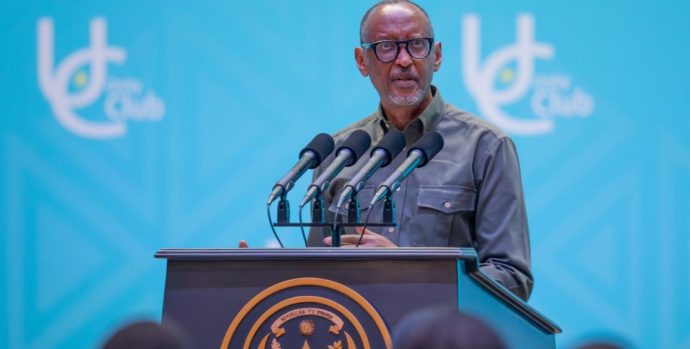
Speaking on June 27 during a national dialogue on the history of the 1994 Genocide against the Tutsi held in Rusororo, Kagame used the anecdote to highlight the deeper meaning of repentance and truth-telling in the process of healing historical wounds.
The Rwandan leader explained that he was raised in the Catholic faith, describing it as a heritage he inherited rather than a choice he consciously made as a child. As he grew older, however, he continued to respect and practice the values he had been taught.
Reflecting on his years in primary school, Kagame recalled the period when he was preparing to receive the sacrament of Confirmation. One of the requirements was to confess and repent for sins committed.
According to Kagame, he struggled to identify any wrongdoing that he felt qualified as a sin serious enough to confess. Concerned that failing to do so might prevent him from being confirmed, he sought advice from those guiding him through the process.
When he eventually went for confession, he admitted that he made up offenses simply to satisfy the requirement.
The President recounted the story with humor, explaining that he invented actions he had never actually committed because he believed he needed something to confess in order to proceed.
While the audience laughed at the childhood memory, Kagame used the experience to make a broader point about the difference between formal repentance and genuine remorse.
He argued that true repentance is not about repeating expected words or fulfilling a ritual. Instead, it requires honesty, accountability, and the courage to acknowledge one’s actions.
Drawing a connection to Rwanda’s history, Kagame said that genuine confession and acknowledgment of wrongdoing play a crucial role in helping individuals and communities heal from painful experiences.
He stressed that when people openly admit what they have done, the process not only frees them from the burden of guilt but also helps others understand, heal, and move forward.
According to Kagame, confronting the truth can be emotionally difficult and uncomfortable, yet it remains an essential step toward reconciliation and societal recovery.
He praised individuals who have previously demonstrated the courage to speak openly about their experiences and actions during discussions on Rwanda’s history, saying such honesty contributes to healing hearts and rebuilding trust.
The President also warned against cycles of accusation and counter-accusation, where individuals focus solely on blaming others while avoiding responsibility for their own actions.
His remarks centered on the idea that lasting unity and reconciliation cannot be built on denial, excuses, or symbolic gestures alone.
Instead, they require truth, accountability, and sincere repentance. By sharing a light-hearted childhood story, Kagame ultimately delivered a serious message: healing historical wounds begins when people stop hiding behind appearances and choose to confront the truth with honesty and courage.