President Paul Kagame has said that for years, external actors attempted to influence Rwanda’s political future by encouraging certain former senior officials to believe they could one day become the country’s leaders.
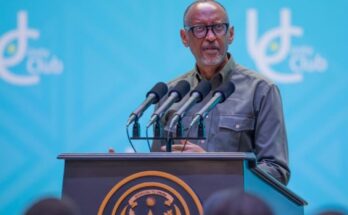
He made the remarks during a dialogue on the history of the 1994 Genocide against the Tutsi and the liberation struggle, held at Intare Conference Arena in Rusororo. The event was organized by Unity Club Intwararumuri and brought together current and former leaders, members of the organization and other invited guests.
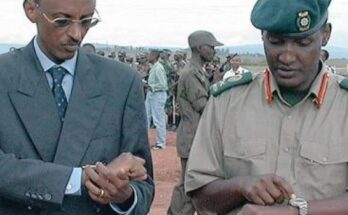
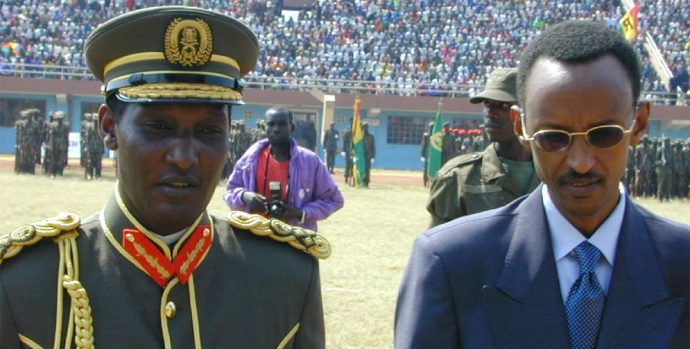
In his speech, Kagame cited former army chief Gen. Kayumba Nyamwasa, late former intelligence chief Col. Patrick Karegeya and former RPF Secretary General Dr. Théogène Rudasingwa as examples of individuals who, according to him, were led to believe that they could eventually become presidents of Rwanda.
Kagame argued that there is nothing wrong with aspiring to lead a country. However, he said the problem arises when political ambitions are fueled by outside interests seeking to shape the leadership of another nation.
The Rwandan leader suggested that some foreign actors and influential business figures viewed political leadership as something that could be engineered from outside the country. He criticized what he described as attempts to create future leaders who would serve private interests rather than national priorities.
According to Kagame, several individuals over the years were encouraged to see themselves as future presidents. He said some were repeatedly approached and persuaded that they had a realistic path to the country’s highest office.
Although he referred to “foreign actors” and “business interests,” Kagame did not identify any specific countries, organizations or individuals. His comments remained broad, focusing on what he described as a long-standing belief among certain outsiders that Rwanda’s political direction could be influenced from beyond its borders.
Kayumba Nyamwasa, Patrick Karegeya and Théogène Rudasingwa were all once influential figures within Rwanda’s post-genocide leadership. Following disagreements with the government, they became associated with the Rwanda National Congress (RNC), a political movement formed in exile in 2010.
Over the years, Rwandan authorities have accused RNC and allied networks of involvement in activities aimed at destabilizing the country. Former members of the movement, however, have often rejected such accusations, arguing that they sought political reform rather than violent regime change.
In various official statements and judicial files released over the years, the Rwandan government has stopped short of naming any specific foreign leader or nation as the architect behind promises of presidency to high-profile dissidents.
However, a closer analysis of the trajectories of key opposition figures, namely Gen. Kayumba Nyamwasa, Col. Patrick Karegeya, and Dr. Théogène Rudasingwa, reveals a complex geopolitical network.
Rwandan state accusations consistently point toward three primary pillars of support: regional neighbors, Western powers, and wealthy commercial elites.
The Regional Axis: The geopolitical friction began intensifying in 2010 when Gen. Nyamwasa and Col. Karegeya fled to South Africa. Kigali has repeatedly accused South African state security organs of collaborating with the duo to establish the Rwanda National Congress (RNC) opposition party, while granting them political immunity to operate.
Further north, Rwandan authorities have leveled sharp criticisms against the government of the Democratic Republic of Congo (DRC). Recent intelligence reports from Kigali allege that Kinshasa provides safe haven and logistical backing to the P5/RNC coalition.
Armed fighters loyal to Nyamwasa are reportedly embedded in the South Kivu region of Eastern Congo, executing operations aimed at destabilizing Rwandan security.
Western Backing and Intelligence Ties: Following his defection, former diplomat Dr. Théogène Rudasingwa secured asylum in the United States. Kigali has frequently challenged Western governments, asserting that intelligence agencies and prominent non-governmental organizations (NGOs) in Europe and America offer platforms to exiled dissidents.
According to state narratives, these Western entities leverage financial aid and diplomatic pressure to sponsor agendas aimed at forcing regime change in Rwanda.
The Role of Oligarchs and Corporate Interests: The operational funding for these dissident movements is also tied to private capital. President Paul Kagame has previously noted that wealthy Rwandan and foreign financiers have attempted to weaponize the influence of these exiled military officers.
State intelligence suggests that the primary motive for these businessmen is the installation of a compliant puppet administration in Kigali. By gaining the leverage to appoint key government officials, including cabinet ministers and mayors, these financial backers aim to secure unregulated monopolies and protect their regional commercial interests.
Kagame used the occasion to reiterate a broader message about sovereignty and national self-determination. He said Rwanda’s future should be decided by Rwandans themselves and not by external political or economic interests.
Reflecting on Rwanda’s history, he argued that the country has learned difficult lessons and should never allow outsiders to determine its political course. He also praised Unity Club for helping promote reconciliation, personal transformation and a break from destructive mindsets that once contributed to division and conflict.
The remarks have renewed debate about the role of foreign influence in African politics, as well as the extent to which exiled political figures can become focal points for competing visions of a country’s future.
While Kagame asserted that some former officials were encouraged to see themselves as future presidents, he stopped short of naming those who allegedly made such promises. As a result, the identities of the specific actors behind those expectations remain undisclosed in the public record.