President Paul Kagame has disclosed that former army chief Kayumba Nyamwasa once proposed that the Rwanda Patriotic Army (RPA) seek temporary refuge in Uganda during one of the most difficult moments of the liberation struggle.
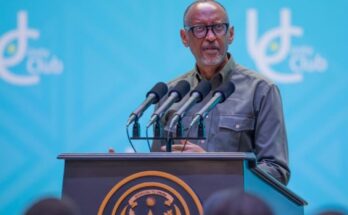
The revelation was made during a dialogue on the history of the 1994 Genocide against the Tutsi and the military campaign that brought it to an end. The event, organized by Unity Club Intwararumuri, brought together veterans and senior leaders who reflected on key moments that shaped Rwanda’s modern history.
Among the speakers was retired General Fred Ibingira, who provided a detailed account of the challenges faced by RPA forces following the deaths of senior commanders including Maj. Gen. Fred Gisa Rwigema, Major Bayingana and Major Bunyenyezi.
Ibingira used the occasion to challenge claims that have been made over the years by Kayumba Nyamwasa regarding his role during the liberation war.
According to Ibingira, he was particularly surprised by statements suggesting that Nyamwasa had rescued Kagame during a confrontation in the Nkana area.
He argued that Nyamwasa never held command responsibilities that would have placed him in a position to conduct such an operation and described him as one of the officers who was often reluctant in combat situations.
As Ibingira recounted those events, President Kagame intervened and shared his own recollection of a difficult period during the war.
Kagame stated that when RPA forces were under intense pressure, Nyamwasa suggested approaching Ugandan President Yoweri Museveni to request refuge for the troops at Kyangwali, a settlement that had previously hosted refugees.
According to Kagame, the proposal was intended to allow fighters to regroup and rest before returning to the battlefield.
The discussion also revisited events from 1996, when Rwanda was battling insurgent infiltrations in the northern regions.
Ibingira recalled a high-level security meeting chaired by Kagame, during which military commanders were asked to propose solutions to the growing threat posed by insurgents.
He said some commanders argued that soldiers needed whistles to counter the tactics being used by infiltrators, while others emphasized the need for stronger military equipment.
The retired general further described how Kagame required commanders to commit themselves in writing, accepting responsibility if insurgents were allowed to breach security zones under their command.
According to Ibingira, most officers signed immediately, while Nyamwasa initially hesitated before eventually signing the document.
The discussion also highlighted sacrifices made by members of the armed forces during that period. Ibingira revealed that soldiers agreed to work for nine months without pay so that the military could acquire two helicopters needed for security operations.
He credited such decisions with strengthening Rwanda’s security institutions and helping the country overcome serious threats in the years following the liberation struggle.
The retired general concluded by emphasizing what he described as the two pillars that have guided Rwanda’s post-war recovery: security and national unity. He urged younger generations to preserve those values and continue building on the foundations established after the country’s liberation.