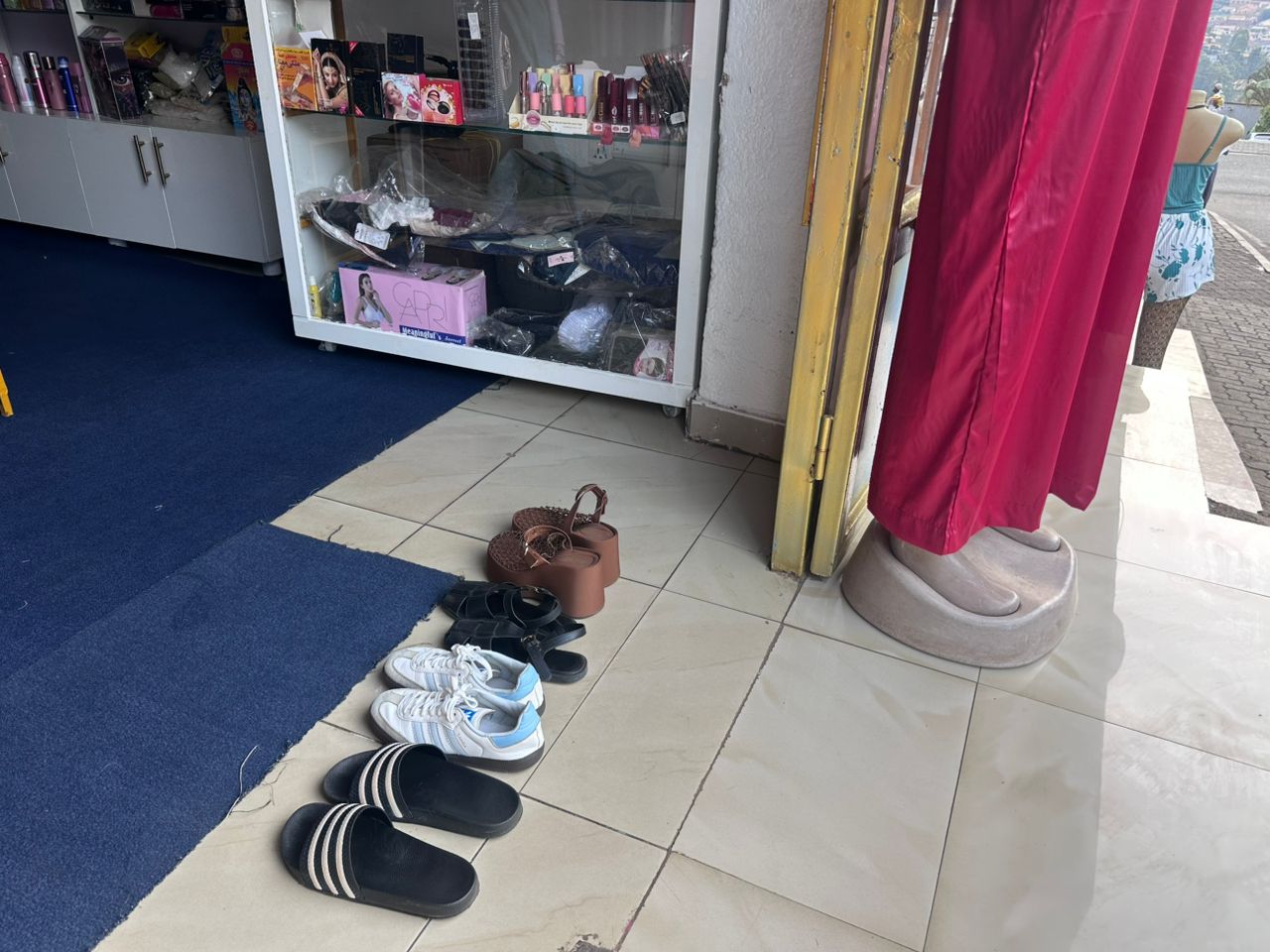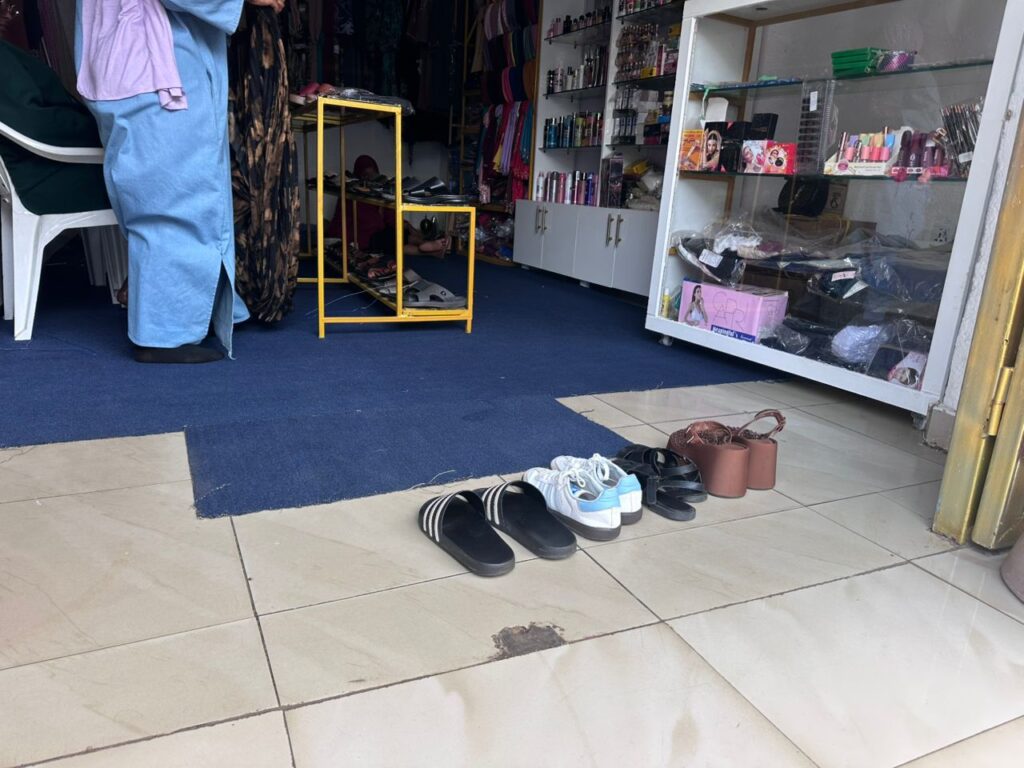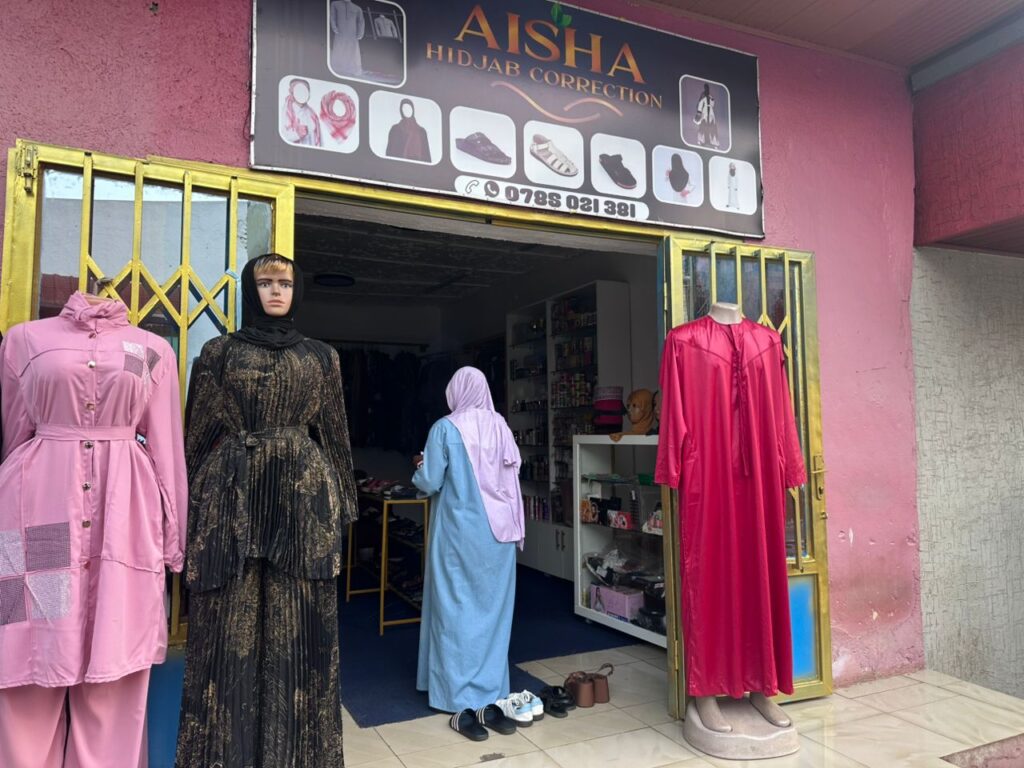
Visitors walking through Biryogo, one of Kigali’s busiest commercial neighborhoods, often notice something unusual before stepping into certain fashion stores: a request to remove their shoes.
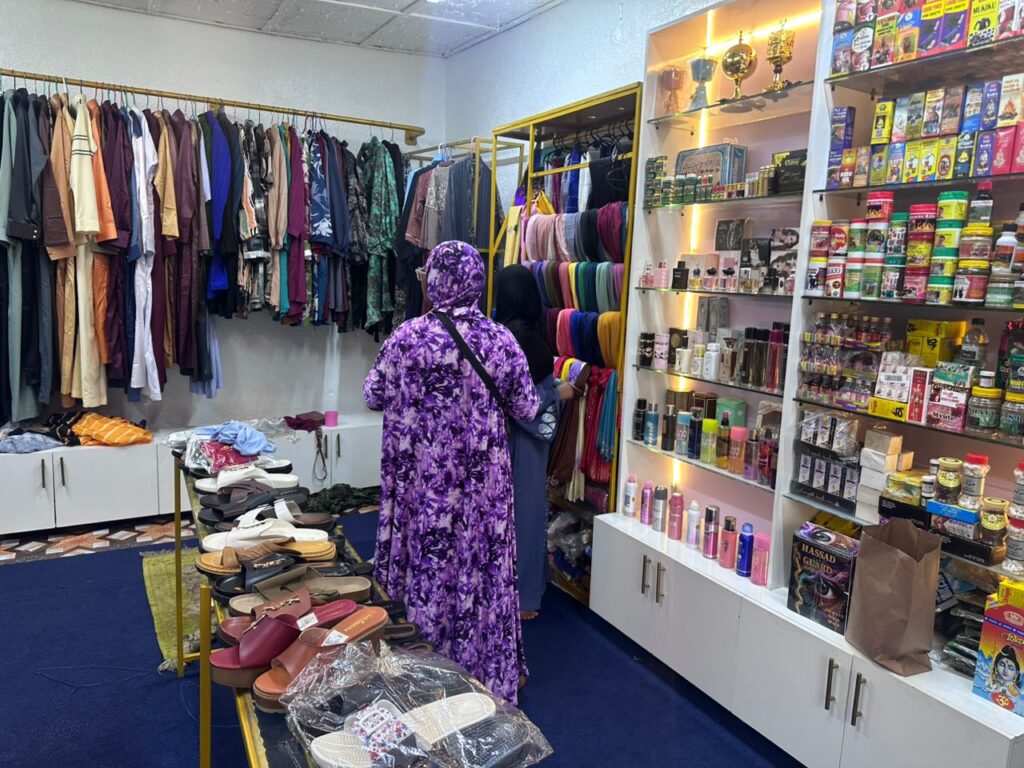
While the practice may surprise first-time visitors, shop owners say it has become a normal part of daily life in this vibrant section of Nyamirambo. The custom is especially common in stores selling clothing, handbags, shoes, and fashion accessories.
For many business owners, the rule is not about restricting customers but about maintaining cleanliness in spaces that often serve multiple purposes beyond commerce.
Aisha Muhongerwa, who owns a clothing and accessories shop in Biryogo, says the idea comes from a belief that cleanliness should extend beyond private homes and into workplaces and public spaces.
According to Muhongerwa, customers generally appreciate the effort to keep stores clean, particularly because many visitors share cultural and religious values that place a strong emphasis on hygiene.
She explains that some shop spaces are also used for prayer when prayer times arrive, making cleanliness even more important. Rather than forcing customers to comply, she says alternative arrangements are available for those who prefer not to remove their shoes.
Store owners argue that maintaining a clean environment becomes particularly challenging during rainy weather, when customers may arrive with mud on their footwear. Keeping floors clean throughout the day allows them to focus on serving customers rather than constantly cleaning.
Safia Umubyeyi, another retailer in the neighborhood who sells women’s clothing, shoes, and handbags, says the practice has become widely accepted among regular customers. However, she notes that convincing male customers to remove their shoes is sometimes more difficult than asking women to do so.
Despite occasional hesitation from newcomers, most shoppers quickly adapt to the custom after understanding its purpose.
Several customers interviewed in the area said they view the practice positively, especially because it creates a cleaner and more welcoming shopping environment. Some even compared it to similar habits observed in their own homes.
Business owners insist that the tradition has never negatively affected sales. Instead, they believe it has become part of Biryogo’s identity, reflecting the neighborhood’s reputation for strong community values and attention to cleanliness.
Not every store in Biryogo follows the same approach. The decision remains a personal choice made by individual business owners. Nevertheless, the sight of shoes neatly arranged outside shop entrances has become a familiar image throughout parts of the district.
Known for its lively markets, diverse population, and unique urban culture, Biryogo continues to stand out as one of Kigali’s most distinctive commercial areas. Among its many characteristics, the practice of asking customers to remove their shoes has evolved into a symbol of respect for hygiene, shared spaces, and community traditions.
For residents and frequent shoppers, it is no longer unusual. Instead, it represents a simple but meaningful reminder that cleanliness is a value that can be carried beyond the home and into everyday public life.