Rwanda’s Public Accounts Committee (PAC) has raised serious concerns about how public funds are being used to maintain the country’s road network after discovering that hundreds of millions of francs were spent on repairs that produced little long-term improvement.
The issue emerged during a parliamentary hearing held on June 25, 2026, where officials from the Rwanda Transport Development Agency (RTDA) appeared before lawmakers to respond to findings contained in the Auditor General’s report for the fiscal year ending June 30, 2025.
One of the most striking examples discussed was the Rusizi–Bugarama road. Despite receiving 392 million Rwandan francs in maintenance funding, the road remains in poor condition, with some residents reportedly forced to navigate damaged sections by jumping over potholes and deteriorated surfaces.
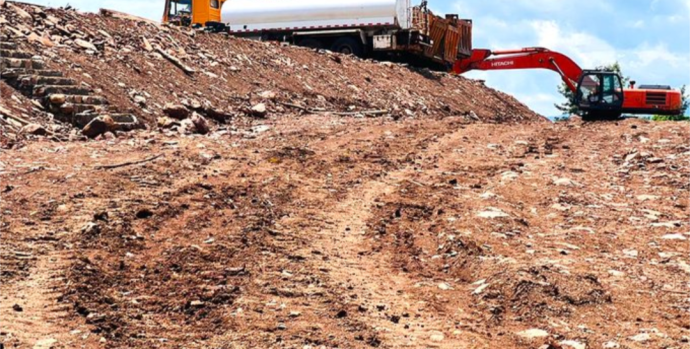
RTDA officials explained that the allocated funds were used primarily to address the most severely damaged sections of the road. The agency said it filled potholes and applied laterite materials to improve accessibility, arguing that budget limitations made a complete rehabilitation impossible.
RTDA Director General Imena Munyampenda acknowledged that the outcome was far from ideal. He admitted that the work had not been carried out to the standard expected and emphasized that the agency was trying to make the best use of limited resources while preparing for more comprehensive interventions.
Lawmakers were unconvinced by the explanation. They argued that repeated short-term repairs consume significant amounts of public money without solving the underlying problem.
PAC Vice Chairperson Cecille Murumunawabo questioned why large sums continue to be spent on temporary maintenance measures rather than sustainable solutions capable of extending the lifespan of critical infrastructure.
MP Barthelemy Karinijabo was particularly critical of the frequent use of laterite and similar materials, arguing that they are often washed away by rain or damaged by heavy vehicles shortly after being applied. According to him, such practices create a cycle of endless repairs that drains public resources while delivering limited benefits.
The committee also examined other roads facing similar challenges. Among them was the Musanze–Rubavu–Nyakinama corridor, where approximately 2.6 billion francs were spent on localized repairs despite widespread concerns that the aging road requires full rehabilitation.
RTDA explained that parts of the Cyanika–Musanze–Nyakinama road date back to 1982 and have already exceeded their intended lifespan, making maintenance increasingly difficult and costly.
Additional concerns were raised about the Huye–Gisagara and Ngororero–Mukamira–Meru–Nyabarongo roads, where lawmakers questioned whether the money spent on repairs matched the quality and durability of the work completed.
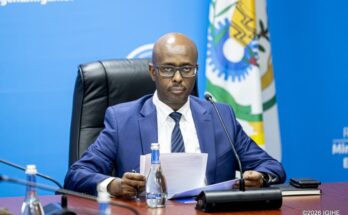
After several hours of discussions, PAC Chairperson Valens Muhakwa said the committee remained dissatisfied with RTDA’s explanations regarding the effective use of public funds.
He stressed that infrastructure financed through long-term loans should provide value throughout its intended lifespan and questioned the logic of roads deteriorating while the country is still repaying the loans used to build them.
PAC concluded by urging RTDA to adopt more sustainable maintenance strategies that reduce repetitive repairs and ensure taxpayers receive lasting value from government investments.
RTDA announced that a permanent asphalt upgrade for the Rusizi–Bugarama road is expected to begin in January 2027, a project that many residents hope will finally bring a long-term solution to a road that has become a symbol of Rwanda’s road maintenance challenges.