Efforts to end the conflict in eastern Democratic Republic of Congo took center stage in Kinshasa this week as Burundi’s President Évariste Ndayishimiye called for a comprehensive approach to peace, while a senior Catholic Church official questioned the political direction of the Congolese government and its relationship with neighboring Rwanda.
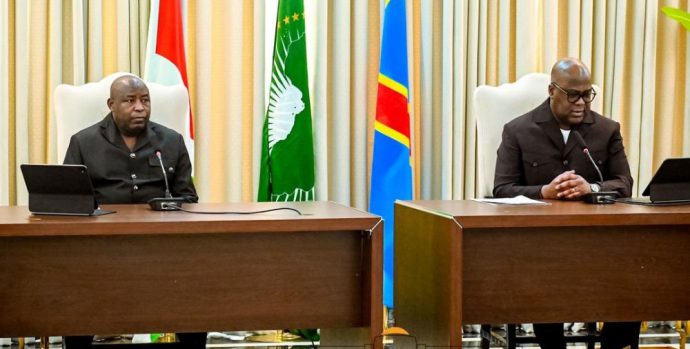
Speaking at the end of a two-day visit to the Congolese capital, Ndayishimiye argued that military operations alone cannot resolve the long-running crisis that has destabilized eastern Congo for years.
According to the Burundian leader, a durable solution must combine security measures with economic development and improved living conditions for local communities affected by violence.
He emphasized that countries in the Great Lakes region must strengthen cooperation against armed groups operating in eastern Congo, describing regional collaboration as essential for preventing recurring cycles of conflict and insecurity.
Ndayishimiye also reaffirmed his support for ongoing diplomatic initiatives, including talks associated with Washington and Doha, as well as mediation efforts backed by the African Union.
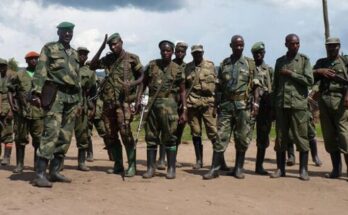
His remarks come at a time when Burundi remains deeply involved in security operations inside DR Congo. Since 2023, Burundian troops have been deployed in support of the Congolese government in its fight against armed movements, particularly the AFC/M23 coalition.
Various reports have suggested that thousands of Burundian soldiers are operating on Congolese territory, although official figures have not been publicly confirmed by either government.
While regional leaders continue to discuss military and diplomatic solutions, political tensions inside Congo have generated a separate debate over national unity and governance.
Donatien Nshole, Secretary General of the National Episcopal Conference of Congo (CENCO), used a discussion on X hosted by journalist Stanis Bujakera Tshiamala to challenge accusations directed at Catholic bishops by members of the ruling political coalition, Union Sacrée de la Nation.
The coalition had accused church leaders of engaging in political interference and maintaining links with Rwanda. Nshole rejected those allegations and suggested that questions should instead be directed toward government officials.
He referred to concerns raised by one bishop who questioned whether undisclosed arrangements might exist between Kinshasa and Kigali regarding territories currently outside government control.
Nshole also warned against organizing a constitutional referendum without the participation of populations living in areas controlled by AFC/M23, arguing that such a process could fuel perceptions that parts of the country are being politically excluded.
In addition, he defended CENCO’s position against constitutional changes, insisting that the bishops’ resolutions were adopted collectively and not by a small faction as critics had claimed.
The Catholic official maintained that national leaders should focus primarily on security challenges and the welfare of citizens rather than deepening political divisions.
The parallel messages from Ndayishimiye and Nshole highlight the complex reality facing DR Congo. On one hand, regional governments continue to promote diplomatic engagement and security cooperation. On the other, questions about governance, territorial control, and political legitimacy remain central to the debate over the country’s future.
As fighting involving forces aligned with Kinshasa, AFC/M23, and Twirwaneho continues in parts of South Kivu, many Congolese citizens are looking to regional diplomacy and ongoing negotiations for signs that a sustainable peace settlement may finally be within reach.