
Rwandan consumers and businesses are closely watching developments in the Middle East after a breakthrough agreement between the United States and Iran raised hopes of easing pressure on global fuel and commodity prices.
The preliminary accord, signed on June 17, 2026, comes after weeks of escalating tensions and military confrontation that disrupted one of the world’s most critical trade corridors, the Strait of Hormuz. The waterway serves as a gateway for nearly one-fifth of the world’s daily oil supply and a significant share of international cargo moving in and out of the Gulf region.
As fighting intensified, global energy markets reacted sharply. Crude oil prices surged to as high as $120 per barrel, fueling concerns about inflation, supply shortages, and rising transportation costs across the world. Countries heavily dependent on imported fuel, including Rwanda, quickly felt the impact.
Following the signing of the agreement, however, market sentiment changed dramatically. Crude oil prices fell back to around $77.69 per barrel, while U.S. benchmark oil traded at approximately $74.90, signaling renewed confidence among traders and investors.
The 60-day framework agreement contains 14 key provisions aimed at reducing hostilities and restoring economic stability. Among the most significant measures are a ceasefire across areas of confrontation in the Middle East, mutual respect for national sovereignty, the reopening of the Strait of Hormuz, and the restoration of access to Iranian ports.
Iran also agreed not to pursue the development of nuclear weapons, while Washington pledged to ease sanctions, release frozen Iranian assets held abroad, and provide approximately $300 billion for reconstruction and recovery efforts.
U.S. President Donald Trump signed the agreement while attending the G7 summit in France, while Iranian President Masoud Pezeshkian formally endorsed the document on the same day.
Despite the positive international reaction, Rwandan authorities remain cautious. Officials argue that a lasting impact on domestic prices will depend on whether the agreement is fully implemented and whether stability in the region is maintained over time.
Speaking to journalists, Minister of Finance and Economic Planning Yusuf Murangwa emphasized that Rwanda would closely monitor the situation before drawing conclusions about potential benefits for consumers.
His comments reflected broader concerns that global supply chains may take time to recover even after hostilities have stopped. Shipping routes, insurance costs, logistics networks, and delayed cargo movements continue to influence the final price of imported goods.
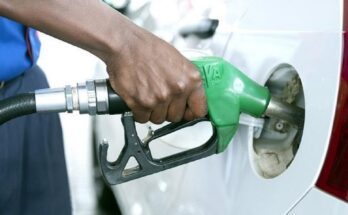
Rwanda experienced a historic increase in fuel prices on June 5, 2026, when petrol reached RWF 2,938 per litre and diesel climbed to RWF 2,927 per litre. The increases were largely attributed to turmoil in international energy markets.
Prime Minister Dr. Justin Nsengiyumva later revealed that government subsidies had prevented prices from rising even further. According to him, diesel could have reached RWF 3,581 per litre without state intervention, meaning authorities absorbed roughly 18.16% of the cost increase.
Analysts note that even with falling global oil prices, immediate reductions at local pumps are unlikely. Fuel shipments purchased during the height of the crisis are still moving through supply chains or remain in storage facilities.
Cargo vessels traveling from ports such as Dubai and Bandar Abbas typically require between six and twelve days to reach East African ports like Mombasa and Dar es Salaam. Additional transportation time is needed before products arrive in Rwanda, creating a lag between international market changes and domestic pricing.
The agreement also includes a 30-day period dedicated to clearing navigational hazards in the Strait of Hormuz and restoring normal maritime traffic. During this period, the United States is expected to withdraw military assets deployed near Iranian waters, while Iran has committed to ensuring commercial shipping returns to pre-conflict levels.
Rwandan authorities maintain that strategic fuel reserves remain intact and that the country has sufficient stocks to avoid shortages. Officials have also pledged to continue safeguarding supplies of essential commodities.
For many households, the key question remains how quickly global developments will translate into relief at local markets. While the agreement has restored optimism to international trade and energy markets, economists warn that lower prices in Rwanda may take time to materialize.
Statistics from Rwanda’s National Institute of Statistics show that consumer prices in May 2026 were 12.9% higher than in May 2025, highlighting the broader inflationary pressures affecting the economy. Although the US-Iran agreement has improved global confidence, the path toward lower living costs for ordinary Rwandans is likely to be gradual rather than immediate.