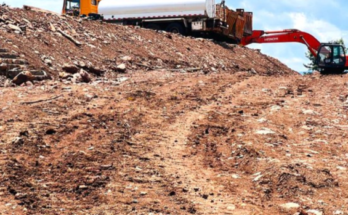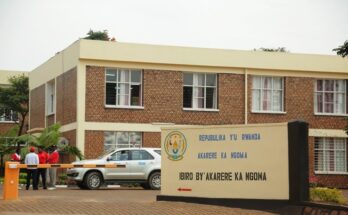
The United States has announced a new round of sanctions targeting four Rwanda-based mining and mineral trading companies as well as two individuals, accusing them of supporting the M23 movement operating in eastern Democratic Republic of Congo.
The measures were unveiled in a statement issued by State Department spokesperson Tommy Pigott, who said Washington was taking action against networks allegedly linked to conflict-mineral activities that benefit armed groups in the region.
According to the statement, the sanctions are intended to disrupt financial and commercial structures that allegedly help sustain M23’s military operations.
Among those sanctioned are Gasabo Gold Refinery LTD and its director, Jean Malic Kalima, alongside three other Rwandan companies involved in the extraction and trade of minerals.
Washington argues that mineral wealth from eastern Congo is being exploited to finance armed activities. The statement claims that resources which should benefit Congolese citizens are instead being used to acquire weapons and fund combat operations.
U.S. officials further stated that the sanctions are meant to reinforce the implementation of the Washington Peace Agreement and discourage illicit mineral trade linked to armed conflict.
The statement also called on governments, businesses, and individuals to halt involvement in conflict-mineral supply chains that contribute to forced labor, child labor, and gender-based violence in mining communities.
For years, the Congolese government and its allies have accused Rwanda of benefiting from mineral resources originating in eastern Congo. Kigali has consistently rejected those allegations, maintaining that Rwanda possesses its own significant mineral resources and denying any role in illegal exploitation.
The sanctions come at a time when the security situation in eastern Congo continues to evolve rapidly.
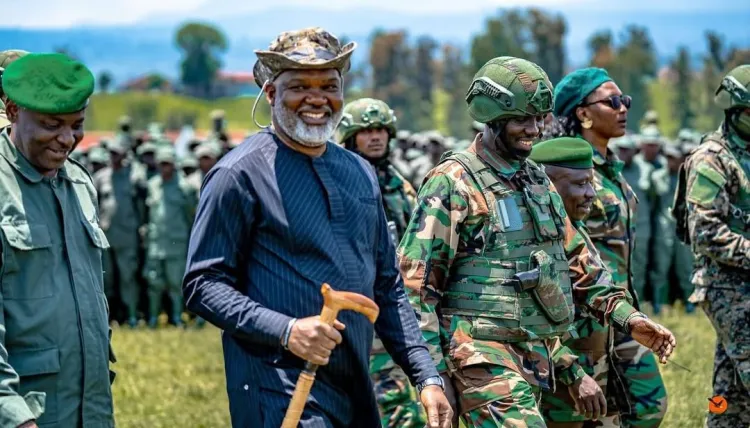
On June 25, 2026, AFC/M23 spokesperson Lawrence Kanyuka announced that the P5 coalition, whose military wing is led by former Rwandan army chief Faustin Kayumba Nyamwasa, had formally joined the conflict in Minembwe, South Kivu.
Kanyuka alleged that P5 fighters are now operating alongside the Congolese army, Burundian troops, FDLR combatants, Wazalendo militias, and foreign mercenaries.
“Kinshasa continues to expand its military coalition,” Kanyuka said. “The government has added fighters from Kayumba Nyamwasa’s P5 movement to FARDC, FDLR, Wazalendo, foreign mercenaries and Burundian forces.”
AFC/M23 also claimed that the coalition involving P5 participated in attacks against Minembwe General Hospital on June 25, marking the second such incident within a 24-hour period. The movement alleged that the attacks resulted in civilian casualties and significant damage to infrastructure.
The group pledged to continue defending residents of Minembwe and neighboring areas, stating that it would resist any attempt to displace, intimidate, or target local populations.
P5 is a coalition of opposition groups that includes organizations such as RNC, FDU-Inkingi, PDP-Imanzi, and RUD-Urunana. The alliance previously maintained a presence in eastern Congo before its activities declined following the arrest of retired Major Habib Mudathiru in 2019.
After the capture of RUD-Urunana fighters involved in an attack in Rwanda’s Musanze District later that year, public references to P5 became increasingly rare, leading many observers to believe the coalition had become inactive.
However, reports over the past year suggested a renewed effort to reorganize and re-establish its presence in the region.
In November 2025, Alexis Mugisha Nkurunziza, Vice President for Politics, Governance and Diplomacy within MDRP-Twirwaneho, claimed that a number of P5 fighters had returned to South Kivu with support from Burundi.
He further alleged that some fighters had already reached the Bijombo area while others were undergoing training inside Burundi.
Security analysts monitoring the Great Lakes region believe the reported entry of P5 into the Minembwe conflict could add another layer of complexity to an already fragmented battlefield involving multiple armed actors and regional interests.
As diplomatic efforts continue and international actors push for lasting peace in eastern Congo, developments on the ground suggest that the conflict remains fluid, with both old and emerging groups reshaping the military landscape.
The combination of new U.S. sanctions and shifting alliances in eastern Congo highlights the growing international attention focused on the region and the challenges facing efforts to stabilize one of Africa’s most volatile conflict zones.