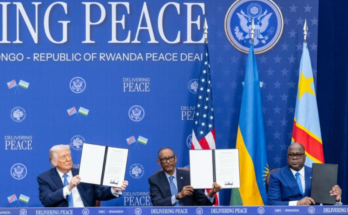
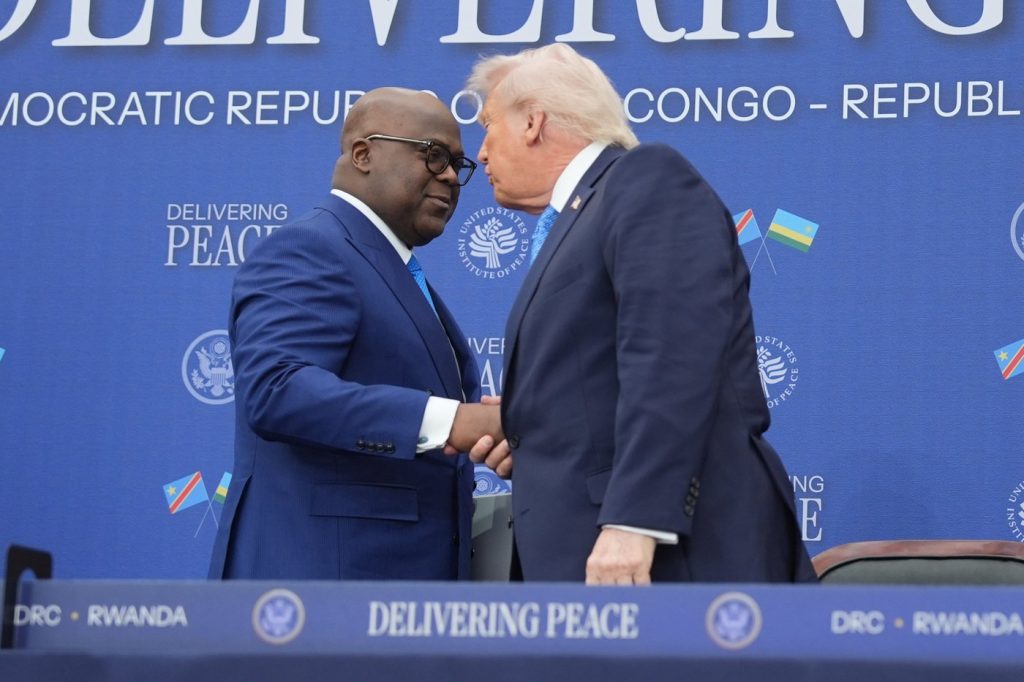
As violence continues to grip eastern Democratic Republic of Congo, questions are increasingly being raised about how the international community understands the roots of the crisis. At the center of the debate is the role of the United States, which some analysts believe has accepted President Félix Tshisekedi’s argument that Rwanda is the primary source of instability in eastern Congo.
For many observers, however, reducing one of Africa’s most complex and long-running conflicts to a single external actor risks overlooking the deeper structural problems that have fueled insecurity for more than three decades.
The narrative portraying Rwanda as the central cause of Congo’s troubles has gained significant international attention. Yet historians, security experts, and regional analysts continue to argue that the conflict cannot be understood without examining Congo’s internal political and governance challenges.
This is not the first time international pressure has focused heavily on Rwanda. In 2012, Kigali faced intense diplomatic pressure and sanctions from several international actors. While those measures were intended to contribute to peace efforts, they failed to eliminate the underlying causes of violence in eastern Congo.
The resurgence of conflict years later has led many observers to question whether the fundamental drivers of instability were ever addressed.
A growing body of research points to a far more complicated reality. Experts frequently identify weak governance, corruption, citizenship disputes, ethnic exclusion, competition among armed groups, and fragile state institutions as key factors sustaining insecurity.
According to many scholars, explaining the conflict solely through mineral wealth or foreign interference oversimplifies a crisis that has evolved over decades and involves numerous local, national, and regional actors.
One of the most persistent challenges has been the Congolese state’s limited authority over parts of its eastern territory. In many areas, government institutions have struggled to provide security, basic services, and effective administration.
This governance vacuum has allowed armed groups to flourish. Today, more than 200 armed groups are believed to operate across eastern Congo, making it one of the most volatile security environments in the world.
Among these groups is the Democratic Forces for the Liberation of Rwanda (FDLR), which has maintained a presence in eastern Congo for many years. The organization was formed by elements linked to those responsible for the 1994 Genocide against the Tutsi in Rwanda who fled into Congo after losing power.
The continued presence of FDLR has remained a major source of tension in regional security dynamics and has repeatedly complicated efforts to stabilize eastern Congo.
Adding further complexity are recurring reports suggesting cooperation between certain elements within the Congolese armed forces and various armed groups. Several United Nations expert reports have highlighted allegations of collaboration involving different militias, including FDLR.
For many analysts, such allegations point to deeper institutional weaknesses within the security sector, including fragmented command structures, short-term political calculations, and limited accountability.
Corruption is also frequently cited as a major obstacle to peace. It undermines state institutions, weakens military effectiveness, and enables illicit networks that profit from instability.
Another dimension often overlooked in international discussions is the long-standing issue of citizenship and ethnic discrimination affecting some communities in eastern Congo, particularly Congolese Tutsi populations.
For years, members of these communities have reported discrimination, exclusion, hate speech, displacement, and challenges related to recognition of their citizenship rights. Analysts argue that these unresolved grievances have contributed to cycles of violence and mistrust.
Such tensions have not only affected local communities but have also influenced relations between countries across the Great Lakes region, reinforcing insecurity and political polarization.
Rwandan President Paul Kagame has repeatedly argued that Rwanda represents only a small part of Congo’s much larger crisis. His frequently quoted statement that Rwanda is “a drop in the ocean” of Congo’s problems remains controversial, but supporters of that view say it highlights an important reality: externalizing blame alone cannot resolve the conflict.
They contend that lasting peace will remain elusive unless Congo’s internal governance challenges, armed group proliferation, corruption, citizenship disputes, and ethnic tensions are addressed directly.
Against this backdrop, some observers believe that the United States and other international actors should take a broader approach when assessing the conflict. Focusing on a single narrative, they argue, risks overlooking the interconnected factors that have sustained instability for decades.
History suggests that diplomatic pressure and sanctions may send powerful political messages, but they rarely create sustainable peace when deeper structural problems remain unresolved. For eastern Congo, the path toward stability may depend less on identifying a single villain and more on confronting the full complexity of a conflict that has shaped the region for generations.