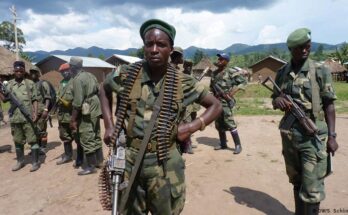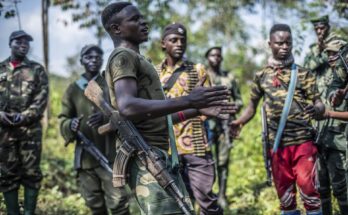
A newly released report by the United Nations Group of Experts has revealed that the AFC/M23 coalition continues to pursue plans aimed at creating a self-governing administration in areas under its control in eastern Democratic Republic of Congo, under a project referred to as the “Federal Republic of Congo.”
The findings were submitted to the UN Security Council and provide fresh insight into the political, military and economic objectives being pursued by the coalition amid ongoing efforts to resolve the long-running conflict in eastern Congo.
According to the report, AFC/M23 remains focused on expanding its territorial influence, strengthening administrative structures in territories under its authority and gaining recognition as a legitimate political actor through regional and international negotiations.
UN experts state that the coalition’s primary objective remains the removal of President Félix Tshisekedi’s government. However, the report indicates that AFC/M23 is also considering an alternative political scenario involving the establishment of a separate governing authority in eastern Congo.
The report notes: “Leaders of AFC/M23 continue to advocate for the creation of a ‘Federal Republic’ and have abandoned previous proposals to integrate their fighters into the Congolese army. Instead, they are demanding that AFC/M23 itself build and command the armed forces of the proposed new state.”
This assessment suggests a significant shift in the coalition’s long-term political strategy. Rather than seeking integration into existing state institutions, AFC/M23 is reportedly advancing a vision that would grant it a central role in governing and securing territories under its control.
The UN experts further state that the coalition continues to justify its military operations and political demands through claims that it is protecting vulnerable communities, including Congolese Tutsi, Banyamulenge and Hema populations, from what it describes as threats of genocide and targeted violence.
The report also highlights that despite UN Security Council Resolution 2773 adopted in 2025, which called on Rwanda to withdraw its troops from Congolese territory and halt support it is accused of providing to AFC/M23, the coalition has continued to expand its presence on the ground.
According to the findings, the territory controlled by AFC/M23 has grown by more than 35 percent since the launch of the Doha negotiations in March 2025.
UN experts argue that this expansion demonstrates the coalition’s determination to pursue military gains while diplomatic initiatives continue in parallel.
The report identifies Walikale, Kisangani, Kalemie and Beni among the strategic areas targeted as part of AFC/M23’s broader territorial ambitions. These developments reportedly continued even as peace initiatives in Doha and Washington sought to establish a political framework for ending decades of instability in eastern Congo.
The findings are likely to intensify international debate over the future of eastern DR Congo and the prospects for ongoing peace efforts. As AFC/M23 strengthens its administrative presence and consolidates control over additional territory, questions surrounding governance, sovereignty and regional security are expected to remain at the center of diplomatic discussions.
The report concludes that despite continued political negotiations, military realities on the ground continue to reshape the conflict, with all parties seeking to improve their strategic positions and influence the future political order of the Democratic Republic of Congo.