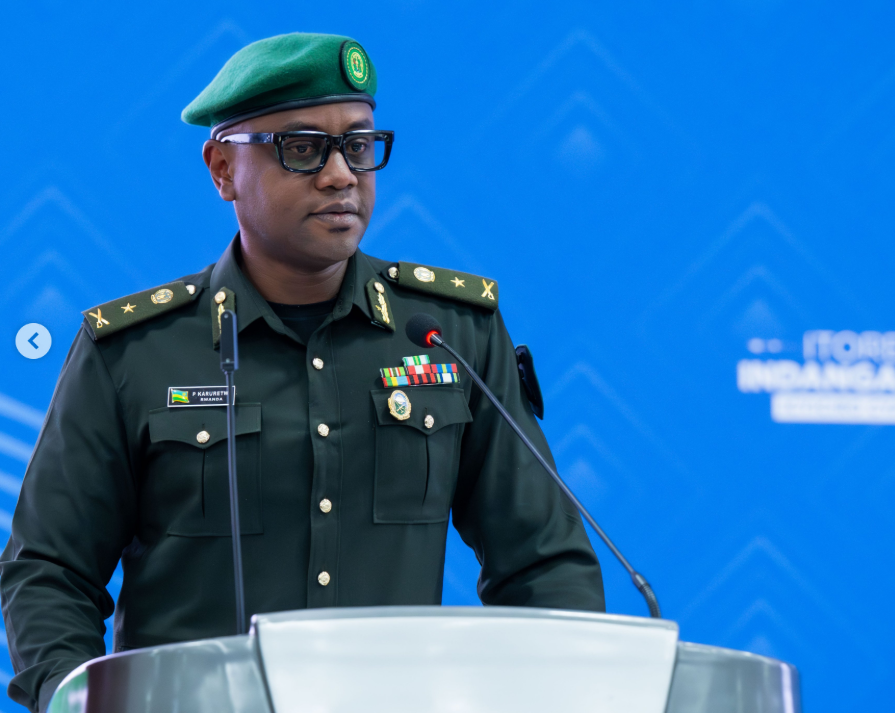
Rwanda’s military spokesperson Brig Gen Patrick Karuretwa says security measures along the DRC border will remain in place until the FDLR threat is effectively addressed, stressing that Rwanda will not compromise its national security.
Rwanda has reaffirmed that the security measures it maintains along its border with the Democratic Republic of Congo will remain in force as long as the threats that prompted them continue to exist.
Speaking during an interview with Rwanda Broadcasting Agency (RBA) on July 5, 2026, Rwanda Defence Force spokesperson Brig Gen Patrick Karuretwa said the country’s security posture is guided by lessons learned from past conflicts and by the responsibility to protect its citizens from external threats.
His remarks come amid continued calls from the United States for Rwanda to remove some of the defensive measures established along the border with the DRC. Washington has linked those requests to peace agreements signed between Rwanda and the DRC on June 27, 2025, and December 4 of the same year.
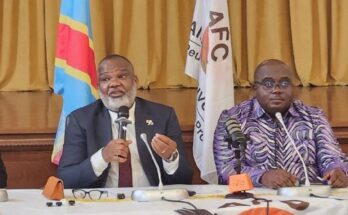
Rwanda, however, argues that one of the central commitments contained in those agreements—the dismantling of the FDLR armed group, has not been fulfilled. Kigali maintains that the group continues to operate inside Congolese territory and remains a direct security concern.
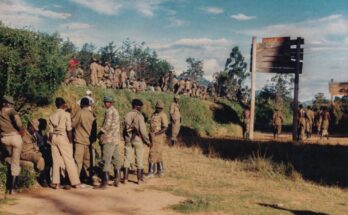
Karuretwa emphasized that Rwanda’s experience during the insurgency commonly known as the Abacengezi war fundamentally changed the country’s approach to border security and threat prevention.
Reflecting on those experiences, he warned against waiting for hostile actors to reach Rwanda’s territory before taking action.
According to him, Rwanda learned difficult lessons from previous security challenges and has since adopted a proactive approach aimed at preventing threats before they reach the country’s borders.
The military spokesperson explained that every nation has the right and responsibility to establish defensive measures based on existing threats. He noted that such measures are not fixed forever but evolve according to changing security realities.
Karuretwa pointed out that Rwanda and the DRC have previously conducted joint military operations against armed groups operating in eastern Congo. Those initiatives, he said, were also part of Rwanda’s broader defensive strategy.
He argued that the current situation differs because Rwanda believes hostile actors continue to benefit from cooperation and protection inside the DRC.
A significant portion of Karuretwa’s remarks focused on the Democratic Forces for the Liberation of Rwanda (FDLR), a group Rwanda considers a major security threat.
He stated that the organization includes individuals linked to the 1994 Genocide against the Tutsi and argued that its ideology has not fundamentally changed over time.
According to Rwanda’s position, the group has continued recruiting members, maintaining structures, and expanding its influence in parts of eastern Congo.
Karuretwa also dismissed suggestions that the FDLR threat has diminished, arguing instead that its networks remain active and continue to pose risks to regional stability.
Addressing international pressure, he said Rwanda has faced external demands for many years but has consistently prioritized its own national security assessments.
He stressed that defensive measures would remain in place and could be adjusted depending on developments on the ground, but removing them entirely while the underlying threat remains unresolved would not be considered.
Karuretwa is among the Rwandan representatives participating in a joint security mechanism involving Rwanda, the United States, and the DRC. The committee is tasked with monitoring the implementation of peace agreements and supporting efforts aimed at restoring stability in the Great Lakes region.
He indicated that Rwanda continues to engage constructively in those discussions while maintaining that decisions concerning national security must be based on facts and security realities rather than external pressure.
As diplomatic efforts continue, Rwanda’s position remains clear: security measures may evolve as circumstances change, but they will not disappear as long as authorities believe the FDLR continues to pose a credible threat to the country’s security and sovereignty.