Rwanda Police has warned that the period of public awareness and voluntary surrender of substandard and illegal alcoholic beverages has ended, with authorities now moving toward enforcement against people who continue to hide, store or illegally sell the prohibited products.
CIP Gahonzire Wellars, Rwanda Police spokesperson in Kigali, said anyone found concealing the drinks after the extensive awareness campaign could be treated as an offender, particularly where the discovery follows information provided by residents or police inspections.
“Those we arrest now are detained because they have violated the regulations. We had enough time to educate and explain the requirements to them. If someone voluntarily brings them forward, there is no problem. But if they hide them and are caught through information from residents or our inspections without having declared them, that person will be punished,”** Gahonzire said.
Police says illegal alcohol is still being hidden
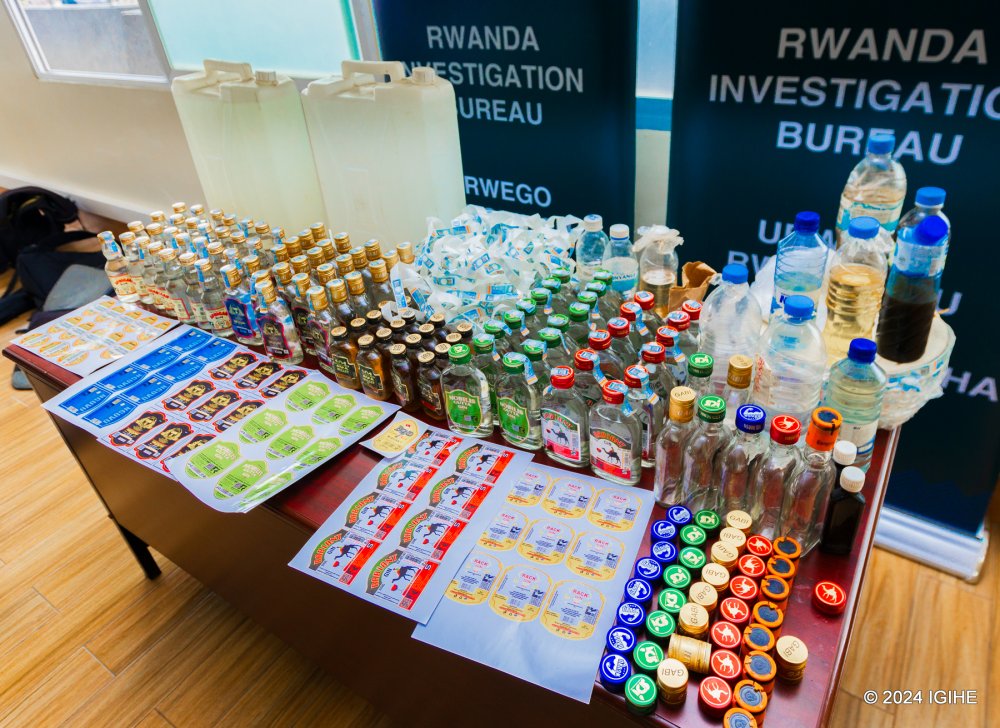
The warning comes as authorities continue to uncover significant quantities of prohibited alcohol despite the nationwide campaign to remove the products from the market.
Gahonzire pointed to the discovery of more than 3,000 cartons of illegal alcohol in the Muhima area of Kigali. The products had reportedly been concealed by a trader, but authorities were alerted by another resident.
“This is evidence that the products are still there because we continue to find them in different places, among people hiding them, those intending to sell them illegally and those storing them in their homes,” he said.
The case highlights the continuing role of community information in helping law enforcement identify hidden stocks that may otherwise remain outside routine inspections.
More than 147,000 bottles destroyed in Kigali
Kigali authorities say more than 164,000 cartons of substandard alcoholic beverages have been collected as part of the campaign to remove them from the market.
The operation has involved products recovered from manufacturers, traders and individual residents. More than 147,000 bottles have already been destroyed.
Authorities say the alcohol is first emptied into a designated container and diluted with water before disposal in order to reduce potential damage to the soil. The diluted waste is then disposed of at the Nduba landfill.
Kigali urges residents to surrender remaining stocks
Kigali City spokesperson Ntirenganya Emma Claudine said more than four million bottles had been collected in the city during the wider operation.
She said some people had initially hidden the products, apparently believing that their removal from the market would eventually make them scarce and more expensive, creating an opportunity for illegal resale.
“Some people initially hid them, thinking that because they had been removed from the market, they would become expensive and they could sell them again. That is not the case. We are also asking anyone who still has them to bring them forward because we will not stop this programme. These are poison,” Ntirenganya said.
Her comments underline the authorities’ position that the removal exercise is a public-health intervention rather than a temporary market disruption.
Nyabihu and Karongi record further destruction
The campaign was also extended beyond Kigali on August 12, 2026, with authorities in other districts destroying additional quantities of substandard alcohol.
In Nyabihu District, nearly 30,000 litres of alcohol produced by small-scale local processing facilities were destroyed. Some of the products were reportedly associated with beverages made from bananas.
In Karongi District, more than 2,500 litres of substandard alcoholic drinks were also destroyed.
Residents describe the social cost of excessive drinking
Some residents who had consumed the drinks described how alcohol had affected their families, education and ability to work.
One resident said excessive drinking had led to repeated intoxication and conflict at home.
“I used to drink these beverages until I became drunk and fought. My children did not finish school even though they were intelligent, and my wife and I separated. All of this was because of these drinks,” the resident said.
Another described the impact on his ability to start the working day.
“When I woke up and someone gave me a drink, I would no longer be in a condition to go to work,” he said.
Their accounts illustrate why authorities have framed the crackdown not only as a matter of regulatory compliance but also as a public-health and social-protection measure.
Enforcement now follows the awareness phase
Gahonzire’s warning signals a shift from education and voluntary compliance toward enforcement.
During the awareness campaign, residents were repeatedly encouraged to stop consuming, selling or storing prohibited alcohol and to surrender existing stocks. Police now says people who continue to conceal or illegally distribute the products risk arrest and punishment.
The authorities are therefore urging anyone who still possesses the prohibited drinks to hand them over rather than hide them or attempt to return them to the market.
Community cooperation remains critical
The scale of the operation also demonstrates the importance of cooperation between residents and enforcement authorities.
The discovery of the more than 3,000 cartons in Muhima after a resident provided information is one example of how community reporting can help authorities locate hidden stocks.
Police and Kigali City authorities are continuing to call on residents to report or surrender remaining supplies, while those who deliberately conceal or illegally trade the drinks now face enforcement action.