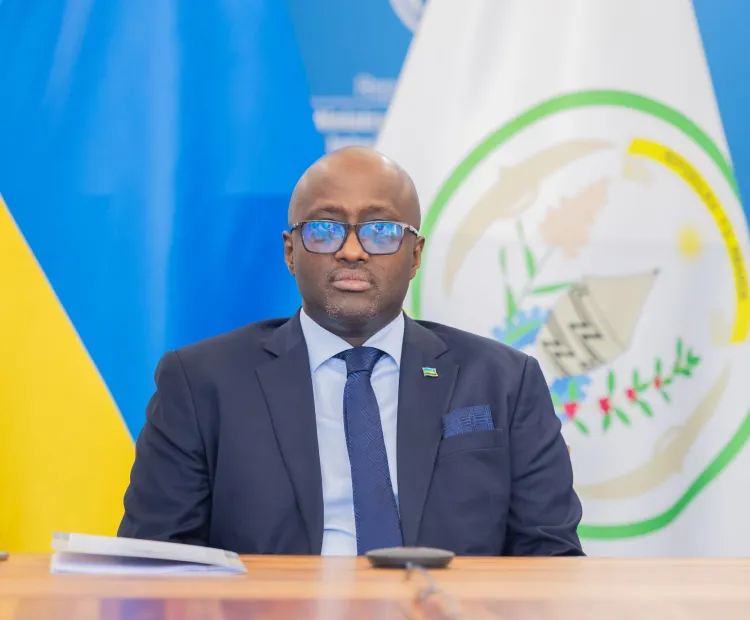
Rwanda’s Foreign Minister, Olivier Nduhungirehe, has rejected allegations that Kigali is preparing to attack Burundi, saying Rwanda has no reason or intention to invade its southern neighbour.
Nduhungirehe said statements by senior Burundian officials, including President Evariste Ndayishimiye and Foreign Minister Edouard Bizimana, accusing Rwanda of planning an attack were unfounded.
“They are talking about it because they know it is not true. What would Rwanda want from attacking Burundi?” he said, questioning what Rwanda would gain from attacking Burundi.
The minister’s remarks come as relations between Kigali and Gitega remain strained despite attempts by the two countries to reopen dialogue and reduce tensions.
Rwanda asks Burundi to stop what Kigali calls provocative rhetoric
Nduhungirehe said Rwanda’s position is that Burundi should stop publicly accusing Rwanda of planning military action and reconsider its cooperation with forces that Kigali considers hostile.
The minister specifically pointed to Burundi’s military cooperation with the Democratic Republic of Congo and the FDLR, a group Rwanda considers a major security threat.
“The problem is known that the Burundian army went to Congo to collaborate with the Congolese army and the FDLR and we know the intentions of the FDLR, a genocidal group,” Nduhungirehe said.
Rwanda argues that Burundi’s involvement in eastern DRC has become part of the broader regional security dispute, particularly because Burundian troops have operated beyond areas directly bordering Burundi.
Kigali questions Burundi’s military role in eastern DRC
Burundi has previously presented its military involvement in the DRC as a security measure, including efforts to address threats posed by armed groups such as RED-Tabara.
Nduhungirehe, however, questioned why Burundian forces would operate in North Kivu, an area that does not share a border with Burundi, arguing that this has contributed to Kigali’s concerns.
The disagreement reflects the wider regional security crisis in eastern DRC, where the activities of national armies and armed groups have repeatedly affected relations among neighbouring states.
Rwanda says earlier dialogue failed to produce lasting de-escalation
According to Nduhungirehe, Rwanda and Burundi had previously opened channels of communication intended to reduce tensions, including discussions following the capture of Uvira.
He said the two sides had reached an understanding on measures intended to prevent further escalation.
“We also had talks last year [in March] after the capture of Uvira and discussed and agreed on how to de-escalate tensions between the two countries,” he said.
But Kigali says the progress was short-lived after President Ndayishimiye subsequently made public accusations that Rwanda was preparing to attack Burundi.
Nduhungirehe said the developments raised questions in Kigali about whether Burundi’s leadership was genuinely committed to restoring relations.
Ndayishimiye’s statements raised fresh concerns in Kigali
Nduhungirehe said Rwanda sought clarification from Burundi after President Ndayishimiye repeated allegations against Kigali despite the diplomatic contacts that had taken place.
He said security and intelligence officials from the two countries also met at the border on December 14 and December 28 following the capture of Uvira.
“They stopped the talks, we met again after the capture of Uvira, we met twice, I think, with security and intelligence agencies at the border on December 14 and 28, but after that, President Ndayishimiye again made the same statement about attacking Rwanda.”
The minister argued that such statements undermine efforts to rebuild confidence between Kigali and Gitega.
Kigali rejects claim that it agreed to hand over Burundians
Another disagreement emerged over Burundian nationals living in Rwanda who are accused by Gitega of involvement in the 2015 attempted coup.
President Ndayishimiye recently claimed that Rwanda had agreed to hand over some of those individuals. Kigali immediately rejected the suggestion.
Nduhungirehe said Rwanda was surprised by the claim because the matter had not recently been discussed between the two governments.
“President Ndayishimiye said that we discussed this for the past five months, and this was not discussed at all, we never agreed to anything,” he said.
According to the minister, there had been discussions on the matter several years ago, but he said some of the commitments and requests arising from those discussions had not been implemented.
Rwanda links the diplomatic dispute to regional security
The latest dispute between Rwanda and Burundi cannot be separated from the broader security crisis in the Great Lakes region, particularly the conflict in eastern DRC.
Kigali has repeatedly raised concerns about cooperation involving Burundi, the Congolese army and armed groups that Rwanda considers threats to its national security.
At the same time, Burundi maintains close relations with Kinshasa and continues to defend its security operations in the DRC, creating another point of friction with Rwanda.
Kigali says ending cooperation with FDLR could help restore relations
Nduhungirehe said Burundi should reconsider its cooperation with FDLR if it wants to create conditions for improved relations with Rwanda.
From Kigali’s perspective, the immediate issue is not a plan to invade Burundi but what it describes as hostile rhetoric and security cooperation involving groups considered threats to Rwanda.
The minister’s remarks suggest that restoring relations will require more than diplomatic meetings. Kigali is calling for a reduction in hostile public statements and changes in security cooperation that it believes directly affect Rwanda’s national security.
For now, the dispute remains part of the wider diplomatic and security tensions surrounding eastern DRC, with the prospects for a sustained Rwanda-Burundi rapprochement depending largely on whether both governments can rebuild trust and maintain dialogue.