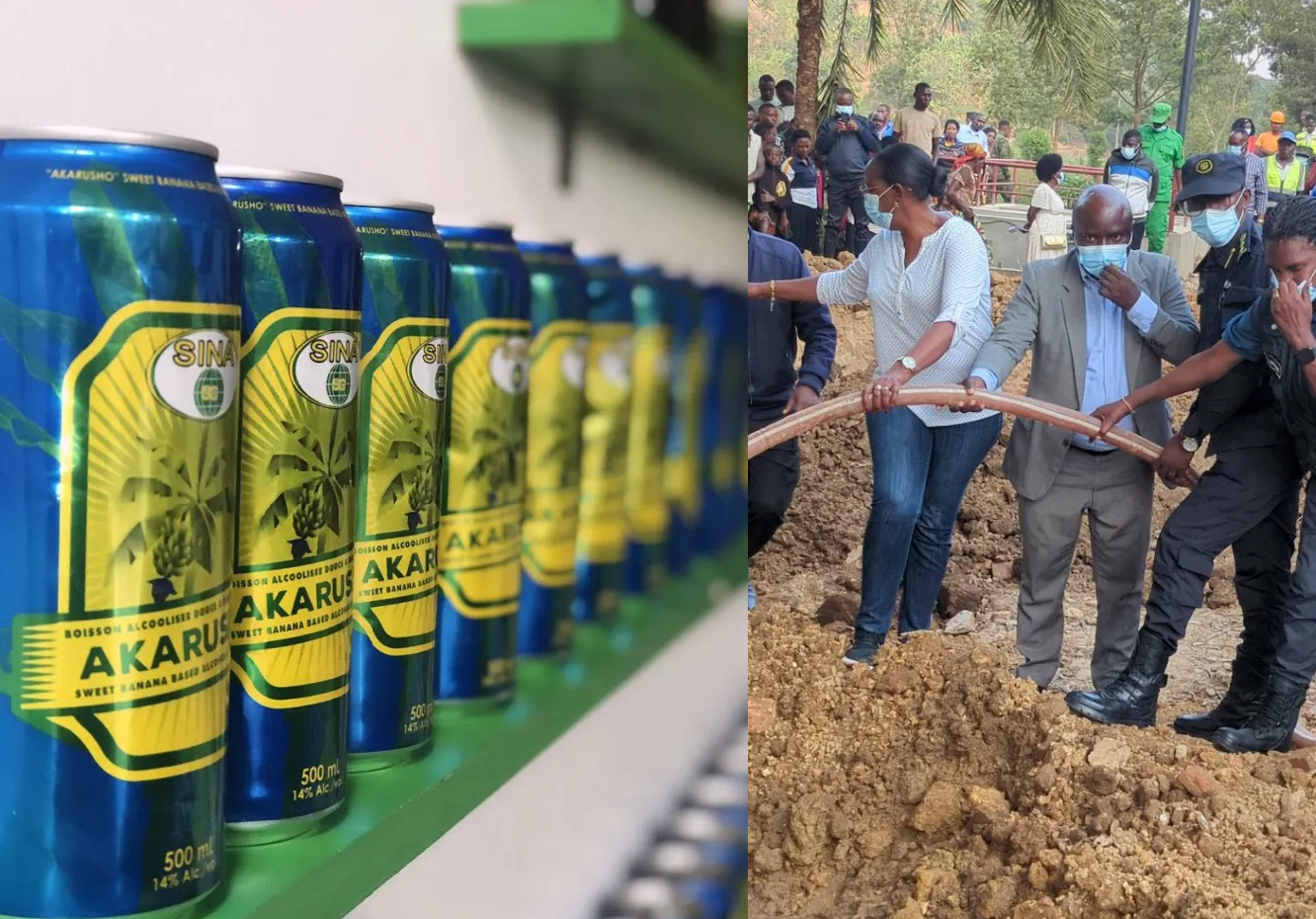
Rwanda National Police has explained why 26,000 litres of Akarusho, a banana-based alcoholic drink produced by Entreprise Urwibutso, commonly known as Nyirangarama, were destroyed despite not containing ethanol.
The decision followed inspections that identified shortcomings in hygiene and the materials used in the production process, according to police. The findings led authorities to remove the product from the market as a precautionary public health measure.
26,000 Litres Destroyed in Rulindo
The destruction took place on Monday, August 18, 2026, in Tare Village, Nyirangarama Cell, Bushoki Sector in Rulindo District, Northern Province.
Akarusho is among fermented drinks made from bananas. Although the product was not found to contain ethanol, authorities said the conditions under which it was being produced did not meet the required standards.
The product was therefore withdrawn from the market and destroyed rather than being allowed to reach consumers.
Police Cites Hygiene and Production Standards
CIP Ignace Ngirabakunzi, Police spokesperson for the Northern Province, said the decision was based on an inspection conducted by relevant authorities.
“They came and found that there were things here that did not meet the required standards for processing these drinks, and they found that the way they were processed could have an impact on human health,” he said.
Ngirabakunzi explained that inspections of alcoholic-drink producers do not focus solely on the presence of dangerous substances. Authorities also assess whether producers have valid operating documents, whether production is conducted hygienically and whether the substances added to the products are legally permitted.
He said inspectors specifically examined whether the producer was operating legally and had valid permits, whether production was carried out under hygienic conditions and whether “the things being added are permitted to be put into alcoholic drinks.”
Destruction Also Served as a Warning to the Producer
Police said the destruction of the Akarusho stock was accompanied by a warning to the management of the factory to address the shortcomings identified during the inspection.
The move reflects a broader approach in which authorities are seeking to prevent potentially unsafe products from reaching consumers while requiring producers to correct deficiencies in their manufacturing processes.
The case also demonstrates that compliance with Rwanda’s beverage standards involves more than testing for ethanol or other harmful chemicals.
Northern Province Governor Says Inspections Will Continue
Northern Province Governor Maurice Mugabowagahunde said inspections of alcoholic beverages and other locally produced drinks would continue.
“It is an inspection that will be continuous, so that we can ensure that other drinks produced across the country and by our industries also meet quality standards, but the main objective is the good health of our citizens,” he said.
His remarks underline the authorities’ intention to maintain regular checks rather than relying on one-off inspections.
Destruction Comes Amid Wider Alcohol Safety Crackdown
The destruction of Akarusho comes amid heightened scrutiny of alcoholic beverages in Rwanda, particularly products associated with the illegal addition of ethanol.
Authorities have been taking action against so-called “ibiyuma” drinks after reports linked them to serious health consequences. The information provided by authorities indicates that such drinks have been associated with about 50 deaths, while other consumers reportedly suffered disabilities, including blindness.
Akarusho, however, was not destroyed because it was found to contain ethanol. Instead, authorities said the product failed to meet required standards relating to production conditions, hygiene and the substances used during processing.
Authorities Emphasize Public Health
The action against the Akarusho stock highlights the importance of compliance throughout the beverage-production process, from licensing and hygiene to the materials used in manufacturing.
Governor Mugabowagahunde urged the public to avoid drugs and unsafe alcoholic products, warning that their effects may not always be immediately visible.
He said substance abuse can cause long-term health problems and, in severe cases, death. For producers, the case sends a clear message that being free from ethanol alone does not automatically make an alcoholic beverage compliant with safety regulations.
Producers are also expected to meet legal, hygienic and manufacturing standards before their products can remain on the market.