A letter sent by the Democratic Forces for the Liberation of Rwanda (FDLR) to the President of the United States has come under renewed scrutiny after a United Nations experts’ report presented evidence that sharply contradicts the group’s portrayal of itself as a peace-oriented political movement.
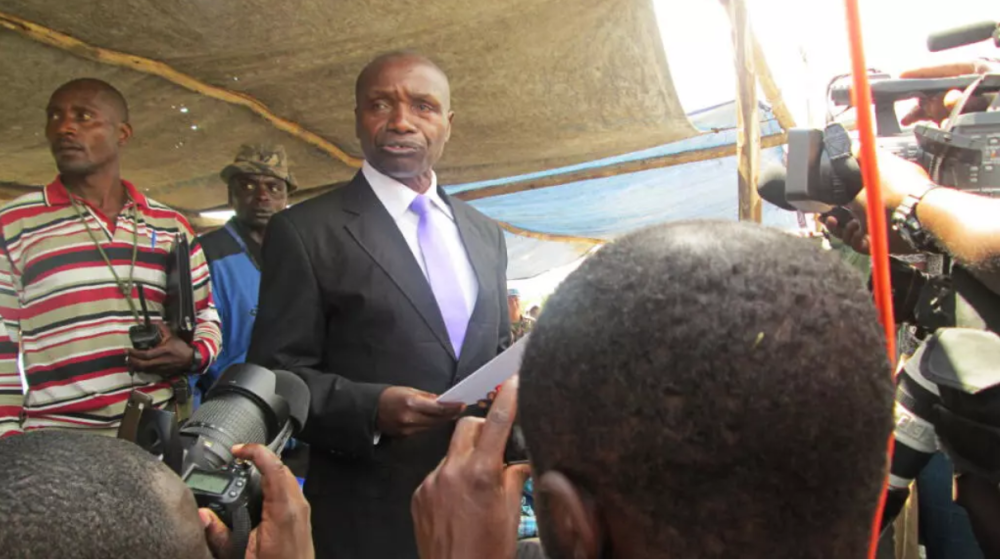
On July 2, 2025, Victor Byiringiro, also known as Gaston Iyamuremye and widely regarded as the leader of FDLR, addressed a letter to the U.S. President under the title “Contribution des FDLR pour ramener la paix dans la Région des Grands Lacs Africains” (FDLR’s Contribution to Peace in the African Great Lakes Region).
In the document, the group attempted to present itself as a political organization committed to regional stability and the protection of Rwandan refugees living in eastern Democratic Republic of Congo. Byiringiro praised the role played by the United States in facilitating the Washington Peace Agreement signed between Rwanda and the DRC on June 27, 2025, stating that FDLR supports “all genuine initiatives aimed at achieving lasting peace.”
However, findings contained in a recent UN report paint a very different picture.
One of the most controversial aspects of the letter is FDLR’s claim that it has never posed a threat to Rwanda or the Rwandan population. Historical records and security assessments have repeatedly linked the group to attacks carried out against civilians in northwestern Rwanda, including incidents involving killings, destruction of property, looting, and arson.
The group also rejected descriptions of itself as a terrorist or genocidal organization. Yet the origins of FDLR remain closely associated with individuals who played significant roles in the planning and execution of the 1994 Genocide against the Tutsi in Rwanda. Many of its founders fled into neighboring Congo following the genocide and later reorganized under armed structures that evolved into the current movement.
According to the UN experts’ report, FDLR remains under international sanctions and continues to play a role in armed conflicts affecting eastern DR Congo.
The report describes the organization as operating through three major components: FDLR-FOCA, FDLR-RUD, and FDLR-FPP. These structures demonstrate that the movement retains an organized military framework despite repeated efforts to weaken it.
The question of troop strength also highlights major discrepancies. UN experts estimate that the group had between 3,500 and 5,500 fighters in 2025. FDLR itself claims to command approximately 10,000 combatants, while its specialized CRAP unit asserts that its forces exceed 20,000 members.
Such figures suggest that the organization continues to maintain a significant military presence in parts of eastern Congo.
Although FDLR portrays itself as a defender of refugees, the UN report indicates that its personnel remain active in combat zones across Nyiragongo, Masisi, Rutshuru, and Walikale territories. These areas have experienced recurring clashes involving armed groups and government forces.
The report further notes that the CRAP wing claims to have operatives positioned around Goma and even inside the city itself. The presence of fighters near the Rwandan border remains one of the major security concerns repeatedly raised by Kigali.
Rwandan President Paul Kagame has previously argued that the primary threat posed by FDLR is not merely its military capacity but also the genocidal ideology that the movement continues to promote. Rwanda has consistently maintained that the group’s continued existence represents a serious national and regional security challenge.
Among the report’s most striking revelations is an alleged secret meeting held on April 7, 2026, in Pinga, Walikale Territory. According to the UN findings, military officials from the Congolese armed forces and FDLR representatives reportedly agreed that cooperation between the two sides would continue despite the signing of the Washington Peace Agreement.
If accurate, such information directly undermines the image FDLR sought to project in its communication with Washington. While the group publicly described itself as a supporter of peace initiatives, the report depicts it as an active participant in ongoing armed conflict and a movement maintaining operational relationships with elements of the Congolese security establishment.
Regional security analysts argue that the letter may have been part of a broader effort to reshape international perceptions of FDLR at a time when diplomatic pressure was increasing.
The timing coincided with growing international calls for the dismantling of the organization under provisions contained in the Washington Agreement and multiple United Nations Security Council resolutions. Those resolutions have consistently called for the neutralization of FDLR and for pathways enabling fighters willing to disarm and return home to be reintegrated peacefully into civilian life.