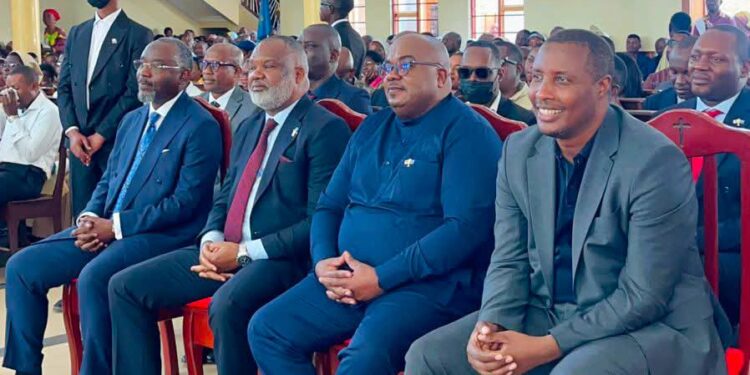
Isaac Bishamamba, a well-known journalist who spent more than a decade reporting from eastern Democratic Republic of Congo, has announced that he has joined the AFC/M23 coalition and is now part of its ranks, a move that has sparked widespread debate across the region.
For years, Bishamamba built a reputation as one of the most recognizable media voices in North and South Kivu. Through his work with media outlets such as Iriba FM and Radio Maria, he covered issues affecting local communities, including insecurity, governance challenges, humanitarian concerns, and human rights developments.
His decision to leave journalism behind and join AFC/M23 has surprised many observers who followed his reporting career. In a public statement, Bishamamba explained that his choice was motivated by a desire to actively participate in what he believes is a struggle for change in his country.
According to his statement, he joined the movement in order to “contribute to the liberation of his country.”
The announcement quickly spread across social media platforms and regional news networks, generating mixed reactions from supporters, critics, fellow journalists, and political observers.
Bishamamba indicated that the decision was not made overnight. He explained that he had reflected on the matter for a long time before concluding that he wanted to move from reporting events to directly participating in a political and military movement that seeks to reshape the future of the Democratic Republic of Congo.
His transition comes at a time when AFC/M23 continues to attract supporters from different sectors of society. Over recent months, the coalition has expanded its political outreach and strengthened its presence in areas under its influence, drawing interest from individuals with diverse professional backgrounds.
Analysts say Bishamamba’s move highlights the profound impact that decades of instability and conflict in eastern Congo have had on local communities. Many residents have witnessed repeated cycles of violence, displacement, and political uncertainty, circumstances that continue to influence personal and professional choices.
While some view his decision as a legitimate expression of political conviction, others argue that it raises broader questions about the relationship between journalism and political engagement, particularly in conflict zones where neutrality and public trust remain critical issues.
In Goma and Bukavu, where Bishamamba was widely known for his coverage of security and governance matters, reactions have varied considerably. Some former colleagues describe him as an experienced reporter who spent years documenting the realities of life in conflict-affected areas.
Regional observers believe his entry into AFC/M23 will likely remain a topic of discussion for months to come, especially as the conflict in eastern Congo continues to evolve and draw international attention.
The development also comes amid ongoing security challenges in eastern DRC, where armed confrontations, political tensions, and humanitarian crises continue to shape daily life for millions of people.
For AFC/M23, the arrival of a figure with extensive media experience represents a notable addition to its ranks. For Bishamamba, it marks the beginning of a new chapter, one that takes him from documenting events as a journalist to becoming directly involved in a movement seeking political and military change.
Whether viewed as a bold personal choice or a controversial career shift, Isaac Bishamamba’s decision has already become one of the most discussed stories in eastern Congo, reflecting the complex realities of a region where politics, conflict, and personal conviction often intersect.