The future of Rwanda’s military mission in Mozambique has received a significant boost after President Daniel Chapo confirmed that the European Union will continue supporting security operations in Cabo Delgado, a region that has spent years battling a violent insurgency linked to extremist groups.
Speaking to journalists on Friday, Chapo said Rwanda’s deployment would continue to receive financial backing from both the Mozambican government and the European Union, maintaining an arrangement that has helped sustain security efforts since Rwandan troops first arrived in the country in 2021.
According to the Mozambican leader, European support is not directed toward the purchase of military equipment. Instead, it focuses on operational assistance and training programs designed to strengthen security institutions and improve their ability to respond to threats.
The announcement comes after months of uncertainty surrounding the future of European funding. Earlier this year, discussions emerged within European political circles about whether support for Rwanda’s mission should continue, especially after U.S. sanctions targeting individuals connected to the conflict in eastern Democratic Republic of Congo intensified scrutiny of Kigali’s regional role.
For Mozambique, however, the stakes have always been larger than diplomatic disagreements. Cabo Delgado remains one of the country’s most strategic regions, not only because of the security challenges it faces but also because of its vast natural gas resources and major international investments.
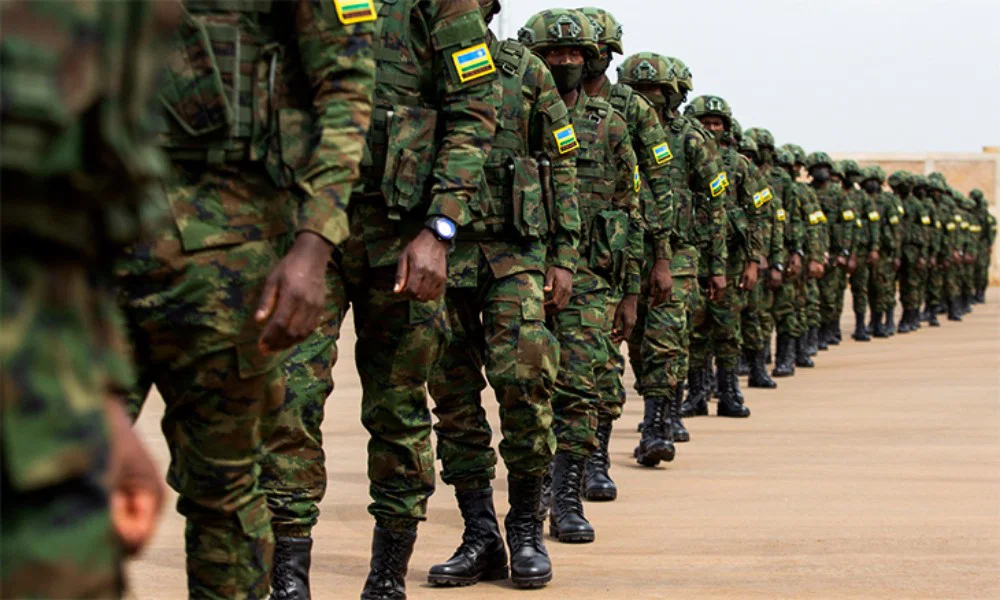
Since July 2021, Rwandan forces have played a central role in helping Mozambican authorities regain territory that had fallen under the control of insurgent groups associated with ISIS. Their intervention helped restore government control over several key towns and significantly reduced the operational freedom of armed militants in many parts of the province.
Despite those gains, questions about funding threatened to complicate the mission. Some European governments, particularly Belgium and Germany, reportedly favored a tougher approach toward Rwanda in light of ongoing tensions surrounding the conflict in eastern Congo. Others argued that suspending support could undermine hard-won security gains in northern Mozambique.
France emerged as one of the countries strongly interested in maintaining stability in Cabo Delgado, where major energy projects are viewed as strategically important for regional and international economic interests. Security concerns surrounding these investments added urgency to discussions about the future of Rwanda’s presence.
During March and April 2026, Rwanda intensified diplomatic engagement with international partners while emphasizing the importance of predictable support for the mission. Officials warned that sustaining a large overseas deployment would become increasingly difficult without clear commitments from funding partners.
Those concerns generated fresh debate within European institutions. Policymakers were confronted with a difficult choice: maintain pressure on Rwanda over broader regional issues or preserve a security mission widely viewed as effective in containing extremist violence in northern Mozambique.
A compromise eventually emerged through a restructuring of the funding mechanism. Rather than channeling support directly through previous arrangements, European assistance is expected to pass through the Mozambican government, which will then support security operations on its territory, including those involving Rwandan forces.
Political observers view this approach as a practical solution that allows all parties to protect their core interests. Mozambique secures continued assistance against insurgency, Rwanda maintains the operational viability of its mission, and the European Union continues contributing to regional stability while navigating internal political differences.
Chapo also stressed that military operations alone will not end the crisis. He acknowledged that no one can accurately predict when terrorism will be fully defeated and said his government remains open to every viable option that could contribute to lasting peace.
He emphasized that peace remains the foundation of development and noted that authorities are exploring multiple pathways, including dialogue initiatives that could help reduce violence and create conditions for long-term stability.
Beyond security matters, the Mozambican government is seeking additional international support for reconstruction efforts across Cabo Delgado. Years of attacks have damaged roads, schools, health facilities and other critical infrastructure, leaving many communities in need of extensive recovery assistance.
For Mozambique, rebuilding the province is increasingly viewed as the next major challenge. Government leaders argue that sustainable peace will depend not only on military success but also on economic opportunity, public services and the return of displaced families to normal life.
The European Union’s decision to maintain support therefore represents more than a financial commitment. It signals continued international confidence in the security partnership between Mozambique and Rwanda and reflects a broader recognition that stability in Cabo Delgado remains a priority for both regional and global actors.