The conflict in eastern Democratic Republic of Congo continues to attract growing international attention as questions emerge over the role of major global powers whose economic and strategic interests increasingly intersect with one of Africa’s most volatile regions.
While diplomatic efforts aimed at restoring peace in eastern Congo remain underway, analysts argue that the competing interests of China and the United States are shaping the political and security landscape surrounding the conflict.
According to reports highlighted by Africa Defense Forum, China has been accused in several international crises of pursuing what critics describe as a “dual-track diplomacy” approach. Under this strategy, Beijing publicly promotes peace, stability, and economic cooperation while simultaneously maintaining military and commercial relationships with competing actors involved in regional conflicts.
Observers point to similar accusations in places such as Ukraine, Myanmar, and Sudan, where China has positioned itself as a supporter of dialogue while continuing military and economic engagements that critics say can prolong instability.
Analyst Samir Bhattacharya of the Observer Research Foundation argues that a comparable pattern can be observed in the Democratic Republic of Congo.
In an assessment published on May 11, Bhattacharya said: “Beijing’s expanding military-industrial activities in the region reflect a narrow and opportunistic path that risks increasing instability. This dual-track diplomacy, designed to protect investments and expand influence, may ultimately undermine the very investments it seeks to secure.”
China’s interests in Congo are deeply tied to the country’s vast mineral wealth. Chinese-linked companies control significant stakes in cobalt, coltan, copper, and uranium projects, making Congo a critical supplier for industries ranging from electronics to renewable energy technologies.
As a result, Congolese security forces have frequently been deployed to protect mining sites connected to Chinese investments in eastern Congo.
At the same time, Beijing has maintained strong ties not only with Kinshasa but also with neighboring countries including Rwanda and Uganda.
This balancing act has drawn criticism from analysts who argue that China seeks to preserve influence with all sides regardless of the political and military realities on the ground.
United Nations experts have repeatedly accused Rwanda and Uganda of supporting the M23 movement, allegations both governments have consistently denied.
Bhattacharya noted that China has expanded security cooperation with Congolese institutions while preserving broader regional partnerships.
He said: “[China] has supported training programs for Congolese security personnel, provided equipment assistance, and encouraged the deployment of local forces to protect Chinese-operated mining sites.”
According to the analyst, this approach allows Beijing to safeguard strategic interests while maintaining its longstanding principle of non-interference.
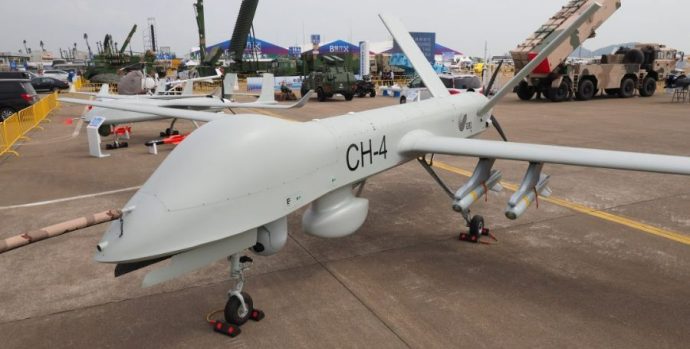
Military equipment manufactured in China has increasingly appeared across the conflict environment. Chinese-made drones and weapons systems have reportedly been used by different actors operating within the broader regional security framework.
Defense industry records indicate that Chinese arms manufacturers have supplied military equipment to several countries in the region. Meanwhile, the Congolese government acquired its first fleet of CH-4 drones from China Aerospace Science and Technology Corporation in 2024.
Bhattacharya summarized the contradiction by stating: “On one hand, China seeks stability in the DRC to protect its extensive mining investments. On the other hand, maintaining relationships with neighboring states reduces its willingness to take a firm position on regional conflicts.”
The United States, meanwhile, continues to support diplomatic initiatives intended to reduce violence and encourage political settlements.
Washington is expected to maintain pressure on actors accused of undermining peace efforts, including through sanctions and diplomatic measures targeting individuals and entities linked to instability.
For Rwanda, analysts believe continued international scrutiny could translate into additional diplomatic pressure if allegations surrounding support for M23 persist. At the same time, Kigali is likely to preserve strong economic ties with China, particularly in trade and investment.
Burundi may face increasing pressure regarding its military presence in eastern Congo, especially as international mediators push for the implementation of regional peace agreements.
Uganda remains in a particularly complex position. While it cooperates closely with Congolese authorities against the Allied Democratic Forces (ADF), it also faces recurring allegations from some observers concerning its role in the broader conflict dynamics.
Experts argue that long-term stability will ultimately depend less on external powers and more on regional solutions driven by African governments themselves. Strengthening peace initiatives, improving transparency in mineral supply chains, expanding regional economic cooperation, and addressing the presence of armed groups remain among the most frequently cited priorities.