A newly released report by the United Nations Group of Experts on the Democratic Republic of Congo has reignited debate over Rwanda’s alleged military presence in eastern Congo, claiming that thousands of Rwandan troops remain active inside Congolese territory.
According to the report, the number of Rwanda Defence Force (RDF) personnel operating in the Democratic Republic of Congo could range between 14,000 and 18,000 troops, making it one of the highest estimates presented by UN investigators in recent years.
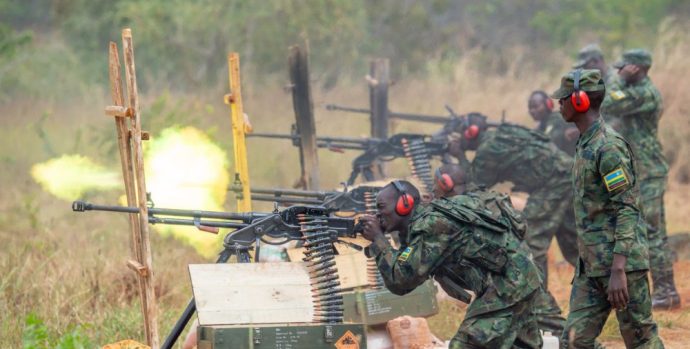
The experts state that by December 2025, between 8,000 and 10,000 RDF soldiers were deployed in South Kivu, while an additional 6,000 to 8,000 troops were present in North Kivu. The report further notes that investigators found no evidence suggesting these forces were withdrawn after that period.
Instead, the experts argue that troop rotations continued, with new personnel reportedly being deployed to replace others and maintain operations up to the time the report was published.
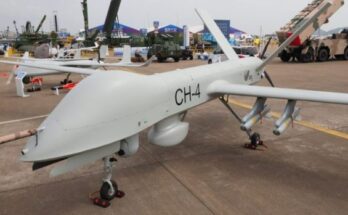
The document also details what it describes as substantial military support provided by Rwanda to the AFC/M23 coalition. According to the UN experts, this support included the deployment of Special Forces units, the use of drones, advanced military technologies, electronic warfare capabilities, and rapid logistical systems designed to move troops and equipment efficiently across battlefronts.
One of the report’s most significant claims concerns the military operation that resulted in AFC/M23 taking control of the city of Uvira in December 2025. The experts state that “Rwanda deployed more than 8,000 soldiers, including Special Forces personnel, together with heavy military equipment.”
The report further argues that the operation was not spontaneous but had been planned in advance as part of a broader strategy aimed at expanding AFC/M23-controlled territory in eastern Congo.
Investigators also claim that RDF units maintained positions near front-line areas and played a role in opening attack corridors and supporting AFC/M23 military operations in several parts of North and South Kivu.
Another key aspect of the report questions Rwanda’s long-standing explanation that its military actions are driven primarily by security concerns linked to the Democratic Forces for the Liberation of Rwanda (FDLR).
The UN experts state that they documented RDF activities in areas where FDLR fighters were reportedly absent, including during the operation that led to the capture of Uvira.
Rwanda, however, has consistently rejected such allegations.
Officials in Kigali maintain that previous UN expert reports have failed to take into account all available information and often present an incomplete picture of the complex security situation in eastern Congo.
The Rwandan government continues to argue that its security measures are focused on protecting national security and addressing threats posed by armed groups, particularly the FDLR, which Rwanda regards as a serious and continuing security concern. T
he publication of the report comes at a time when eastern DR Congo remains one of Africa’s most volatile conflict zones.
Ongoing military confrontations, political tensions, and the presence of multiple armed groups continue to raise concerns among local communities, regional governments, and international organizations. Whether the latest findings will influence diplomatic efforts and regional peace initiatives remains a question that observers will closely watch in the months ahead.