
Fresh fears are spreading across East and Central Africa after Ebola resurfaced in the Democratic Republic of Congo and Uganda, prompting Rwanda to tighten border controls and temporarily shut down some crossing points along its western frontier.
Authorities in Rwanda confirmed that two border posts linking the country with DR Congo in Rusizi District were temporarily closed as part of emergency measures aimed at preventing the deadly virus from entering the country.
The decision comes as health officials intensify surveillance following the confirmation of a new Ebola patient in the eastern Congolese city of Goma, a major commercial hub located near the Rwandan border.
Additional restrictions and health screening procedures were also reinforced at border points in Rubavu District on May 17, 2026, with travelers undergoing stricter medical checks amid growing regional concern.
Rwanda’s Ministry of Health stated that no Ebola case has been detected inside the country so far, but emphasized that authorities remain on high alert.
“There is no confirmed Ebola case in Rwanda. As a preventive measure, Rwanda has strengthened screening and vigilance at the border with the DRC,” the ministry said, stressing that preventive screening systems have been strengthened at border crossings.
The ministry added that rapid response teams and surveillance units have been deployed to ensure any suspected case is identified and isolated as early as possible.
The renewed outbreak has alarmed international health agencies after the World Health Organization announced that Ebola infections had surged again in both DR Congo and Uganda.
WHO Director-General Tedros Adhanom Ghebreyesus said more than 300 infections had already been recorded, while 88 people had died from the virus.
The latest confirmed patient in Goma was identified as the wife of a man who recently died of Ebola in Bunia, according to Congolese virologist Jean Jacques Muyembe.
Health experts say the outbreak involves the Bundibugyo strain of Ebola, which has become particularly concerning because there is currently no approved vaccine or specific treatment available for it.
Jean Kaseya, head of Africa CDC, recently warned that “the particular challenge with the Bundibugyo Ebola strain is that there is neither a vaccine nor a dedicated treatment.”
Since 1976, DR Congo has faced multiple Ebola outbreaks involving different strains, including Zaire, Sudan, and Bundibugyo variants. According to WHO data, Ebola kills around half of those infected on average, although fatality rates have historically ranged between 25 and 90 percent depending on the outbreak and access to treatment.
Meanwhile, the United States has also begun monitoring reports that some American citizens in eastern Congo may have been exposed to the virus.
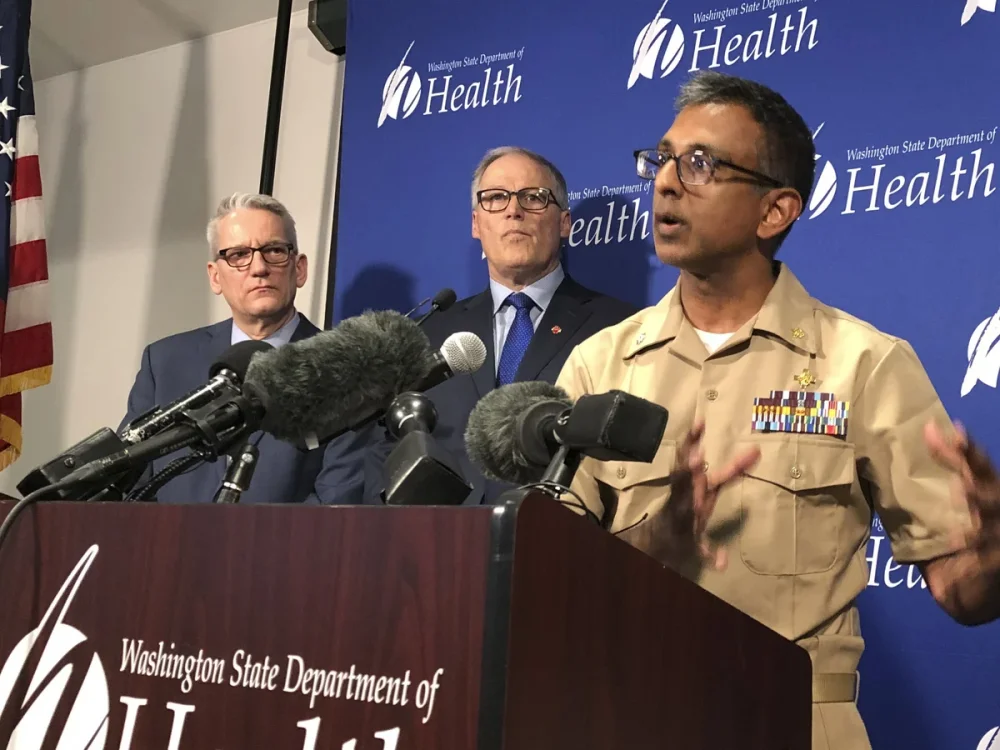
During a press briefing on May 17, CDC Ebola response official Satish K. Pillai declined to confirm whether Americans had tested positive, but acknowledged that U.S. authorities were closely tracking the situation.
“CDC and its offices in the country are working with international partners and the embassy to monitor the situation and determine what support may be needed,” he said. “This is a rapidly evolving situation.”
When pressed further by journalists, Pillai responded: “We do not discuss private medical information. If the U.S. government has additional information to share, we will continue to provide updates.”
Earlier, the CDC had announced it was assisting partners in efforts to evacuate “a small number of Americans directly affected by the outbreak.”
Reports from The Washington Post and STAT News indicated that among those potentially exposed were aid workers operating in Ituri Province. One American reportedly developed Ebola-like symptoms, triggering urgent discussions over possible medical evacuation options.
According to multiple reports, U.S. officials have been considering transferring exposed individuals to a U.S. military facility in Germany, where they could be quarantined and medically evaluated before further decisions are made.
The first known fatal case linked to the current Bundibugyo outbreak reportedly occurred in April 2026, although confirmation came weeks later, allowing the virus additional time to spread before emergency measures intensified.
As regional governments race to contain the outbreak, concerns remain especially high around border communities where thousands of traders, students, and daily commuters move between DR Congo and neighboring countries every day.