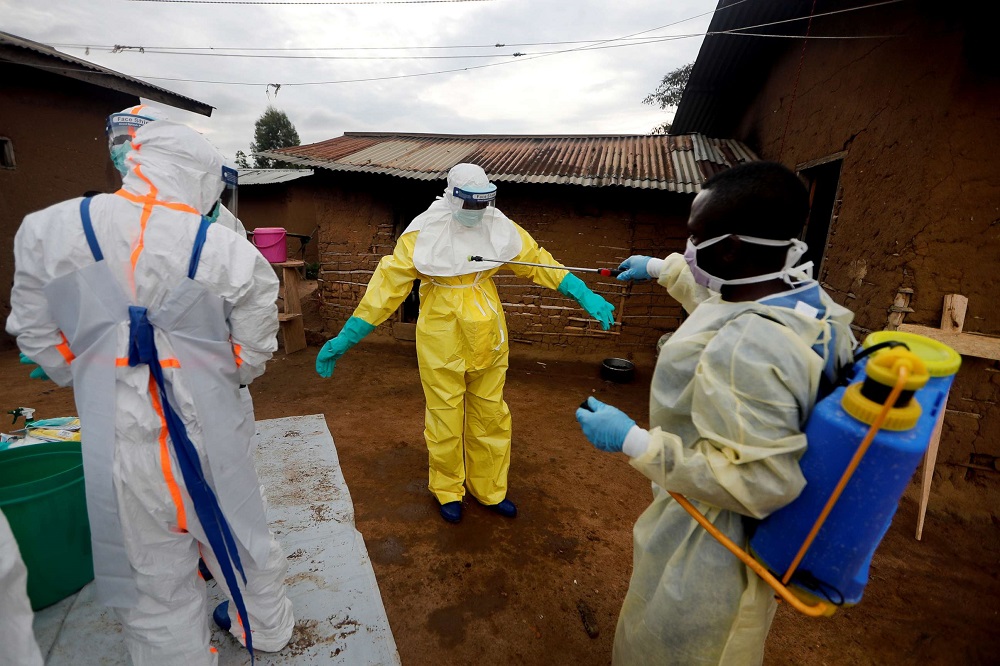
Rwanda has stepped up preventive measures along its border with the Democratic Republic of Congo following renewed Ebola outbreaks in eastern Congo and neighboring Uganda, raising fears of a wider regional health crisis.
The announcement was made by Rwanda’s Ministry of Health on May 17, 2026, shortly after the World Health Organization confirmed that Ebola cases had increased significantly in both DR Congo and Uganda.
According to WHO Director-General Tedros Adhanom Ghebreyesus, more than 300 people have already been infected while 88 deaths have been recorded, prompting growing international concern.
In a public statement, Rwanda’s Ministry of Health emphasized that no Ebola case had been detected inside the country but warned that authorities were maintaining strict surveillance measures at border crossings with DR Congo.
The ministry stated: “No Ebola patient has been identified in Rwanda. As a preventive measure, Rwanda has reinforced screening and vigilance at the DR Congo border.”
Health officials also confirmed that emergency response teams remain on high alert and that monitoring systems have been strengthened to ensure any suspected infection is detected early and handled immediately.
Authorities further noted that Rwanda would continue working closely with local institutions, regional partners, and international health organizations to protect public health.
The renewed concern comes as border crossings between Rwanda and DR Congo in Rubavu District were temporarily closed on the morning of May 17, 2026, amid fears linked to the outbreak.
On the same day, a new Ebola case was confirmed in the eastern Congolese city of Goma, increasing anxiety among communities living near the Rwanda-DR Congo border.
The information was confirmed by Congolese medical researcher Jean Jacques Muyembe, who revealed that the patient identified in Goma was the wife of a man who recently died from Ebola in Bunia.
He stated that “the patient identified in Goma is the wife of a man who recently died of Ebola in Bunia.”
Public health experts warn that the appearance of Ebola in Goma presents a major risk because of the heavy movement of people between Goma and Rwanda, especially through Rubavu.
DR Congo remains one of the countries most affected by Ebola since the virus was first identified in 1976. Over the decades, the country has experienced multiple outbreaks involving different strains including Zaire, Sudan, and Bundibugyo.
The Bundibugyo strain is currently causing particular concern because, according to Africa CDC Director General Jean Kaseya, there is still no specific vaccine or approved treatment available for it.
Dr. Kaseya recently explained that “the uniqueness of the Bundibugyo Ebola strain is that there is neither a vaccine nor a specific treatment available.”
WHO estimates that Ebola kills around half of those infected on average, although fatality rates have varied between 25% and 90% depending on the outbreak and access to medical care.
Doctors continue to stress that early detection and rapid medical intervention can significantly improve survival chances.
In Rwanda, citizens have been urged to remain vigilant, maintain hygiene practices, avoid contact with people showing unusual symptoms, and seek immediate medical attention in case of high fever, vomiting, or bleeding, which are among the common warning signs of Ebola.
Regional analysts believe cooperation among East African countries will be essential in preventing the outbreak from spreading further at a time when cross-border movement remains extremely active.