The European Union has signaled a major shift in its security strategy in northern Mozambique by prioritizing direct support to Mozambique’s armed forces instead of extending financial assistance to Rwanda’s military deployment in Cabo Delgado.
The decision has triggered growing concerns over the future of the Rwandan mission, which has played a central role in pushing back Islamist insurgents in the gas-rich province since 2021.
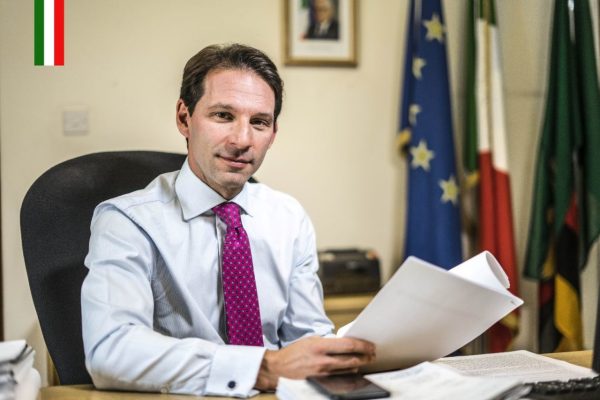
Speaking during recent discussions on the future of EU security engagement in Mozambique, the bloc’s ambassador to the country, Antonino Maggiore, confirmed that European leaders are reviewing the next phase of their involvement after four years of operations.
“We are currently in discussions because the mission, as I mentioned, has been operating for four years, and the goal is to discuss a possible extension. It is a decision that rests with the 27 member states of the European Union.”
Maggiore said the EU now believes strengthening Mozambique’s own military capacity should become the priority as insecurity continues to affect several parts of Cabo Delgado.
“At this stage, it is believed that it is important to focus on increasing the capacity of the Mozambique Armed Forces …. and allowing the Mozambique forces to have all the necessary capacity and equipment to fight terrorism.”
When asked whether the EU intended to continue financing Rwanda’s military operations in Cabo Delgado, the ambassador responded clearly: “At this time, no.”
The remarks come as the current EU support package for Rwanda’s mission, estimated at around €20 million, is expected to expire in May 2026.
Rwandan officials have repeatedly argued that the European contribution represented only a small portion of the actual operational costs carried by Kigali.
Rwanda says maintaining troops in Cabo Delgado requires massive financial resources, logistics, military equipment, and continued risk to soldiers deployed in one of Africa’s most volatile insurgency zones.
On March 15, Rwanda’s Foreign Affairs Minister, Olivier Nduhungirehe, warned that Kigali could withdraw its troops if long-term and sustainable financing mechanisms are not secured.
Government spokesperson Yolande Makolo also indicated that Rwanda cannot indefinitely shoulder the burden of the mission alone without broader international support.
Over the last four years, Rwandan troops working alongside Mozambique’s armed forces succeeded in recapturing strategic towns and stabilizing areas previously controlled by Ansar al-Sunnah militants, often linked to the Islamic State insurgency network in southern Africa.
Security analysts now warn that a sudden Rwandan withdrawal could create a dangerous security vacuum in Cabo Delgado.
Mozambique’s military, despite ongoing reforms, is still considered under-equipped and insufficiently prepared to independently contain the insurgency across the province.
Experts also fear renewed instability could threaten major international investments, particularly large offshore gas projects led by companies such as TotalEnergies.
The issue has further complicated Rwanda’s diplomatic relations with some Western governments, especially amid tensions linked to the conflict in eastern Democratic Republic of Congo.
Kigali has increasingly criticized Western powers for undervaluing Rwanda’s security contribution in Cabo Delgado while continuing to benefit economically from protected energy investments in the region.
Meanwhile, Mozambique’s President Daniel Chapo has continued expressing interest in maintaining strong security cooperation with Rwanda.
That has opened discussions about possible bilateral arrangements outside EU financing structures, including direct Mozambican support for part of the operational costs or a reduced Rwandan deployment focused on protecting strategic economic zones.
Despite these options, uncertainty remains over whether Mozambique’s military can fully replace Rwanda’s role if international backing continues to decline.