
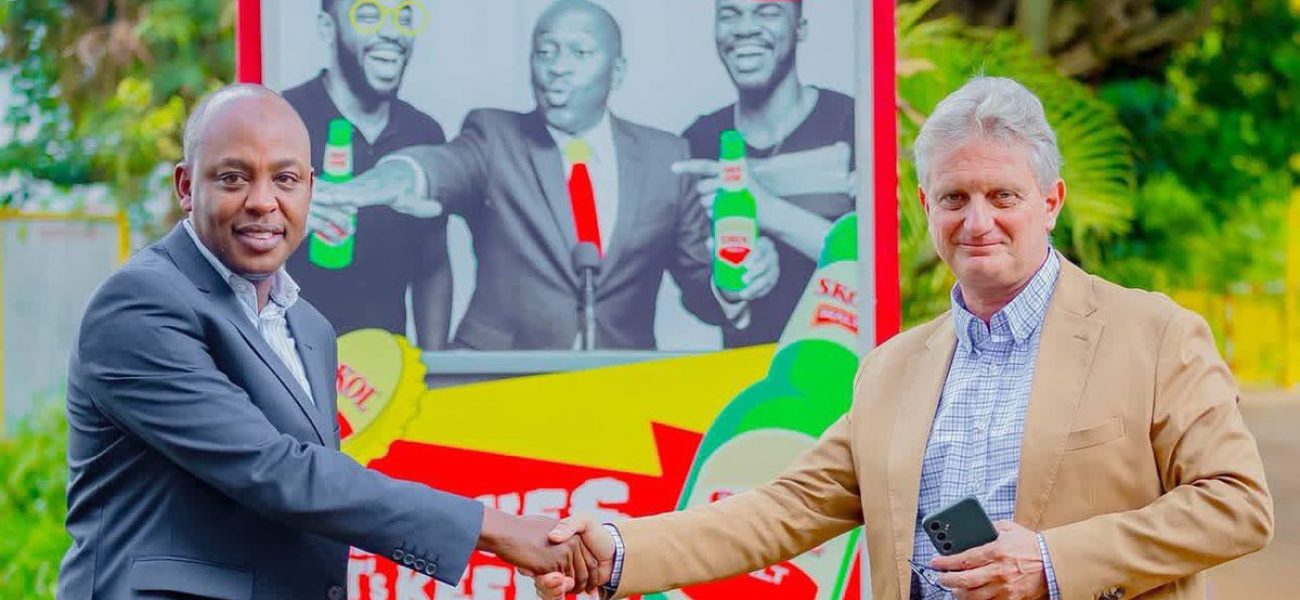
A significant chapter in Rwandan football has come to an end after SKOL Brewery Ltd officially confirmed the conclusion of its sponsorship agreement with Rayon Sports, ending a partnership that lasted more than a decade and helped shape one of the country’s most successful clubs.
The announcement, made on June 8, 2026, confirmed that the contract between both parties had reached its natural expiration date. While the sponsorship agreement has ended, both sides emphasized that their long-standing relationship remains strong and discussions about future collaboration are still ongoing.
For many football fans, the SKOL logo became inseparable from Rayon Sports. Over the past 12 years, the brewery’s involvement extended far beyond traditional sponsorship, influencing the club’s infrastructure, operations, fan engagement, and long-term development.
The relationship began in May 2014 when SKOL signed its first sponsorship agreement with Rayon Sports, committing RWF 47 million annually for three years. As the partnership proved successful, a new deal was signed in 2017 worth RWF 66 million per year over five years.
Over time, the sponsorship evolved into one of the most comprehensive partnerships in Rwandan football. SKOL provided direct financial support, contributed to equipment and branding initiatives, and even offered financial flexibility whenever urgent club needs arose.
The brewery also introduced performance-related incentives, including bonuses for Peace Cup victories and annual support for team kits, reinforcing its commitment to the club’s competitive ambitions.
However, the project most closely associated with SKOL’s legacy is undoubtedly the Nzove training complex.
In September 2017, SKOL officially handed over the modern training ground to Rayon Sports after investing close to RWF 100 million in its construction. At a time when many clubs in Rwanda struggled to secure permanent training facilities, Nzove provided Rayon Sports with a stable home base.
The facility quickly became the heart of the club’s daily operations. Senior players trained there, youth prospects developed their talents there, and important preparations for domestic and continental competitions took place on its grounds.
Beyond the training field itself, SKOL helped create additional revenue opportunities by establishing the Rayon SKOL Bar near the complex. The project strengthened engagement between supporters and the club while generating income that benefited Rayon Sports.
Another milestone came in July 2020 when SKOL delivered residential facilities capable of accommodating up to 40 players. The housing project significantly improved player welfare and demonstrated that the company’s vision extended beyond conventional sponsorship.
In July 2022, both parties renewed their partnership through a three-year agreement reportedly worth more than RWF 1 billion. That contract has now expired, formally ending the sponsorship era that began in 2014.
Despite the conclusion of the agreement, SKOL stated that discussions continue regarding alternative forms of cooperation. The company has suggested a new model that could allow Rayon Sports to attract additional sponsors while maintaining strategic ties with the brewery.
The timing of the separation coincides with a new financial era for Rayon Sports. Earlier in 2026, the club secured a five-year sponsorship agreement worth RWF 5.1 billion with Tanzania-based Jayrutt Investment Ltd. The club is also preparing for participation in the 2026/27 CAF Confederation Cup, a campaign that will require substantial financial and organizational resources.
As supporters reflect on the end of the partnership, many believe SKOL’s greatest contribution was not simply the money invested but the lasting infrastructure it left behind. Training facilities, player accommodation, fan-centered projects, and years of organizational stability have become permanent parts of the club’s story.
Future sponsors may invest more money, and larger commercial deals may eventually follow. Yet whenever the history of Rayon Sports is discussed, the Nzove complex, the trophies won during this period, and the club’s evolution over the last decade will remain closely linked to the SKOL name. For that reason, the partnership may have ended on paper, but its legacy is likely to endure for many years to come.