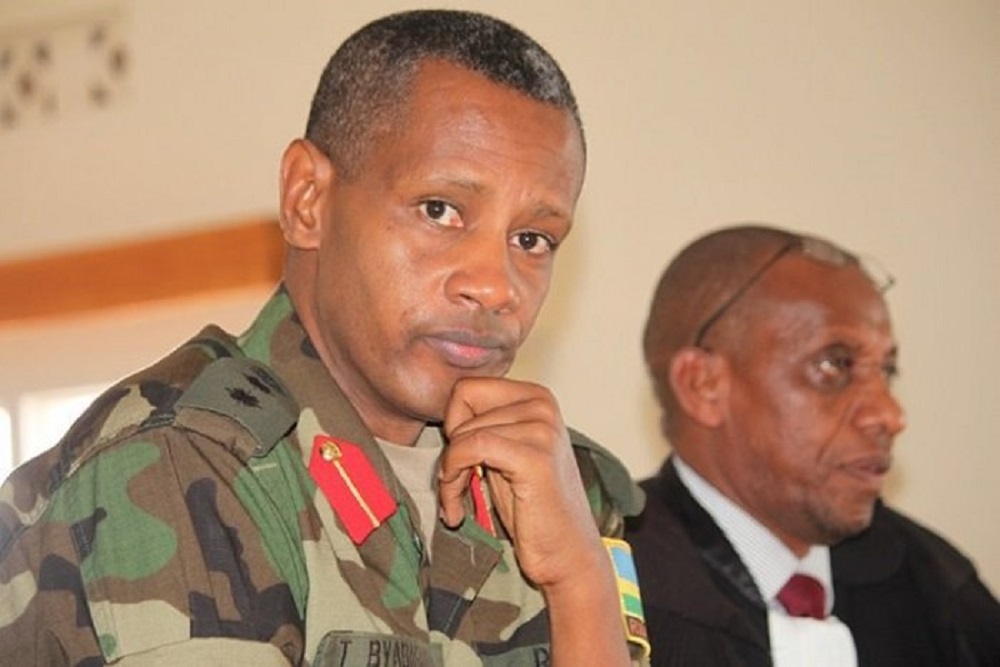
Former Rwandan military officer Colonel Tom Byabagamba, who once commanded the unit responsible for protecting President Paul Kagame, has died in prison after nearly 12 years in detention.
His death was announced on August 25, 2026, by his family. His elder brother, David Himbara, confirmed the death in a post on X, while AFP reported that relatives had also been notified by the military. The cause and circumstances of Byabagamba’s death had not been disclosed at the time of reporting.
Himbara wrote: “Tom Byabagamba, my younger brother, died after 12 years in prison.”
He added: “We are deeply saddened to announce the death of our beloved brother, Colonel Tom Byabagamba, who died in prison in Rwanda. May God grant him eternal rest.”
Rwandan prison and defence authorities had not publicly released detailed information on the circumstances of the death, including the precise time of death or its cause.
From Presidential Guard Commander to Prisoner
Byabagamba was once a senior figure within Rwanda’s military establishment and served as commander of the unit responsible for presidential protection.
He was arrested in August 2014 alongside his brother-in-law, Frank Rusagara, a retired senior military officer, and François Kabayiza.
The arrests brought down a group of former senior military figures whose careers had previously placed them close to Rwanda’s security establishment.
Military Court Sentenced Him to 21 Years
On March 31, 2016, the Military High Court in Kanombe convicted Byabagamba of offences that included inciting public disorder, tarnishing the country’s image, concealing evidence that could be used in the commission of an offence, and disrespecting the national flag.
He was sentenced to 21 years in prison and stripped of his military rank.
The case subsequently went to appeal, with Byabagamba challenging the conviction and sentence.
Appeal Reduced Sentence to 15 Years
In December 2019, the Court of Appeal upheld Byabagamba’s conviction but reduced his prison sentence from 21 years to 15 years.
The reduction did not end his imprisonment, and he remained behind bars until his death.
Freedom Now, which has followed the case, says the Court of Appeal upheld the convictions of Byabagamba and Rusagara in December 2019 while reducing their sentences to 15 years.
Death Follows That of Frank Rusagara
Byabagamba’s death comes about 17 months after the death of Frank Rusagara, his brother-in-law and co-defendant in the same case.
Rusagara died in prison on March 24, 2025, after spending more than a decade behind bars. His death was confirmed by Rwanda Defence Force spokesperson Brig Gen Ronald Rwivanga, who said Rusagara had been ill.
Rusagara and Byabagamba had been detained together since 2014 and their cases were tried together. Rusagara was initially sentenced to 20 years in prison in 2016 before his sentence was also reduced to 15 years on appeal in 2019.
Cause of Death Remains Unclear
While Byabagamba’s family has confirmed that he died in prison, key questions surrounding his death remain unanswered.
The cause of death, the exact time he died, whether he had been suffering from an illness and the current whereabouts of his remains had not been publicly disclosed when the death was reported. AFP reported that a relative said the family had been notified by the military but did not yet know the cause of death.
Further information from the relevant authorities could therefore be significant in establishing the circumstances surrounding his final hours.
A Case That Remained Controversial
The Byabagamba case continued to attract controversy years after his arrest, particularly over the charges, the conduct of the proceedings and his detention.
Human Rights Watch has described the trial of Byabagamba and Rusagara as flawed and referred to serious allegations involving torture and witness tampering.
The courts, however, convicted Byabagamba and upheld the conviction on appeal while reducing his sentence.
His death now closes the life of a former senior military officer who once held responsibility for one of Rwanda’s most sensitive security assignments, but it also leaves unanswered questions about the circumstances of his death in custody.