A new phase appears to be unfolding in eastern Democratic Republic of Congo, where the government in Kinshasa is increasingly relying on a long-term strategy designed not necessarily to win a decisive battlefield victory, but to gradually wear down its opponent.
Military analysts describe this approach as a war of attrition, a strategy aimed at exhausting an adversary’s manpower, resources, logistics, and political resilience over time. In the ongoing confrontation with the AFC/M23 alliance, Congolese authorities seem to be betting that sustained pressure may achieve what conventional offensives have struggled to accomplish.
Unlike traditional military campaigns focused on capturing territory through rapid advances, attrition warfare seeks to impose continuous costs on the opposing side. The objective is to keep the enemy engaged, force constant defensive adjustments, and steadily drain its operational capacity.
For Kinshasa, the calculation appears straightforward. AFC/M23 has established significant influence in several strategic areas and has demonstrated an ability to maintain military cohesion despite repeated offensives. Rather than pursuing risky large-scale assaults, Congolese planners appear increasingly focused on making the alliance fight on multiple fronts for extended periods.
The strategy is also linked to broader regional dynamics. Congolese officials continue to accuse Rwanda of supporting AFC/M23, allegations repeatedly denied by Kigali. Within the framework of attrition warfare, extending the conflict theoretically increases the economic and military burden on any external backers that Congo believes are assisting the movement.
This approach relies heavily on regional partnerships. The Congolese army, FARDC, has received support from neighboring Burundi and troops deployed under regional arrangements involving Southern African countries. These partnerships have allowed Kinshasa to maintain military pressure despite setbacks on the battlefield.
Another pillar of the strategy has been the extensive use of local armed groups commonly known as Wazalendo. These groups conduct frequent small-scale attacks intended to disrupt AFC/M23 operations, force redeployments, and complicate efforts to consolidate territorial control.
Technology has also become a central element of the conflict. FARDC has expanded the use of drones and air strikes against military positions linked to AFC/M23. The objective has often been to target command structures and key leaders, a tactic commonly referred to as a decapitation strategy in military doctrine.
Yet the effectiveness of these measures remains the subject of intense debate.
One of AFC/M23’s most significant strengths has been its demonstrated ability to adapt. Even when commanders have been removed from the battlefield, the movement has repeatedly shown an ability to replace leadership and maintain operational continuity.
The alliance itself has evolved beyond its original military structure. Through the broader AFC framework, it has incorporated political actors, former government soldiers, local armed factions, and other groups opposed to the current political order in Kinshasa. This expansion has increased both its reach and its resilience.
Meanwhile, technological competition is no longer one-sided. Reports from the battlefield suggest that AFC/M23 has also enhanced its drone capabilities, creating a more complex aerial dimension to the conflict. As a result, the struggle for military advantage increasingly extends beyond conventional ground operations.
Questions have also emerged regarding the long-term reliability of local militias. While groups operating under the Wazalendo umbrella may provide short-term tactical benefits, critics argue that their involvement risks generating additional security challenges and alienating local communities.
Economic sustainability represents another critical factor. AFC/M23 has established administrative structures in areas under its control and is reportedly generating revenue through taxation, cross-border trade, and economic activities linked to strategic commercial routes. This financial base may reduce the effectiveness of attempts to exhaust the movement through prolonged warfare.
Beyond military operations, diplomacy remains an essential arena. Peace initiatives in Doha and mediation efforts supported by the United States have sought to create conditions for a negotiated settlement involving Congo, Rwanda, and AFC/M23 representatives.
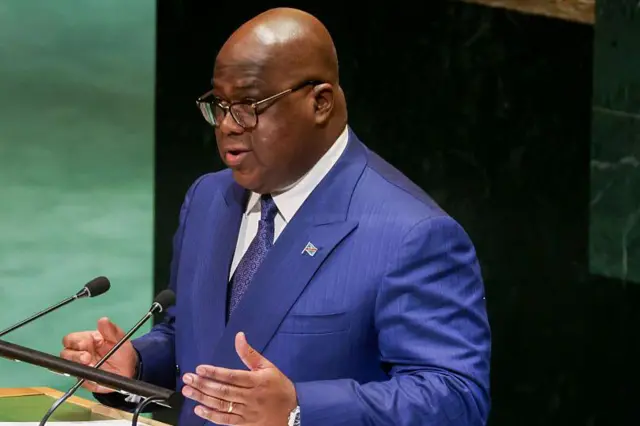
Both Congolese President Félix Tshisekedi and AFC/M23 officials, including Bertrand Bisimwa, have at various times expressed hope that a political solution can eventually replace armed confrontation. However, renewed clashes in parts of North and South Kivu continue to undermine confidence in a near-term breakthrough.
The central question therefore remains unresolved: can a war of attrition produce a decisive outcome?
Current evidence suggests that the strategy may help prevent a complete military collapse by maintaining pressure on AFC/M23 and limiting its freedom of action. However, there is little indication that it can deliver an outright victory on its own.
Without a comprehensive political settlement addressing the deeper drivers of the conflict, eastern Congo may be entering a prolonged period of military stalemate. In such a scenario, neither side achieves a decisive triumph, while civilians continue to bear the heaviest burden through displacement, insecurity, economic hardship, and recurring violence.
The ultimate test of Congo’s attrition strategy may not be whether it defeats AFC/M23, but whether it creates sufficient leverage to bring all parties to a sustainable political settlement before another generation becomes trapped in an endless cycle of war.