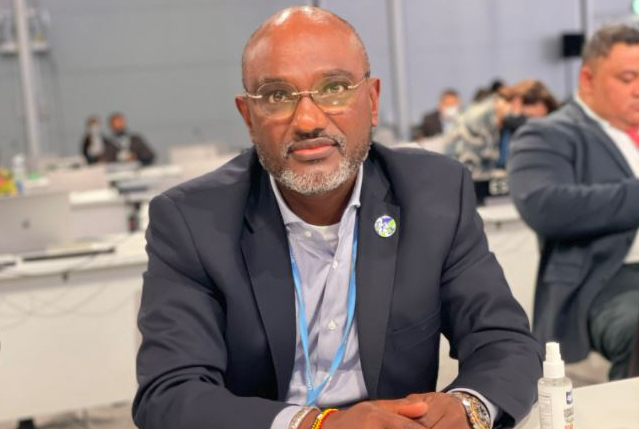
Uganda’s Ambassador to the United Nations, Dr Adonia Ayebare, has revealed that tensions between Rwanda and Uganda once escalated to a level where a direct military confrontation between the two neighboring countries became a real possibility.
Speaking during an interview on The Long Form Podcast alongside journalist Sanny Ntayombya, Ayebare offered rare insight into one of the most difficult periods in relations between Kigali and Kampala.
The senior diplomat, who previously served as Uganda’s envoy to Rwanda and as a special representative of President Yoweri Kaguta Museveni in Kigali, described how mistrust, diplomatic failures, and informal power networks pushed relations between the two governments to the brink.
Ayebare explained that part of the problem came from the attitude of some influential Ugandan officials who struggled to fully recognize Rwanda’s independent decision-making authority.
According to him, the 2019 closure of the Gatuna border forced many people in Uganda to understand that Rwanda could act decisively in defense of its own national interests, even when those decisions were unpopular in Kampala.
He argued that the crisis deepened because some actors attempted to resolve sensitive state matters through personal relationships instead of formal diplomatic institutions.
Ayebare stressed that countries cannot be governed through informal arrangements alone and warned that bypassing established diplomatic channels only fuels mistrust and anger.
The ambassador also reflected on the historical relationship between Rwandans and Ugandans, saying the tensions became emotionally complicated because the two societies share deep family, political, and historical connections.
At the height of the crisis, Ayebare admitted he feared the two countries could slide into open conflict.
He said there were moments when he lost sleep worrying that the situation could spiral out of control and reverse decades of progress for ordinary citizens on both sides of the border.
Despite the dangerous atmosphere, Ayebare maintained that neither President Paul Kagame nor President Museveni wanted war. Instead, he blamed part of the escalation on intelligence failures and misinformation that increased suspicion between the two governments.
According to Ayebare, a major turning point came when Gen Muhoozi Kainerugaba stepped into the reconciliation effort.
He described Muhoozi as someone who deeply understood the strategic importance of Rwanda-Uganda relations, including trade, regional security, and the movement of people across borders.
Ayebare said Muhoozi’s influence came not only from his role in Uganda’s military leadership, but also from his close relationship with both President Museveni and President Kagame.
He revealed that shortly after Muhoozi visited Kigali, diplomatic relations began improving rapidly, eventually leading to the reopening of the Gatuna border.
The ambassador also disclosed that security concerns surrounded Muhoozi’s trip to Rwanda, with some officials worried about possible risks given the tense political environment at the time.
However, he said Muhoozi himself remained confident because both governments trusted him as a genuine mediator.
Ayebare added that Kagame had known Muhoozi since childhood, something that strengthened personal trust during the negotiations.
He concluded by saying Muhoozi had grown increasingly uncomfortable with the deteriorating relationship between the two countries and eventually decided to take an active role in rebuilding ties.
His revelations now offer one of the clearest insider accounts yet of how Rwanda and Uganda moved from a dangerous diplomatic standoff to renewed cooperation after years of strained relations.