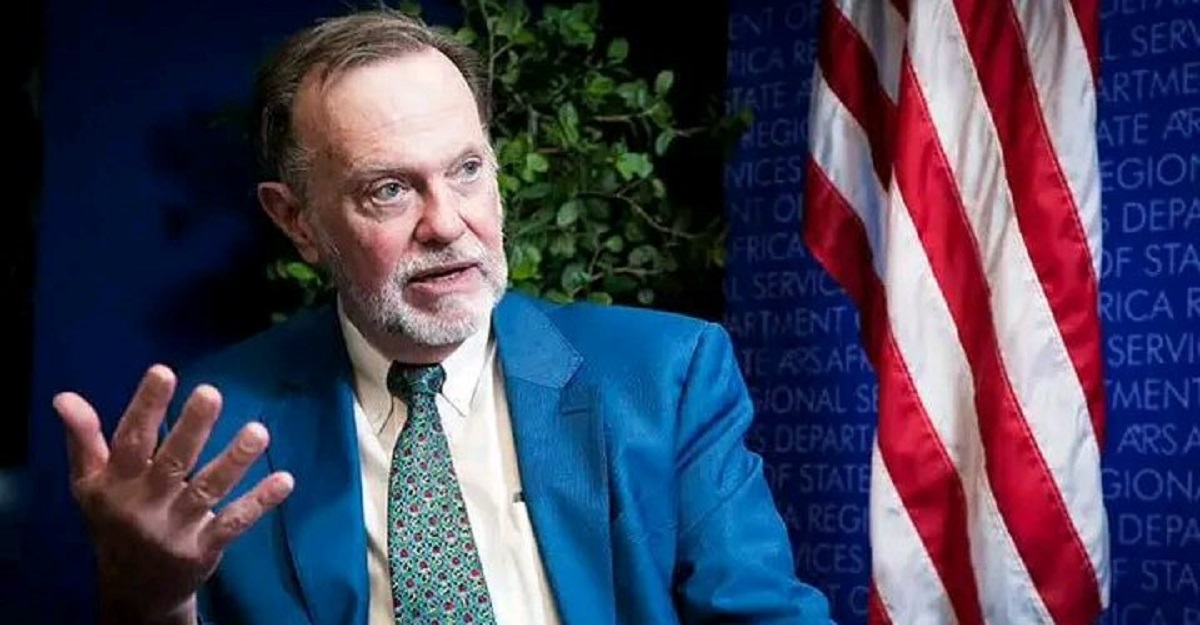
Fresh political controversy has erupted around the leadership of the Democratic Republic of Congo after former U.S. Assistant Secretary of State for African Affairs, Tibor Nagy, publicly admitted that Washington made what he described as a “serious mistake” by recognizing Félix Antoine Tshisekedi as the winner of the country’s 2018 presidential election.
Nagy made the remarks during an interview with Marius Muhunga, where he reflected on the growing pattern of political leaders across Africa attempting to remain in power beyond constitutional limits. His comments quickly sparked debate among political observers and diplomats following developments in Central Africa.
According to Tibor Nagy, Africa continues to face recurring political challenges linked to constitutional manipulation and long-term power retention by sitting presidents.
He stated: “It is very painful when history repeats itself, when we see a president trying to change the Constitution in order to remain in power.”
The statement immediately attracted international attention, especially among analysts monitoring governance and democratic stability in the Great Lakes region. Although Nagy did not directly accuse the Congolese government of formally launching constitutional reforms, many observers interpreted his comments as a warning directed at the political trajectory of President Tshisekedi’s administration.
Political analysts argue that the remarks reveal growing international concern over governance standards in the DRC, particularly regarding democracy, constitutional order, and respect for institutional limits of power.
Some experts also believe that international recognition of Tshisekedi in 2018 was largely driven by diplomatic and regional stability considerations, despite widespread allegations contesting the election results at the time. Nagy’s public expression of regret is now being viewed as a rare acknowledgment from a senior former U.S. official involved in African diplomacy.
The political debate comes as eastern Congo continues to experience worsening insecurity. North Kivu and South Kivu provinces remain engulfed in armed confrontations involving Congolese government forces, the AFC/M23 coalition, and MRDP-Twirwaneho fighters.
Residents from several affected areas say daily life has become increasingly difficult as violence spreads across communities. Many families have reportedly been displaced multiple times while fleeing clashes, while economic activities including farming and trade have slowed dramatically in several territories.
Local communities also describe worsening humanitarian conditions, with access to food, healthcare, and education becoming more difficult because of persistent insecurity.
In many parts of eastern Congo, thousands of civilians continue to abandon their homes as fighting intensifies, creating additional pressure on humanitarian organizations responding to the crisis.
The Congolese government maintains that it is working to restore peace and stability in the region, but armed confrontations continue in multiple locations. Military operations against armed groups remain active, while AFC/M23 and MRDP-Twirwaneho continue to play major roles in the ongoing conflict.
Analysts believe the deteriorating security situation in eastern Congo is placing increasing political pressure on President Tshisekedi, particularly as citizens demand long-term solutions to insecurity and economic hardship.
Tibor Nagy’s comments now add to a broader wave of international scrutiny surrounding the future of governance in the Democratic Republic of Congo. Observers say the country stands at a critical crossroads between democratic aspirations and persistent political and security challenges.
As debate over Nagy’s remarks continues to grow, pressure on President Félix Tshisekedi’s administration is expected to intensify both domestically and internationally. Many analysts believe the coming years will determine whether the DRC can strengthen democratic institutions while also finding a lasting solution to the decades-long instability in its eastern provinces.