
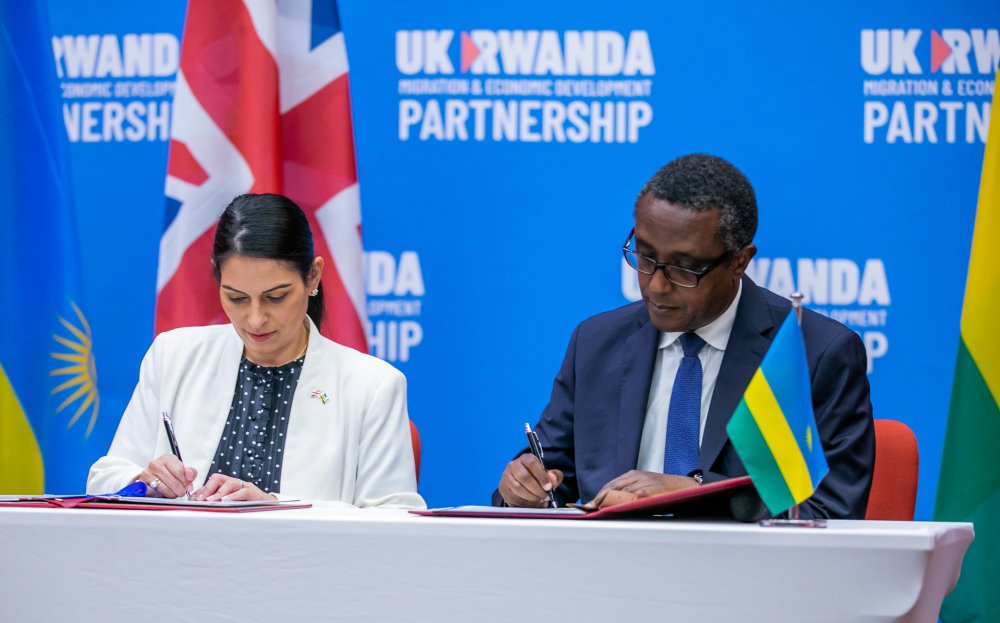
Rwanda has accepted the outcome of a high-profile international arbitration case against the United Kingdom, even as Kigali highlighted a dissenting legal opinion that challenged the tribunal’s central conclusion.
The ruling, delivered by the Permanent Court of Arbitration in The Hague, brought an end to a dispute over the controversial migration partnership that once stood at the center of British immigration policy.
A three-member tribunal chaired by former International Court of Justice President Peter Tomka concluded that the United Kingdom was not required to make the additional payments sought by Rwanda after the migration arrangement was terminated by London.
The dispute stemmed from a bilateral agreement under which certain asylum seekers who arrived in Britain through irregular routes could be transferred to Rwanda, where their asylum claims would be processed. The initiative was designed to discourage dangerous Channel crossings and disrupt human trafficking networks.
Rwanda argued that Britain remained legally obligated to make substantial payments that had been planned under the agreement’s financial framework. Kigali maintained that a change in government policy could not erase commitments that had already been established through a binding international arrangement.
The British government rejected those claims, arguing that diplomatic exchanges between the two countries in late 2024 effectively settled the issue and removed any obligation for further scheduled payments.
The tribunal sided with the United Kingdom, finding that Rwanda had agreed through diplomatic correspondence to waive claims to future installments that would otherwise have become due under the agreement.
However, the decision was not unanimous.
Egyptian arbitrator Professor Mohamed Abdel Wahab issued a separate opinion that sharply differed from the majority view. He argued that the diplomatic correspondence cited by Britain did not meet the legal threshold required to amend or override the original treaty obligations.
According to his analysis, there was no clear and mutual agreement sufficient to eliminate the UK’s financial commitments under the second year of the partnership. He therefore concluded that Rwanda remained entitled to the £50 million payment that formed a central part of the dispute.
Although his position did not alter the final ruling, it underscored the legal complexity of the case and highlighted a significant disagreement among experts interpreting international treaty law.
Responding to the judgment, Rwandan government spokesperson Yolande Makolo said Rwanda respected the tribunal’s decision and considered the matter concluded.
She stated: “We noted a different and unique opinion provided by Professor Mohamed Abdel Wahab, which demonstrates that the issues before the Court were complex and capable of legal conclusions that vary.”
Rwanda also emphasized that the dissenting opinion supported its view that the diplomatic exchanges of November 2024 did not legally modify the financial provisions originally agreed upon by both countries.
The roots of the partnership stretch back to Britain’s broader immigration reforms launched in 2021. UK authorities sought a safe third-country solution to process asylum claims outside British territory, eventually selecting Rwanda as a partner after assessing its legal framework, institutional capacity, and ability to implement the program.
Rwanda, meanwhile, consistently presented the arrangement as part of its wider strategy on refugee inclusion, economic development, and long-term integration. Officials argued that the partnership aligned with the country’s Vision 2050 agenda and built upon earlier cooperation with international refugee agencies.
The political landscape changed dramatically after the UK general election of July 2024. Prime Minister Keir Starmer’s Labour government quickly abandoned the migration plan, fulfilling a campaign promise to scrap what it considered an ineffective and costly policy.
Despite years of political controversy, legal challenges, and international attention, only four individuals ultimately relocated voluntarily to Rwanda under the scheme before it was cancelled.
With the arbitration now concluded, both countries appear ready to move forward, though the case is likely to remain a reference point in future debates about migration policy, treaty obligations, and the limits of government changes on international agreements.