A sweeping government reshuffle announced by President Paul Kagame has introduced a new generation of leaders into key state institutions while assigning several experienced public servants and retired military officers to strategic diplomatic positions abroad.
The changes, announced on June 10, 2026, affect ministries, state agencies and Rwanda’s diplomatic missions, signaling a renewed focus on performance, infrastructure development, economic transformation and international engagement.
One of the most notable appointments is that of Damien Murwanashyaka, who takes over as Minister of Infrastructure. He succeeds Dr. Jimmy Gasore and enters government service after years of leadership in Rwanda’s construction and real estate sectors.
Murwanashyaka is widely recognized as a professional civil engineer with more than fifteen years of experience managing major development projects. His career includes leadership positions at Ultimate Developers Ltd, Preferred Contractors Ltd, ROKO Construction, Real Contractors and several other engineering and construction firms.
His appointment comes at a time when infrastructure remains one of Rwanda’s most closely watched sectors, with ongoing investments in roads, energy, water systems, housing and public facilities. Expectations are high that his technical expertise and private-sector experience will help accelerate implementation of major national projects.
The Ministry of Infrastructure also received two new State Ministers. Armand Zingiro, formerly the Chief Executive Officer of the Rwanda Energy Group (REG), joins the ministry after overseeing important developments in the energy sector. He previously led the Energy Utility Corporation Limited (EUCL).
Zingiro’s departure from REG opens the way for Maximilien Byilingiro, who has been appointed as the institution’s new Chief Executive Officer.
Another newcomer to the ministry is Col. Claudien Bizimungu, who previously served as Deputy Commander of the Rwanda Defence Force’s engineering brigade. His background in large-scale infrastructure projects and reconstruction efforts is expected to strengthen implementation capacity within the ministry.
The Ministry of Trade and Industry also saw a leadership transition. Antoine Marie Kajangwe was promoted from Permanent Secretary to Minister, replacing Prudence Sebahizi. Having spent years working within the ministry, Kajangwe is considered one of the officials most familiar with Rwanda’s trade and investment agenda.
His former position as Permanent Secretary has been filled by Chantal Tuyishimire.
In the Ministry of Public Service and Labour, Judith Uwizeye returns to a role she previously held between 2014 and 2017. She replaces Christine Nkulikiyinka, who has been assigned diplomatic duties abroad.
Uwizeye brings extensive experience in public administration, governance and law. She previously served as Minister in the Office of the President and has also worked in academia and international legal studies.
Beyond cabinet appointments, the reshuffle also introduced significant diplomatic changes.
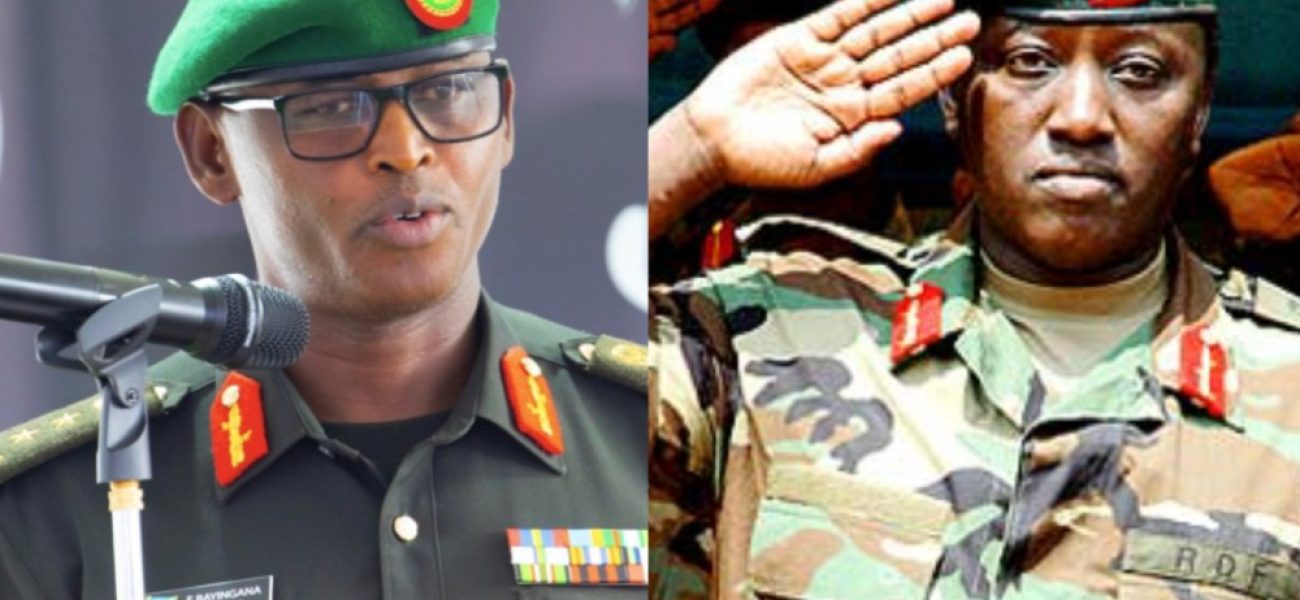
Retired Lieutenant General Karenzi Karake has been appointed Rwanda’s Ambassador to China. A prominent figure in Rwanda’s liberation struggle, Karake previously served as Deputy Chief of Defence Staff and Director General of national intelligence and security institutions.
Major General Emmanuel Bayingana has been named Rwanda’s Ambassador to Israel. Throughout his military career, he held several senior positions, including leadership responsibilities in military education and the Air Force.
Retired Colonel Jeannot Ruhunga, best known for serving as Secretary General of the Rwanda Investigation Bureau (RIB), has been appointed Ambassador to Poland.
Meanwhile, Christine Nkulikiyinka will represent Rwanda in Spain, returning to diplomatic service after previous assignments in Europe.
The reshuffle also touched major public institutions. Louise Kanyonga was appointed Chief Executive Officer of Zigama CSS, while Michelle Umurungi became Deputy Chief Executive Officer in charge of Investments at Rwanda’s Social Security Board (RSSB).
Political observers view the changes as part of a broader effort to inject new energy into government institutions while strategically deploying experienced leaders where their expertise can generate the greatest impact. The appointments reflect a balance between continuity, institutional memory and the introduction of fresh perspectives in sectors considered critical to Rwanda’s long-term development ambitions.