As Burundi’s President Évariste Ndayishimiye arrived in Kinshasa for a two-day state visit, the official message from both governments centered on cooperation, regional security, public health, and bilateral relations. Yet behind the diplomatic language, analysts believe the meeting reflects a deeper reality: the growing military partnership between Burundi and the Democratic Republic of Congo.
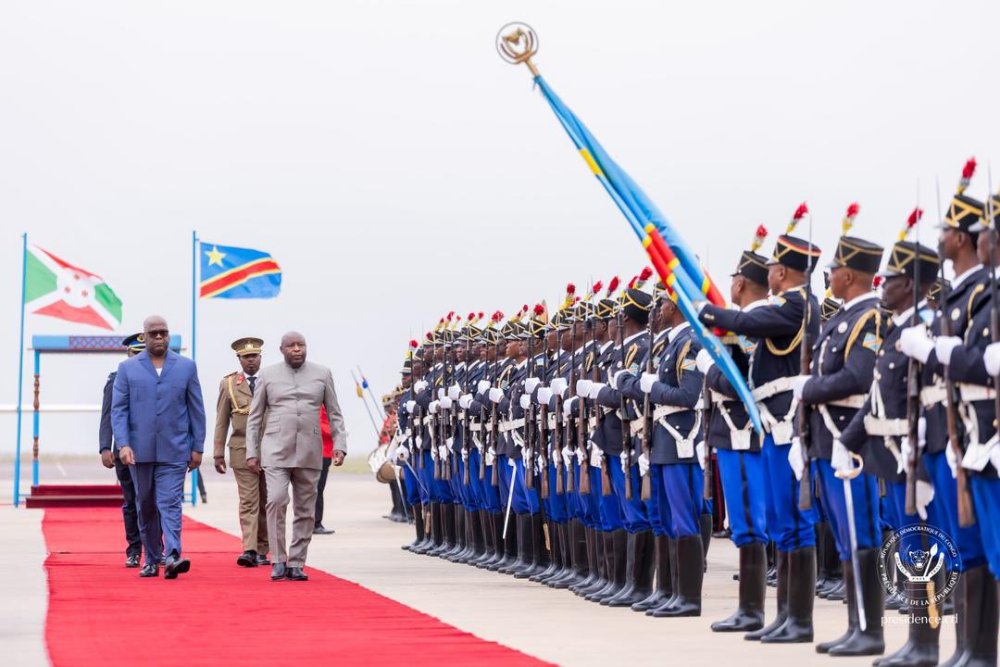
Ndayishimiye landed in the Congolese capital on June 22, 2026, accompanied by First Lady Angeline Ndayishimiye. In a highly symbolic gesture, President Félix Tshisekedi personally welcomed him at N’djili International Airport, where military honors were rendered and the national anthems of both countries were played.
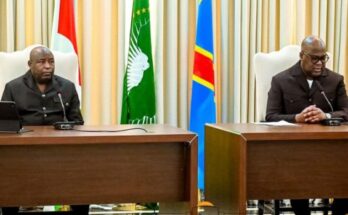
The two leaders later held closed-door talks at the Cité de l’Union Africaine. Official statements pointed to discussions on security challenges in eastern Congo, regional cooperation, Ebola prevention, and broader issues affecting the Great Lakes region. However, observers argue that the most important topic was the ongoing war in eastern DRC.
Since relations between Rwanda and the DRC sharply deteriorated in 2022, Kinshasa and Gitega have steadily strengthened their ties. The relationship has been marked not by major economic projects or infrastructure development, but by increasing military cooperation.
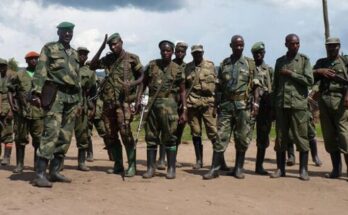
Burundian troops have become one of the key pillars supporting the Congolese government’s military operations against AFC/M23 and MRDP-Twirwaneho. Their deployment has expanded over the years, first in South Kivu and later in other conflict zones where Kinshasa sought additional military support.
Political analysts note that the partnership emerged after President Tshisekedi became frustrated with the East African Community regional force, which focused on ceasefire monitoring and conflict de-escalation rather than directly fighting M23. Seeking allies willing to engage militarily, Kinshasa found a willing partner in Burundi.
The visit comes at a particularly sensitive moment as intense fighting continues around Minembwe in South Kivu. During June, pro-government forces announced gains in several villages surrounding the area and intensified military operations using heavy weapons, drones, and aircraft.
On June 15, government-aligned sources claimed that Minembwe had fallen under state control. MRDP-Twirwaneho rejected the claim, insisting that it remained in control of the area. Days later, FARDC spokesperson Lt. Reagan Mbuyi Kalonji stated that government troops had captured the villages of Ilundu, Kitavi, and Bidegu and were advancing toward Minembwe’s airstrip.
Reports also emerged suggesting that an L-39 military aircraft allegedly used by pro-government forces may have been shot down during the fighting, underscoring the increasingly sophisticated nature of the conflict.
Military operations intensified further on June 18 and 19, with reports indicating that four TB2 drones were deployed against positions in and around Minembwe. Despite these operations, Twirwaneho maintained that the town remained under its control.
Another major issue surrounding the conflict is the alleged involvement of FDLR alongside government-aligned forces, including FARDC, Burundian troops, and Wazalendo fighters. Rwanda has repeatedly argued that the continued presence and activities of FDLR remain a serious security concern.
Kigali views FDLR not simply as another armed group but as an organization rooted in elements linked to the perpetrators of the 1994 Genocide against the Tutsi. Rwandan authorities argue that any military collaboration involving the group threatens long-term regional stability.
President Paul Kagame has previously stated that lasting peace in eastern Congo cannot be achieved while FDLR remains active and operational near Rwanda’s borders.
For his part, President Ndayishimiye has publicly defended Burundi’s military presence in Congo. In an interview with Jeune Afrique, he argued that instability in eastern DRC directly affects Burundi’s national security.
Referring to the proximity of M23 forces to Burundi’s borders, he said: “As long as M23 fighters remain close to our border, it will remain a concern, and we must stay vigilant.”
He later made remarks that sparked debate across the region, stating: “We are not in the DRC to defend Burundi; we are there to support the Congolese army in its fight against its enemy.”
Ndayishimiye further explained that Burundian troops had been placed “under the command of FARDC” and that Congolese authorities determine where they are deployed.
Asked when those troops would leave Congo, he replied: “It is the Congolese government that must decide. If it concludes that their presence is no longer necessary, Burundi will bring its soldiers home.”
Those comments have fueled discussions about the extent of Burundi’s involvement in the conflict. Supporters view the deployment as a legitimate security partnership between neighboring states, while critics argue that it reflects a deeper military commitment to Kinshasa’s war effort.
Beyond the battlefield, many regional observers believe the Tshisekedi-Ndayishimiye alliance is increasingly defined by shared security priorities rather than economic integration or development goals. For Kinshasa, Burundi represents one of its most dependable military partners. For Gitega, involvement in eastern Congo is presented as a strategy to prevent instability from spilling across its borders.
As fighting continues in Minembwe and tensions remain high across eastern DRC, the outcome of this latest meeting between Tshisekedi and Ndayishimiye could influence both the military balance on the ground and the future political landscape of the Great Lakes region.