Mozambique President Daniel Francisco Chapo has expressed confidence that Rwanda’s military mission in Cabo Delgado will continue as his government agreed to financially support the deployment amid growing uncertainty surrounding European Union funding.
The development follows high-level discussions between Kigali and Maputo after the European Union signaled that it may no longer continue direct financial assistance for Rwanda’s counterterrorism mission in northern Mozambique.
On May 19, 2026, Rwanda’s Minister of Foreign Affairs, Olivier Nduhungirehe, announced that Rwanda and Mozambique had reached an understanding that would allow the mission to continue without depending on external political pressure.
According to Nduhungirehe, Rwanda decided to engage directly with Mozambique after observing what Kigali described as increasing politicization of European support for the Cabo Delgado operation.
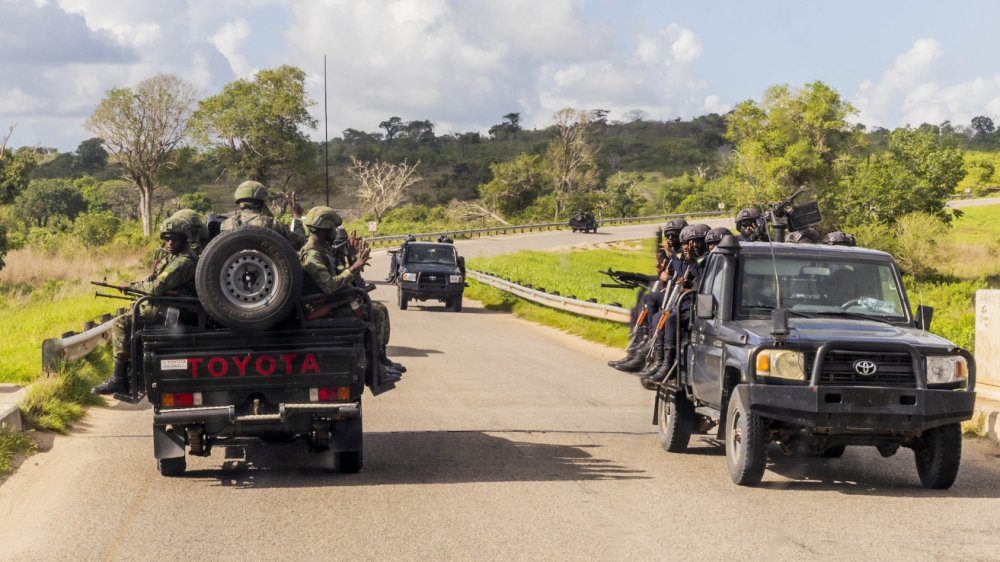
He said Rwanda’s deployment, which began in July 2021 at the request of Mozambique, has produced visible results over the past five years.
“Peace and stability returned, families went back to their homes, children resumed school, businesses reopened, Mozambique’s army received training, and American and European companies were able to safely resume their $50 billion gas investments,” he stated.
The minister also emphasized that European Peace Facility funding represented only a small portion of the overall operational costs covered by Rwanda in Cabo Delgado.
He accused some European countries of turning Rwanda’s security contribution into a political issue despite the mission’s achievements on the ground.
“Unfortunately, we noticed that Rwanda’s requests to the EU were treated with hesitation and politicized by some member states, including two former colonial powers,” he said.
Nduhungirehe added that Rwanda therefore chose to prioritize direct cooperation with Mozambique, which has now committed to continue supporting the Rwandan security forces operating in Cabo Delgado.
Before the latest agreement, Rwanda had warned that it could withdraw its troops if the mission continued to face financial uncertainty, sanctions, or persistent criticism despite its role in restoring stability.
The debate intensified after EU Ambassador to Mozambique Antonino Maggiore indicated that Brussels was considering shifting its focus toward training Mozambique’s national army rather than directly financing Rwanda’s deployment.
“We are currently in discussions because the mission has now lasted four years, and the question is how it could be extended,” Maggiore said, adding that any decision would have to be approved by all 27 EU member states.
When asked whether the EU would continue funding Rwanda’s mission, he replied: “For now, no.”
President Chapo had earlier addressed the uncertainty surrounding the operation during remarks made on March 18, 2026.
“Every mission has a beginning and an end, but since this one has not ended yet, operations are continuing as planned while we await decisions from the concerned parties,” Chapo said.
He also suggested that both Rwanda and the European Union could still decide to extend their involvement in the mission.
Meanwhile, EU Commission spokesperson for foreign affairs and security policy Anouar El Anouni confirmed that discussions with Mozambique are ongoing regarding future mechanisms for supporting peace and security efforts in Cabo Delgado.
Since Rwanda’s deployment in 2021, the security situation in Cabo Delgado has significantly improved. Several insurgent strongholds linked to the extremist group Ansar al-Sunnah were dismantled, displaced civilians returned home, and economic activities gradually resumed.
The province remains strategically important for Mozambique because of its massive natural gas projects, which require long-term stability and security to operate successfully.
Political and security analysts argue that Rwanda’s intervention played a decisive role in stabilizing the region, although they caution that the fight against terrorism in Cabo Delgado is far from over.