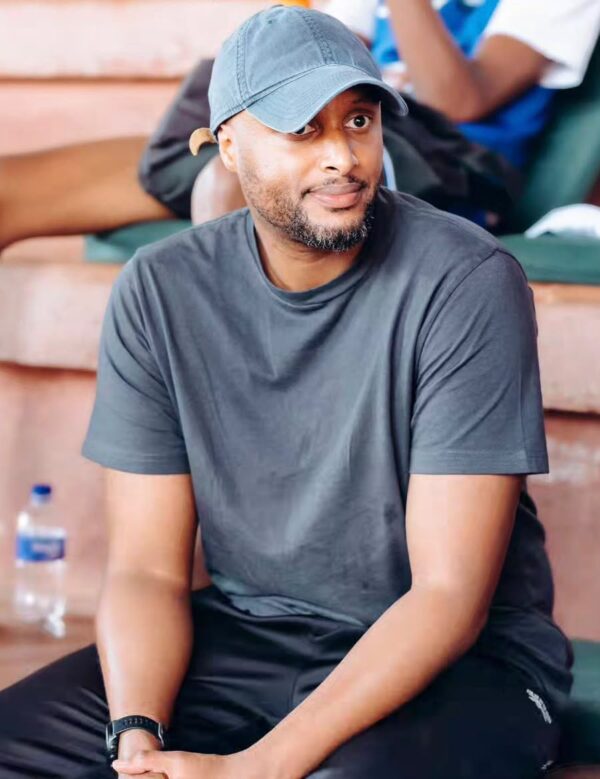
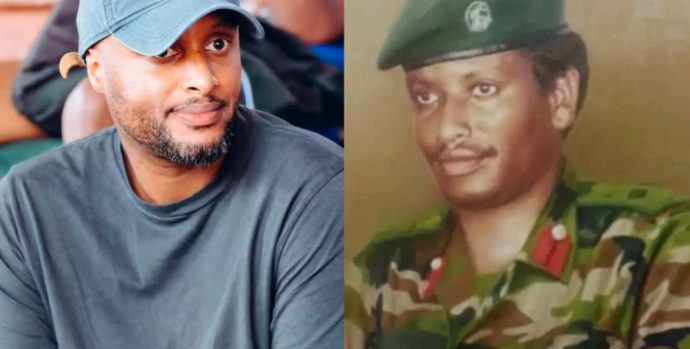
Eric Gisa Rwigema, the son of the late Maj. Gen. Fred Gisa Rwigema, one of the most prominent figures in Rwanda’s liberation struggle, has made a rare public appearance in Kigali, drawing attention from many Rwandans who have seldom seen him at public events in the country.
He was spotted on Friday, June 27, during a basketball memorial event held at Zaria Court in Remera in honor of Kenrik Kabano, a former youth national basketball player.
The event was organized months after the tragic deaths of Kenrik Kabano and his mother, Rosine Kabano, who lost their lives in a car accident in Texas, United States, in April this year.
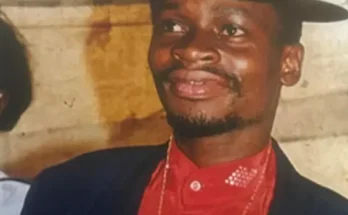
For many attendees, Eric’s presence was notable because he has largely lived outside Rwanda for most of his life, spending significant periods in the United States and Uganda. His father, Maj. Gen. Fred Gisa Rwigema, played a historic role in military struggles that shaped both Uganda and Rwanda.
Although Eric Gisa Rwigema has maintained a relatively low public profile, his family name remains deeply connected to Rwanda’s modern history through the legacy of his father, who is widely remembered as a key figure in the liberation movement.
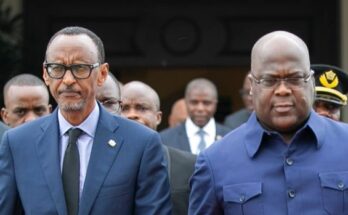
His appearance in Kigali also revived public discussion about remarks made by President Paul Kagame during a family wedding in November 2021. Speaking at the wedding of Teta Gisa Rwigema, Eric’s sister, Kagame publicly expressed disappointment that Eric was not present.
The President said: “Teta, I am sending you, I am sending Jeannette [Rwigema], and I am also sending your grandmother. I did not see Gisa’s son here. Tell him he should have been here. He should be in the country, the country his father and all of us fought for and eventually secured.”
Kagame went further, saying he did not want Fred Rwigema’s son living outside Rwanda or being considered a refugee.
He stated: “I do not want Fred’s son to remain outside the country or become a refugee seeking foreign documents.”
The President also praised Teta Gisa Rwigema for maintaining ties with Rwanda despite spending years abroad for education and other opportunities.
He emphasized that Eric should be able to live in Rwanda and freely travel in and out of the country without seeking refuge elsewhere.
“His place should be in Rwanda, or at least he should always have the freedom to leave and return without looking for asylum abroad,” Kagame said.
He also criticized situations in which Eric reportedly visited neighboring countries without entering Rwanda.
“It is not right for him to come to neighboring countries and then leave without coming to Rwanda. That should not happen,” Kagame added.
Those remarks generated widespread discussion at the time because they reflected Kagame’s desire to see the children of liberation heroes maintain a strong connection with the nation their parents helped build.
Eric’s latest appearance in Kigali has once again sparked conversations about his relationship with Rwanda and whether he may become more visible in public life in the future.
Although he did not make any public remarks during the memorial basketball event, his participation demonstrated solidarity with the Kabano family and with Rwanda’s youth sports community.
As the legacy of Maj. Gen. Fred Gisa Rwigema continues to occupy a special place in Rwanda’s history, Eric Gisa Rwigema’s presence in Kigali has renewed public interest in his future role and connection to the country his father fought to liberate.