A new legal battle between the Democratic Republic of Congo and Rwanda has brought one of Africa’s longest-running regional disputes before the International Court of Justice (ICJ), setting the stage for another major diplomatic confrontation between the neighboring countries.
On June 26, 2026, the Congolese government formally submitted a case to the UN’s highest court, accusing Rwanda of committing serious violations of international law over the past three decades.
According to the filing, Rwanda allegedly deployed troops on Congolese territory and violated several international conventions, including agreements related to the prevention of genocide, the prohibition of torture, anti-discrimination measures, and the protection of women.
The complaint was presented by Congo’s Minister of Justice and Attorney General, Guillaume Ngefa, who asked the court to officially recognize Rwanda’s alleged responsibility for crimes that include killings, abuses against civilians, and the exploitation of Congo’s natural resources.
The move immediately triggered a strong reaction from Kigali, which dismissed the accusations and described the case as politically motivated.
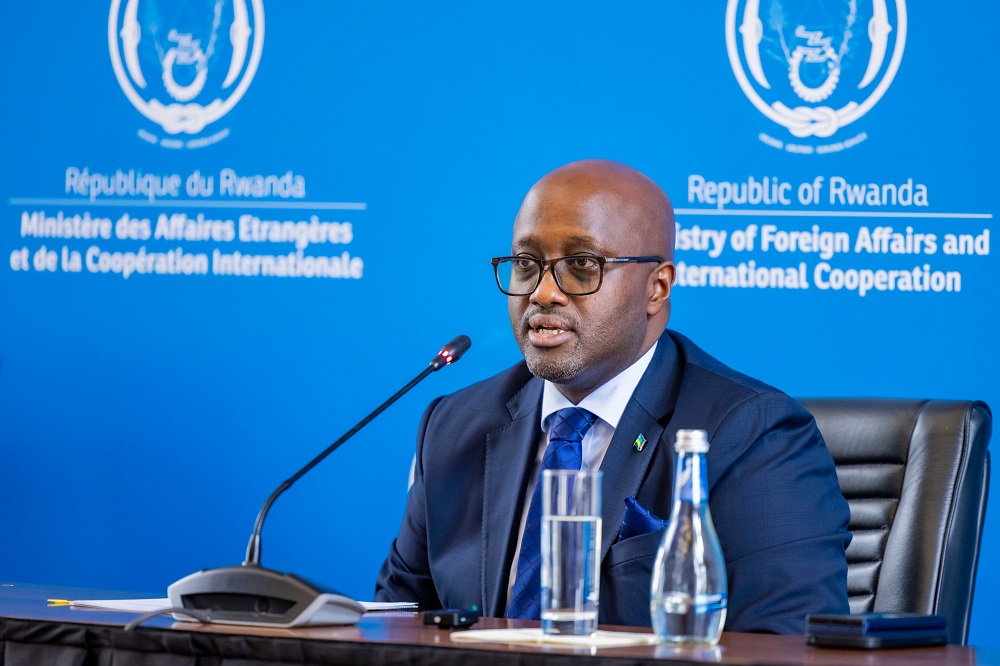
Speaking on June 29, 2026, during an interview with France 24 journalist Marc Perlman, Rwanda’s Minister of Foreign Affairs and International Cooperation, Ambassador Olivier Nduhungirehe, argued that the lawsuit was intended to shift attention away from what Rwanda considers the Congolese government’s collaboration with the Democratic Forces for the Liberation of Rwanda (FDLR).
According to Nduhungirehe, the real issue is not Rwanda’s conduct but the continued presence and influence of a group that Kigali identifies as being linked to perpetrators of the 1994 Genocide against the Tutsi.
He stated: “It is a political maneuver by the DRC, which is collaborating with a genocidal group known as the FDLR. It is President Tshisekedi and his government. The first question is: who is working with a genocidal organization? Clearly, it is the government of the DRC.”
His comments reflected Rwanda’s long-standing position that the FDLR remains one of the most significant security threats in the Great Lakes region and that Kinshasa has failed to decisively address the issue.
Nduhungirehe also pointed to the situation facing Congolese Tutsi communities, particularly the Banyamulenge population living in South Kivu.
He accused Congolese government forces of carrying out attacks against Banyamulenge communities in Minembwe, an area connecting the territories of Fizi, Uvira, and Mwenga. He further alleged that other Congolese Tutsi communities have been targeted because of their ethnic identity.
The minister linked these concerns to what Rwanda views as growing ethnic hostility and discriminatory rhetoric inside the DRC.
Referring to former Congolese military spokesperson Sylvain Ekenge, he said: “These are people connected to President Tshisekedi, including former army spokesperson Sylvain Ekenge. So who is collaborating with armed groups such as Wazalendo and bringing in mercenaries?”
The controversy surrounding Ekenge resurfaced after Nduhungirehe’s remarks. Late last year, Ekenge attracted criticism following comments broadcast on state television RTNC, where he warned Congolese citizens against marrying Tutsi women, claiming they did not have children with people from other ethnic groups.
The remarks sparked widespread condemnation from human rights advocates and several international partners of the DRC. Belgium was among the countries that urged Congolese authorities to take disciplinary action.
Under mounting pressure, Ekenge was subsequently suspended from his duties pending further decisions.
Rwanda argues that a government accused of tolerating ethnic discrimination and violence against its own citizens lacks the moral authority to accuse another country of genocide-related crimes.
Nduhungirehe maintained that international institutions with the mandate to examine the evidence should be allowed to conduct a thorough review before reaching conclusions.