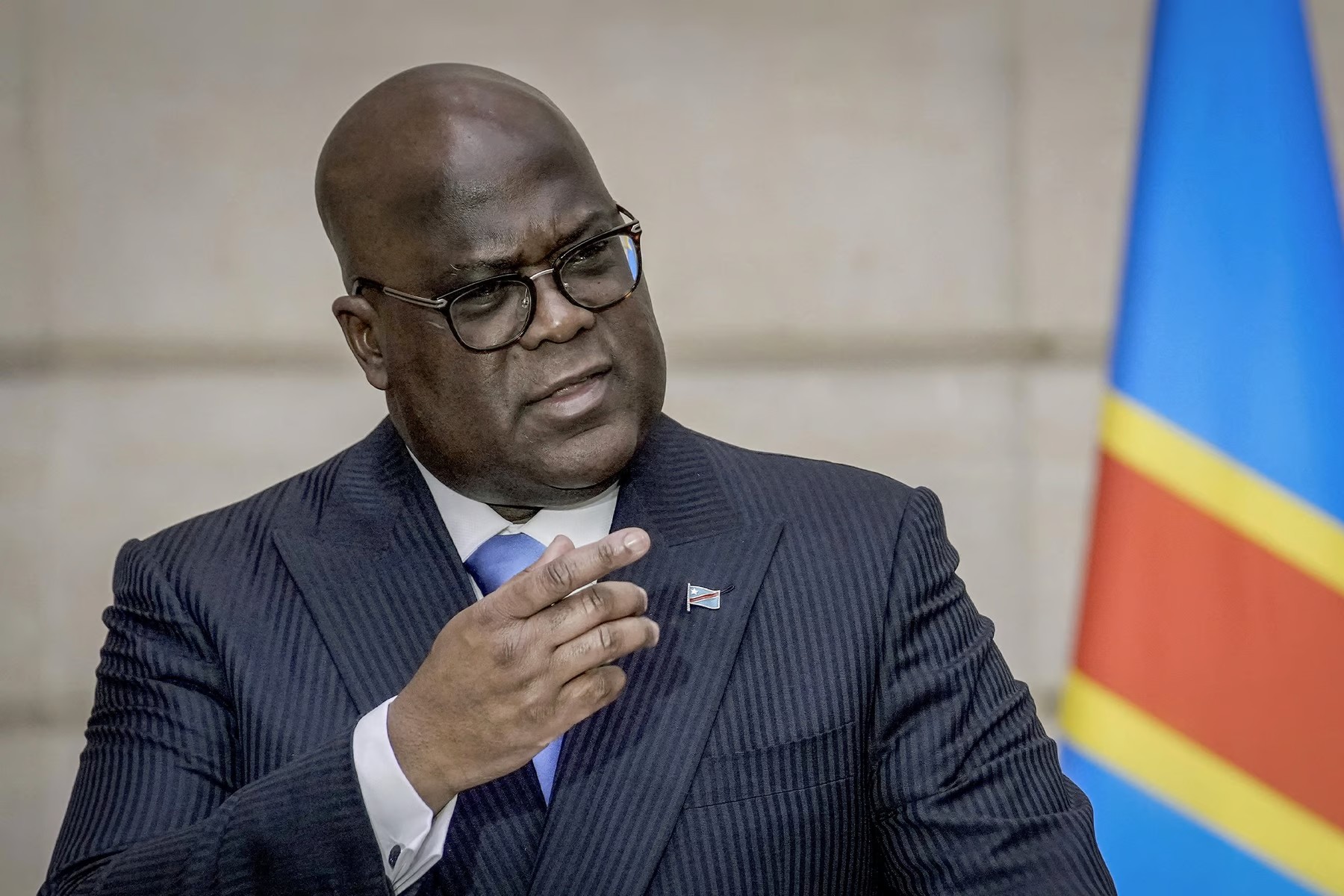
Political tensions are rising in the Democratic Republic of Congo after the opposition coalition known as C64 announced plans to take President Félix Tshisekedi to court while also organizing public demonstrations aimed at defending what it describes as the country’s constitutional order.
The announcement marks a new phase in the confrontation between the government and opposition figures, who argue that the nation is moving toward a dangerous political crossroads. At the center of the dispute are allegations that constitutional principles and democratic safeguards are being weakened.
Delly Sesanga, one of the leading figures within the coalition, revealed that C64 intends to file a formal legal complaint on June 9, 2026. The complaint will target President Tshisekedi as well as individuals the coalition considers to be collaborators in actions that allegedly undermine the constitutional framework of the state.
According to the coalition, evidence has been gathered suggesting attempts to alter, weaken, or bypass mechanisms established under the Constitution. Opposition leaders argue that such actions represent a serious threat to democratic governance and, in their view, could amount to a violation of the nation’s fundamental legal order.
Sesanga insisted that the President must be held accountable for his constitutional responsibilities, particularly his oath to protect and uphold the Constitution. He argued that the country’s highest office carries a special obligation to safeguard democratic institutions and respect the rule of law.
Beyond the planned court action, C64 has also announced a major protest scheduled for June 12, 2026, outside the National Assembly building in Kinshasa. Organizers say the demonstration is intended to demand respect for constitutional principles and reinforce democratic values.
Opposition leaders describe the planned protest as a peaceful expression of public concern over the country’s political direction. They believe it will provide citizens with an opportunity to voice dissatisfaction and call for reforms in governance and accountability.
The developments come at a sensitive time for the Democratic Republic of Congo. The country continues to face security challenges in its eastern regions while political debates over governance, institutional reforms, and national leadership remain highly contentious.
Political observers warn that the opposition’s latest moves could further intensify tensions between government officials and their critics. Many analysts believe that constitutional issues are becoming increasingly central to the national political debate, especially as citizens seek solutions to broader security and economic challenges.
For now, President Tshisekedi’s administration has not issued a formal public response to the accusations raised by C64. Government representatives have consistently maintained that their actions are carried out within the framework of the law and are intended to serve the broader interests of the Congolese people.
Attention is now focused on the upcoming dates of June 9 and June 12. The legal complaint and planned demonstrations could become significant political moments, potentially shaping the next chapter of the relationship between the government and the opposition.
As the situation unfolds, many Congolese citizens are hoping that political disagreements will be addressed through lawful and democratic channels, preserving stability while allowing institutions to function independently and effectively.