Tensions between the government of the Democratic Republic of Congo and the AFC/M23 coalition have escalated after the Ebola outbreak in eastern Congo became the center of a growing political confrontation.
The dispute intensified following comments by government spokesperson Patrick Muyaya, who linked efforts to contain Ebola in Goma to the removal of what he described as “Rwandans and their auxiliaries” from Congolese territory.
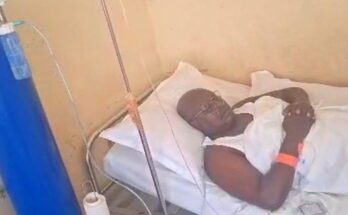
The remarks came as the Ebola outbreak continues to spread in the eastern province of Ituri, where Congolese health authorities reported that at least 131 people had died among more than 510 suspected cases recorded in Bunia by May 18, 2026.
At the same time, AFC/M23 officials stated that only one confirmed Ebola case had so far been identified in Goma based on 27 laboratory tests conducted in the city’s national laboratory facilities.
Speaking during a press conference on May 19, Patrick Muyaya argued that effectively containing Ebola in Goma required the departure of “Rwandans and their auxiliaries,” language often used by Kinshasa to accuse Rwanda of backing AFC/M23 forces controlling large parts of eastern Congo, including Goma.
The Rwandan government has repeatedly denied involvement in the conflict, insisting that the Congolese crisis is an internal matter that should be resolved through dialogue among Congolese actors.
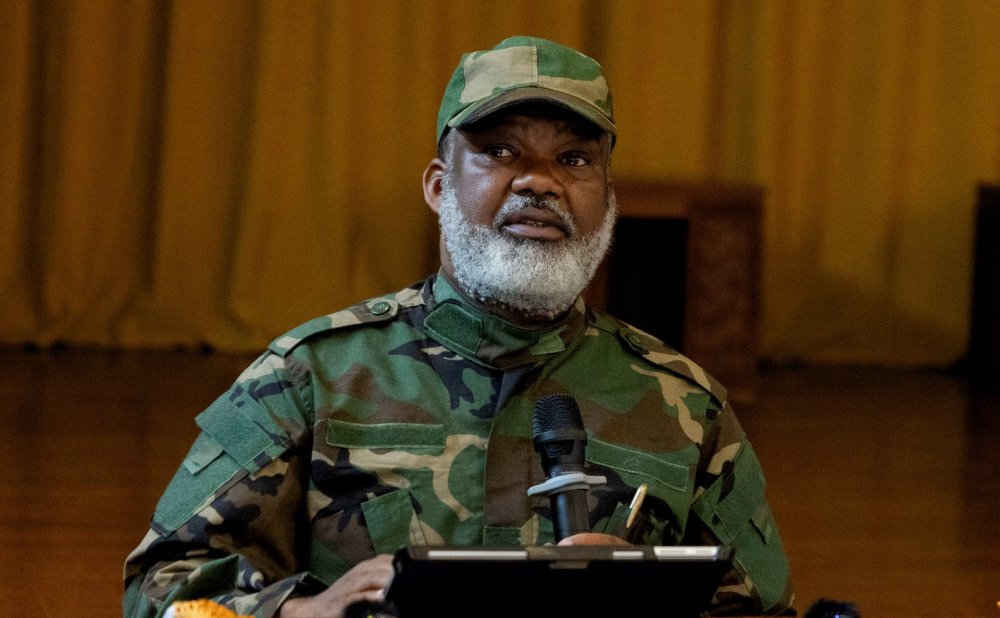
In response to Muyaya’s statements, AFC/M23 leader Corneille Nangaa accused the Congolese government of exploiting a public health emergency for political and military purposes.
“An epidemic should never be turned into a political issue,” Nangaa said. “Disease does not recognize borders, frontlines, or political affiliations. Today it is in Goma and Bunia, tomorrow it could reach Uvira, Kalemie, Kinshasa, or any other part of the country if urgent and coordinated measures are not taken.”
Nangaa further criticized Kinshasa for allegedly failing to adequately support the National Institute for Biomedical Research (INRB), which plays a central role in Ebola testing and surveillance efforts.
According to the AFC/M23 leader, the Congolese population should not become “victims of political calculations” linked to efforts to regain control over territories lost to the coalition.
“AFC/M23 warns the Kinshasa government against using the current health crisis as a pretext for continuing military operations and attacks against civilians living in Goma and neighboring areas,” he declared. “The coalition will not tolerate any attempt to exploit a public health issue for security, military, or political interests.”
Nangaa also called on the Congolese authorities to stop what he described as propaganda campaigns and focus instead on cooperation aimed at preventing the virus from spreading further.
Health experts and regional observers have warned that politicizing Ebola could undermine public trust in health institutions and complicate response efforts in a country that has already faced multiple deadly Ebola outbreaks over the past decade.
Eastern Congo has long struggled with insecurity, armed conflict, and weak healthcare infrastructure, factors that have repeatedly hampered containment efforts during previous epidemics.
With fears growing that Ebola could spread beyond Bunia and Goma into larger urban centers such as Bukavu, Uvira, Kalemie, and even Kinshasa, pressure is mounting on all sides to prioritize public health cooperation over political confrontation.