
Rwanda has temporarily shut down major border crossings with the Democratic Republic of Congo after a growing Ebola outbreak in eastern Congo and neighboring Uganda raised alarm across the region and beyond.
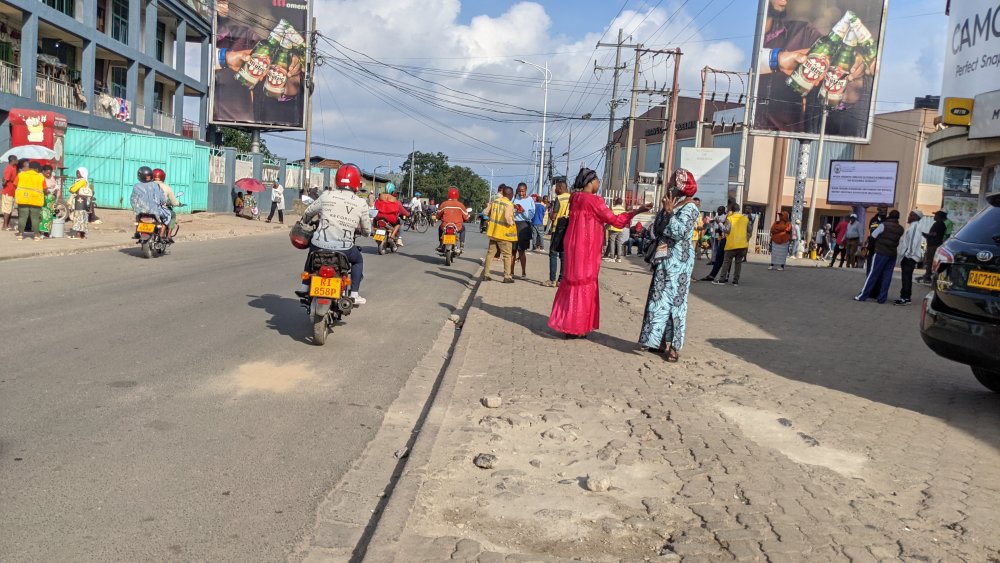
The decision came into effect on Sunday morning, May 17, 2026, targeting some of the busiest crossing points linking the Congolese city of Goma with Rwanda’s border city of Gisenyi. Authorities said the move was intended to prevent the deadly virus from spreading into Rwanda.
Mulindwa Prosper, the Mayor of Rubavu District, confirmed the suspension of border activities and said the closures would remain in place for an unspecified period while health officials monitor the situation.
He stated: “The border crossings connecting Goma and Gisenyi have been temporarily closed as part of efforts to respond to the Ebola outbreak. We will continue engaging residents to explain why these measures were taken.”
He also urged residents to remain patient, stressing that protecting public health must take priority.
Rwandan health authorities have continued screening travelers arriving from DR Congo while Congolese nationals returning home are still being allowed to cross under strict health surveillance measures.
The restrictions affect Petite Barrière, Grande Barrière, and the Kabuhanga border post, while crossings between Rusizi and Bukavu remain open for now.
The sudden closure has caused concern among thousands of small-scale traders who depend on daily cross-border commerce between Goma and Gisenyi for their livelihoods.
Uwizeyimana Afissa said traders only discovered the closure after arriving at the border early in the morning.
“We arrived ready to send our goods across the border only to find it closed because of the Ebola outbreak in the neighboring country,” she explained.
She called on authorities to establish controlled trading arrangements that would allow limited movement of goods while maintaining strict health protections.
Another veteran cross-border trader, Mukeshimana Emeritha, who has spent two decades in the business, said traders were ready to comply with all government directives but appealed for solutions to protect perishable goods from being lost.
The border restrictions follow reports that a new Ebola case was identified in Ituri Province in eastern DR Congo late this week. On Saturday, Africa’s disease control agency announced that confirmed infections had reached 336 while the death toll stood at 87.
Uganda also confirmed its first Ebola patient, who later died in a hospital in Kampala, bringing the total number of deaths linked to the outbreak to 88. A second case has since been detected in the country.
Officials said all infected individuals in Uganda had recently traveled from DR Congo, increasing fears that the outbreak could rapidly spread across East and Central Africa.
The virus involved in the current outbreak is known as the Bundibugyo strain of Ebola, first identified in Uganda between 2007 and 2008, when it infected 149 people and killed 37. Another outbreak later emerged in Isiro, DR Congo, in 2012, infecting 57 people and claiming 29 lives.
World Health Organization has described the resurgence of Ebola in DR Congo and Uganda as a matter of international concern, calling for urgent cooperation and increased funding to contain the disease.
WHO Director-General Tedros Adhanom Ghebreyesus emphasized the need for coordinated international action but also cautioned countries against relying solely on border closures as the main response strategy.
Despite those recommendations, Rwanda appears determined to prioritize preventive measures as fears grow that the outbreak could spread further across the Great Lakes region.