
Authorities in eastern Democratic Republic of Congo have stepped up emergency health measures after Rwanda temporarily closed three major border crossings over fears linked to the growing Ebola outbreak spreading across the region.
Somo Kakule Evariste, the military governor of North Kivu appointed by the Kinshasa government, announced a series of strict preventive directives aimed at stopping the virus from entering and spreading within the province.
The measures come after Ebola cases resurfaced in neighboring Ituri Province, which has already been placed under heightened surveillance and containment procedures.
Addressing residents, Gen. Major Somo Kakule Evariste urged the public to exercise extreme caution in daily activities and avoid unnecessary physical contact with unfamiliar objects or unsafe food sources.
He said: “Residents must avoid touching unknown objects, avoid eating food from uncontrolled locations, and increase hygiene practices by using soap, clean water, and approved sanitation products.”
The governor also encouraged residents to immediately report anyone showing possible Ebola symptoms so that health teams could respond quickly before the disease spreads further.
“We ask residents to quickly report any person showing symptoms associated with Ebola in order to prevent the virus from entering North Kivu,” he stated.
Authorities also released a dedicated emergency telephone line for reporting suspected Ebola cases, while urging the public to remain calm despite growing fears fueled by regional developments.
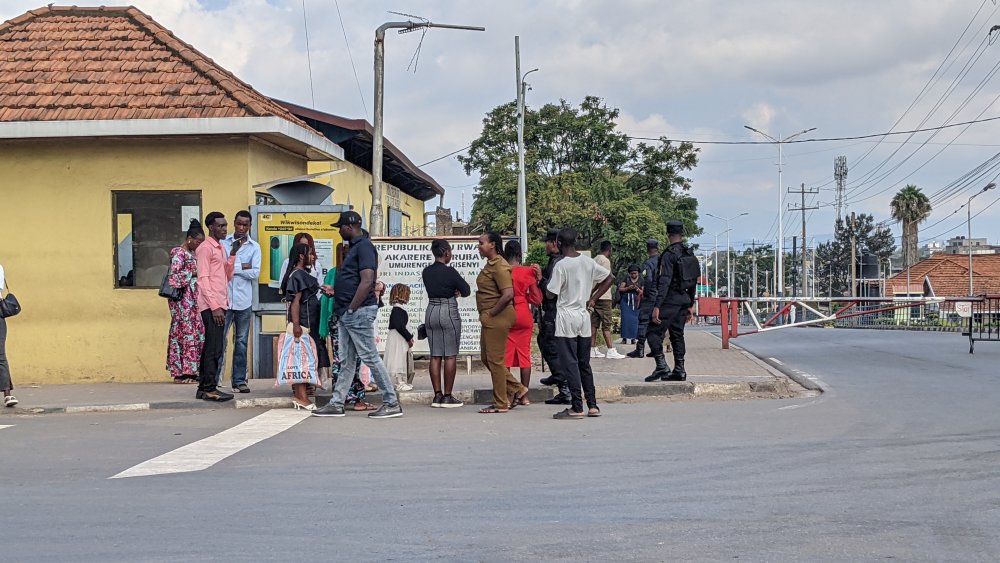
The announcement came shortly after Rwanda decided to suspend activities at Petite Barrière, Grande Barrière, and Kabuhanga border posts connecting Goma and Gisenyi.
Mulindwa Prosper confirmed that the crossings were closed temporarily as part of efforts to protect Rwanda from the escalating outbreak in DR Congo and Uganda.
“The border crossings linking Goma and Gisenyi have been temporarily closed as part of Ebola response measures,” he explained.
The closure immediately disrupted cross-border trade between Rwanda and DR Congo, affecting thousands of small traders who depend on daily commercial exchanges.
Uwizeyimana Afissa said traders arrived early in the morning only to discover that operations had been suspended.
“We came to work expecting to send goods across the border but found it closed because of the Ebola outbreak in the neighboring country,” she said.
Another trader, Mukeshimana Emeritha, said business operators were willing to comply with health directives but appealed for special arrangements to protect perishable goods from heavy losses.
Regional concern has intensified after a new Ebola case was confirmed in Ituri Province. Africa’s disease control agency reported that infections had climbed to 336 while 87 deaths had already been recorded.
Uganda later confirmed its first Ebola case, whose patient died in a hospital in Kampala. A second infection was later identified, with both patients reportedly having recently traveled from DR Congo.
World Health Organization has described the re-emergence of Ebola in DR Congo and Uganda as a serious international concern requiring coordinated action from governments and health agencies.
WHO Director-General Tedros Adhanom Ghebreyesus emphasized that countries should strengthen cooperation and invest more resources into fighting the outbreak, while cautioning against relying solely on border closures as the primary response strategy.
Even so, governments across the Great Lakes region are continuing to tighten preventive measures as fears grow that the outbreak could expand further into neighboring countries.