President Donald Trump has renewed his claim that his administration helped end the long-running tensions between Rwanda and the Democratic Republic of Congo, even as armed clashes continue in eastern Congo and key provisions of the Washington peace agreement remain disputed.
Speaking to reporters aboard Air Force One after a NATO summit, Trump listed what he described as eight conflicts he had helped bring to an end, including the dispute involving Rwanda and the DRC.
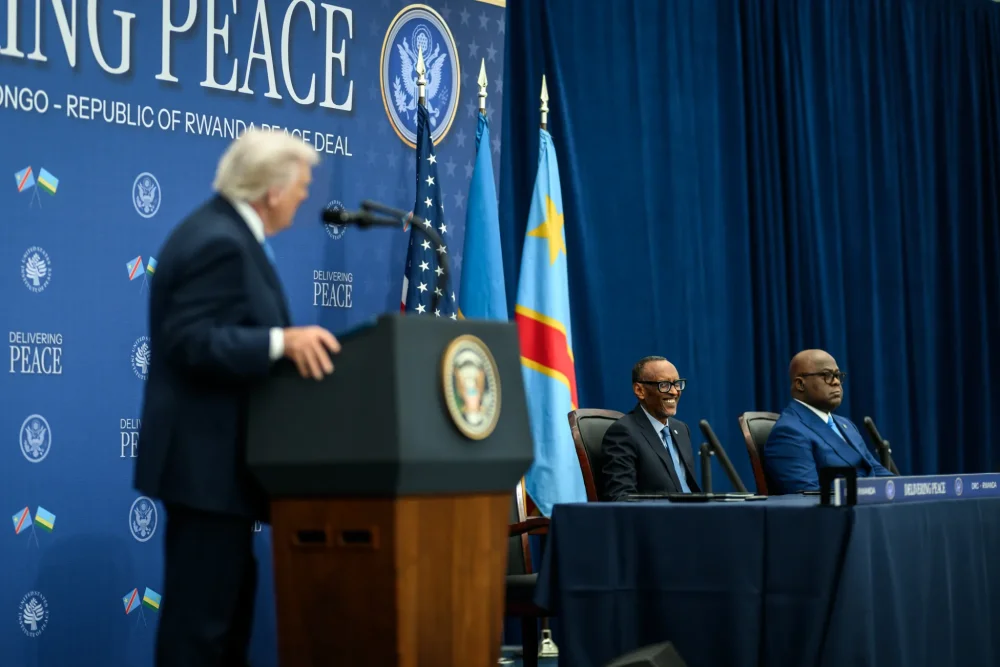
He argued that his diplomatic efforts had prevented further bloodshed and highlighted the agreement signed in Washington on December 4, 2025, as evidence of progress.
The Washington accord was designed to address longstanding security concerns between the two neighboring countries, including commitments related to dismantling the FDLR and implementing confidence-building measures.
However, developments on the ground have painted a more complicated picture.
Rwanda maintains that the Congolese government has failed to honor key obligations under the agreement, particularly regarding the dismantling of the FDLR, which Kigali says continues to cooperate with the Congolese army in military operations against AFC/M23.
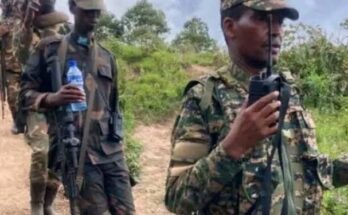
Meanwhile, fighting has intensified in several parts of South Kivu, especially around Minembwe. MRDP-Twirwaneho and AFC/M23 recently announced that they had captured several strategic locations, while fresh clashes were also reported on July 8, 2026, in areas including Rugezi, Mulima, Point Zero, Kazaroho, Bilalo Mbili and Mikenke.
Violence had already escalated in late June around Ngungu in Masisi Territory and in Rubaya, Bibwe, Minjenje and Pinga, underscoring that insecurity remains a serious challenge despite ongoing diplomatic initiatives.
The peace process has also come under criticism from observers who argue that implementation has been uneven and that pressure has not been applied equally to all parties involved.
Rwandan Foreign Affairs Minister Ambassador Olivier Nduhungirehe recently argued that sanctions are unlikely to produce lasting peace, insisting that sustainable progress depends on both sides fully implementing the commitments they accepted under the Washington agreement.
As diplomatic efforts continue, the gap between political declarations and realities on the battlefield remains one of the biggest obstacles to achieving lasting peace in eastern DR Congo.