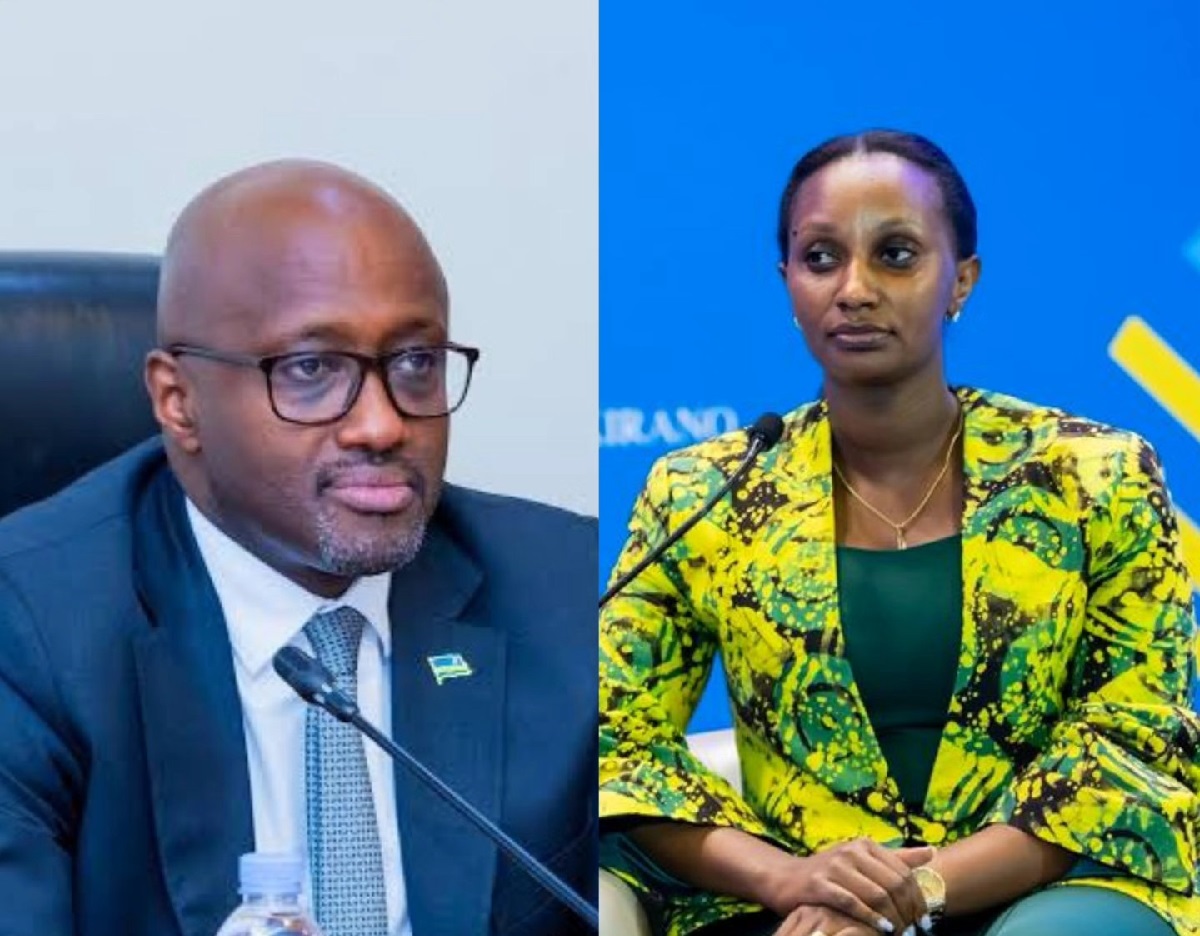
A heated online exchange involving Rwanda’s Minister of Foreign Affairs and International Cooperation, Olivier Nduhungirehe, and journalist Mutesi Scovia has triggered intense discussion across social media platforms, with many Rwandans debating the role of language, journalism, and public communication in government affairs.
The controversy emerged after a discussion aired on the YouTube channel Mama Urwagasabo TV analyzing statements made by Minister Nduhungirehe regarding what he described as misinformation spread by the Democratic Republic of Congo about discussions held in Nairobi.
During the program, the presenters questioned aspects of the minister’s communication, prompting a sharp response from Nduhungirehe on X, formerly Twitter.
In a strongly worded post, the minister accused the program’s hosts of misunderstanding French and misrepresenting his message.
He wrote: “Madam @ScoviaMutesi, your program is creating confusion among Rwandans. My statement was written in a clear language. Next time, find a journalist who properly understands French and can accurately translate such a statement before discussing it. If necessary, ask me directly.”
The minister also clarified that the Africa Forward Summit held in Nairobi had no direct connection to the Heads of State meeting being discussed.
He added: “The Africa Forward Summit event in Nairobi had nothing to do with the Heads of State meeting because it took place after the summit had ended. Therefore, you cannot ask Sherrie Silver, who organized that event, to confirm what I wrote about the Heads of State meeting. She was not there.”
Nduhungirehe concluded by emphasizing the importance of accurate reporting for the audience following Mama Urwagasabo TV.
He stated: “Rwandans who follow Mama Urwagasabo TV truly deserve clear and accurate information that does not mislead them, especially when discussing texts written in foreign languages.”
The exchange quickly spread online, dividing opinions among Rwandans.
Some defended the foreign minister, arguing that journalists discussing diplomatic matters written in French or English should first ensure they fully understand the content before analyzing it publicly.
Others sided with Scovia, saying the deeper issue lies in the government’s frequent reliance on foreign languages in official communication, making important information inaccessible to many ordinary citizens.
Scovia had criticized the tendency of government institutions and officials to communicate primarily in English and French on social media and in official statements. She argued that wider use of Kinyarwanda would help ordinary citizens better understand national and regional developments affecting their lives.
She referenced rural communities such as Kiyombe, Mushubati, and Kinigi, insisting that citizens living there also deserve access to information in a language they understand comfortably.
The confrontation has since evolved into a broader national conversation about the balance between international diplomacy and local accessibility.
Political observers note that Minister Nduhungirehe is among Rwanda’s most active public officials on social media, often responding directly and rapidly to criticism or narratives he considers misleading. Supporters say this helps correct misinformation quickly in a fast-moving digital environment.
Critics, however, warn that increasingly public confrontations between officials and journalists risk turning serious public discussions into personalized online battles, potentially undermining trust in both media institutions and public authorities.
Analysts also point out that diplomacy traditionally relies heavily on English and French because they remain dominant languages in international negotiations and official documentation. Yet many believe that should not prevent authorities from simplifying key messages in Kinyarwanda for the broader population.
The dispute has also highlighted the growing political influence of social media in Rwanda, where a single post can rapidly shape public discourse nationwide within hours.
Several commentators have called for restraint from both sides, arguing that journalists must strengthen fact-checking and contextual analysis, while government institutions should prioritize communication that remains accessible to all citizens regardless of educational background or language proficiency.