
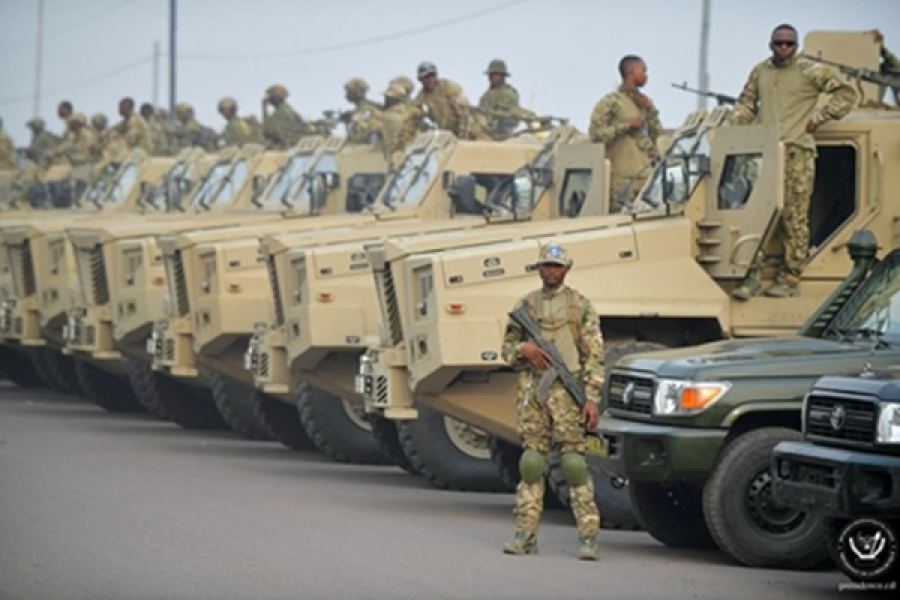
Tensions are rising once again in eastern Democratic Republic of Congo as renewed fighting and accusations of attacks against civilian communities deepen concerns about the region’s security situation.
The AFC/M23 coalition has alleged that government forces and their allies carried out overnight bombardments targeting densely populated areas in Minembwe, a region that has repeatedly been affected by conflict and displacement.
According to a statement released on Thursday, the coalition said attacks took place during the night of June 3–4, 2026, between approximately 7:00 p.m. and 5:00 a.m. The statement claimed that military forces aligned with the Kinshasa government launched strikes against the communities of Gakenke, Bidegu, and Mikenke using kamikaze drones and KT-6 systems.
The coalition argued that the attacks came despite repeated public warnings it had issued regarding the consequences of military operations in civilian zones. AFC/M23 maintains that such actions have contributed to deaths, destruction of property, and the displacement of thousands of residents.
The group also stated that its concerns had been communicated not only to Congolese authorities but also to international actors, whom it says were informed about the risks associated with continued military operations in populated areas.
The latest accusations come only days after AFC/M23 spokesman Lawrence Kanyuka warned that military activity by Congolese government forces and allied groups had intensified throughout May. He cited clashes and offensives in several strategic areas, including Masisi, Minembwe, Numbi, and Walikale.
According to Kanyuka, government troop deployments, weapons transfers, and logistical movements observed in recent weeks suggest preparations for larger military operations in both civilian zones and positions held by AFC/M23, particularly in South Kivu Province.
He stressed that any new offensive launched against territories under the coalition’s control would receive what he described as a strong and proportional response.
More significantly, AFC/M23 signaled that its military strategy may no longer be limited to defending existing positions. The coalition indicated that it could push opposing forces away from areas used to organize attacks, arguing that such measures would create a larger security buffer for civilians and their property.
The statement has fueled speculation that AFC/M23 could seek to expand its operational reach if it concludes that attacks against areas under its influence continue.
Last week, the coalition reported that it had pushed back Congolese government forces and Wazalendo fighters who had been conducting operations near its positions in Masisi Territory. AFC/M23 claimed the opposing forces were forced away from the Rubaya area after attempting to advance toward the strategic center.
Following those developments, the movement reassured residents of Rubaya, Kinigi, and surrounding communities that it was prepared to defend them and encouraged civilians to continue their daily activities despite growing tensions.
As both sides maintain hardened positions, civilians remain at the center of the crisis. Analysts warn that without renewed diplomatic engagement or meaningful dialogue, the security situation in eastern Congo could deteriorate further, potentially opening new fronts in an already volatile conflict.
At the time of publication, authorities in Kinshasa had not publicly responded to AFC/M23’s latest allegations regarding the reported strikes in Gakenke, Bidegu, and Mikenke. Nevertheless, the coalition’s recent statements suggest that any future escalation could have significant implications for the military and political landscape of eastern Democratic Republic of Congo.