Fresh discussions between AFC/M23 leaders and officials from the World Health Organization (WHO) have reignited debate over the future of eastern Democratic Republic of the Congo and the increasingly discussed idea of a possible “Kivu Republic” emerging in territories controlled by AFC/M23.
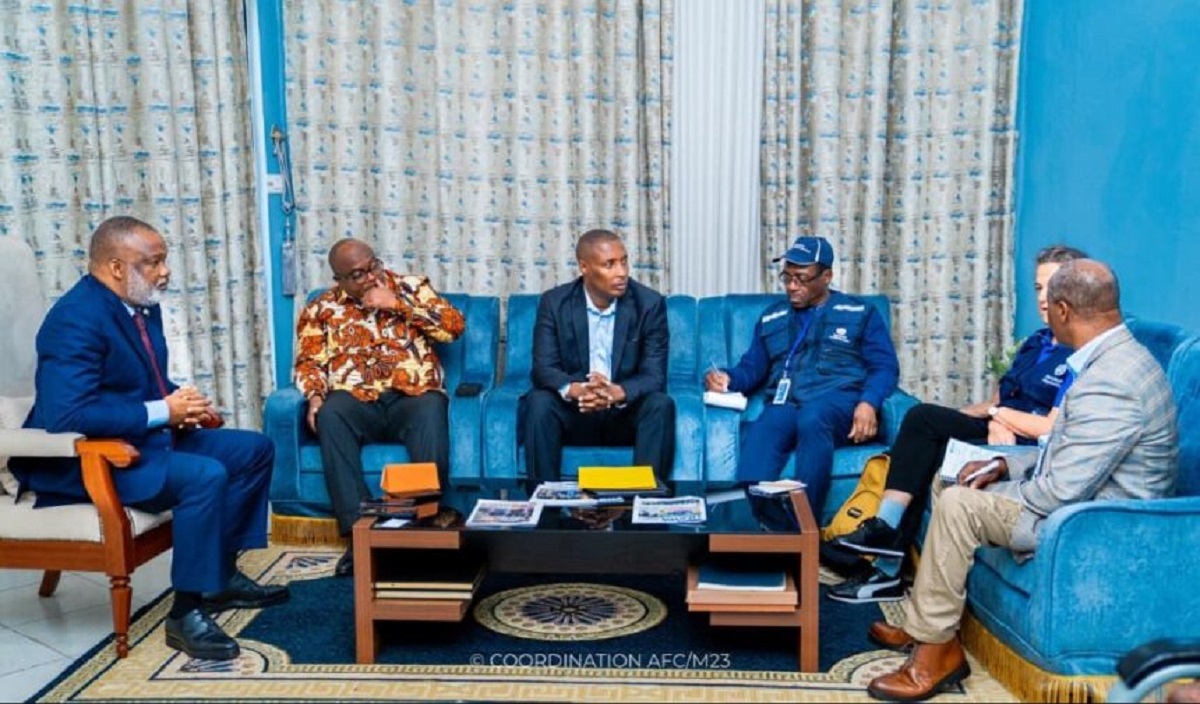
On May 26, 2026, senior AFC/M23 officials hosted a WHO delegation in the city of Goma for talks focused on strengthening measures against the Ebola outbreak threatening parts of eastern Congo.
The meeting was led by Corneille Nangaa Yobeluo alongside Bernard Bisimwa and Dr. Freddy Kaniki.
According to participants, discussions centered on disease surveillance, public awareness campaigns, early detection of Ebola symptoms, and continued support for healthcare workers operating in affected areas.
AFC/M23 officials stated that they are prepared to continue cooperating with international health organizations to protect civilians from Ebola and other dangerous diseases spreading across the region.
WHO representatives reportedly praised the facilitation of health operations in the controlled territories, emphasizing that cooperation with local authorities has improved humanitarian access and delivery of healthcare services to civilians.
They also stressed that collaboration between health institutions and local administrative authorities remains essential to preventing the spread of Ebola and protecting civilian lives.
However, beyond the health dimension, the meeting has fueled political speculation across the region. Some observers believe that direct engagement between United Nations agencies and AFC/M23 authorities could signal growing international acknowledgment of the movement’s governing role in territories under its control.
That interpretation has revived discussions surrounding the controversial concept known as the “Kivu Republic.”
The idea is rooted in arguments that the government in Kinshasa has failed for more than three decades to restore lasting security in eastern Congo, where repeated cycles of violence have targeted Kinyarwanda-speaking Congolese communities, especially Tutsi and Banyamulenge populations.
Supporters of the idea argue that eastern Congo may require either autonomous regional governance or a separate political structure capable of guaranteeing security, economic stability, and administrative efficiency independent from Kinshasa.
Analysts point to AFC/M23’s recent governance initiatives as evidence that the coalition is attempting to build functioning state-like institutions rather than operating solely as an armed movement.
In territories under AFC/M23 administration, particularly in North Kivu, civilian authorities have been appointed to oversee local governance structures. Bahati Musanga Erasto currently serves as governor in those areas.
The movement has also launched administrative leadership programs, including the recent “Uongozi Bora” training initiative that brought together 395 civilian administrators in Kanombe, Rutshuru. Supporters say the program demonstrates an effort to establish organized governance and public administration systems.
Economic activity has also become part of the debate. Border crossings linking AFC/M23-controlled areas with Uganda, including Bunagana and Ishasha, remain operational, allowing trade and cross-border commerce to continue.
Critics of the “Kivu Republic” concept, especially officials aligned with the government in Kinshasa, strongly reject the idea. They argue that such a project would amount to the fragmentation or “Balkanization” of the Democratic Republic of the Congo.
There are also concerns that any attempt to create a new political entity in eastern Congo would face major international legitimacy challenges due to the region’s long history of armed conflict and instability.
Nevertheless, some political observers argue that the continued engagement of international organizations such as WHO with AFC/M23 authorities reflects the practical reality that the group currently exercises administrative control over significant territories.
AFC/M23 leaders insist that fighting Ebola and protecting civilian populations should not be viewed solely through a political lens. They maintain that containing the outbreak requires cooperation between local authorities, international organizations, healthcare workers, and ordinary citizens.
Residents have been urged to follow hygiene and prevention guidelines, seek immediate medical attention when symptoms appear, and cooperate closely with healthcare professionals to prevent further spread of Ebola.
As political negotiations and regional tensions continue across the Democratic Republic of the Congo, the question of whether a future “Kivu Republic” could emerge remains one of the region’s most controversial and closely watched developments.
What remains clear is that AFC/M23’s growing administrative structures, cross-border economic networks, and direct engagement with international organizations are increasingly shaping perceptions of a political reality that extends far beyond the traditional image of an armed rebellion.