
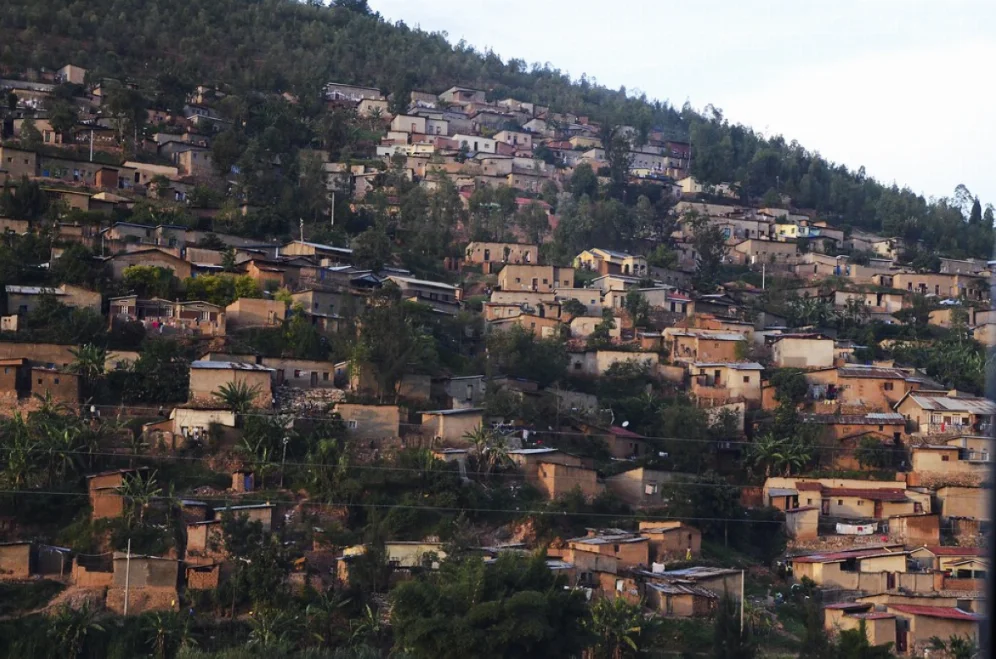
Kigali is preparing for another significant chapter in its urban transformation journey, with authorities moving closer to redeveloping three of the city’s most densely populated hillside communities—Mont Jali, Mont Kigali and Rebero.
The initiative is part of a broader effort to improve housing conditions, modernize infrastructure and strengthen the city’s resilience against climate-related disasters, particularly in areas where rapid population growth has placed increasing pressure on the environment and public services.
Recent studies conducted by the City of Kigali identified approximately 2,328 hectares on Mont Jali, 1,658 hectares on Mont Kigali and 1,350 hectares on Rebero as priority zones for urban upgrading and redevelopment.
Together, the three areas are home to about 4,434 households, including 2,889 households on Mont Kigali in Nyarugenge District, 1,044 on Mont Jali in Gasabo District and 501 on Rebero in Kicukiro District.
According to Emmanuel Ahabwe, Director in charge of Housing and Affordable Housing Development at the Rwanda Housing Authority (RHA), the ongoing study is designed to determine the most effective approaches for upgrading settlements in these locations.
“The study aims to identify how existing settlements can be upgraded. All areas requiring upgrading will follow similar procedures,” he explained.
Officials report that the study, which began during the 2024/25 fiscal year, has already reached 80 percent completion and is expected to provide critical data for future planning and investment decisions.
More than Rwf 66.2 million has already been spent on the assessment phase, while the entire project is expected to cost over Rwf 199.5 million before its anticipated completion by June 2027.
Urban planners believe the redevelopment will play a crucial role in reducing the risks associated with flooding, soil erosion and landslides that often affect densely populated hillside neighborhoods.
At the same time, the Rwanda Housing Authority is conducting a nationwide assessment of informal settlements to establish a comprehensive database that will guide future housing and urban development policies across the country. That study is currently 50 percent complete and is also expected to conclude by June 2027.
Construction experts emphasize that redeveloping hillside communities requires careful engineering solutions. Emmanuel Nsengiyumva, founder of Avi Construction and Engineering Services (ACES), noted that effective storm-water management systems are essential in preventing disasters in such environments.
He also highlighted the importance of proper drainage networks, quality road infrastructure, tree planting and construction techniques designed to minimize erosion and landslide risks.
Kigali’s previous urban upgrading projects provide encouraging examples. The Mpazi redevelopment initiative demonstrated that communities can be transformed while allowing residents to remain within their original neighborhoods.
A similar approach is currently underway in Nyabisindu, Gasabo District, where authorities hope to create another model for sustainable and inclusive urban renewal.
If implemented as planned, the redevelopment of Mont Jali, Mont Kigali and Rebero could reshape some of Kigali’s most challenging urban zones, improve living standards for thousands of residents and further strengthen the Rwandan capital’s reputation as one of Africa’s fastest-transforming cities.