The debate over security and peace in eastern Democratic Republic of Congo has taken a new turn after Belgium publicly endorsed an approach that links the withdrawal of Rwandan troops from Congolese territory with the dismantling of the Democratic Forces for the Liberation of Rwanda (FDLR).
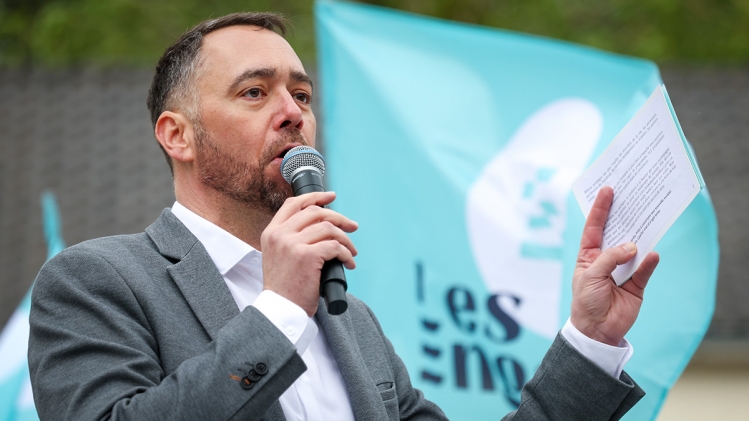
The position was expressed by Belgian Foreign Minister Maxime Prevot, whose remarks drew significant attention across the Great Lakes region and among international observers closely following the ongoing crisis in eastern Congo.
Prevot made the comments in response to a statement published on X by Massad Boulos, U.S. President Donald Trump’s adviser for the Great Lakes region. Boulos had addressed recent sanctions imposed on senior figures associated with both M23 and FDLR while outlining what Washington considers necessary steps toward lasting peace.
Reacting to the American position, Prevot wrote: “Belgium fully agrees with this approach. The withdrawal of Rwandan troops and the dismantling of FDLR must go hand in hand as urgent and essential steps toward lasting peace.”
The statement was notable because it openly recognized the FDLR issue as a central component of regional security discussions, a subject that has often generated disagreement among regional actors and international partners.
According to Prevot, peace and civilian protection remain urgent priorities despite other challenges facing the region, including public health concerns such as Ebola outbreaks. He emphasized that while efforts to contain disease must continue uninterrupted, ensuring security for civilians is more critical than ever.
The Belgian minister’s remarks, however, did not receive unanimous support.
One of the strongest reactions came from Lydia Mutyebele, a Belgian member of parliament of Congolese origin who has frequently defended positions aligned with the government in Kinshasa.
Responding directly to Prevot, she stated: “Mr. Minister, this is exactly what is angering many Congolese today. No one is against dismantling armed groups. But how can one equate the FDLR with the presence of Rwandan troops?”
Her response highlighted the continuing divisions surrounding the root causes of instability in eastern Congo. While some observers argue that armed groups such as FDLR remain a key source of insecurity, others maintain that the presence of foreign forces should remain the primary focus of diplomatic efforts.
The controversy intensified because Prevot’s remarks followed a strong statement issued by Massad Boulos on June 5.
In that message, Boulos explained that the United States had imposed sanctions on senior leaders of both M23 and FDLR due to abuses committed against civilians and actions that undermined peace efforts in eastern DR Congo.
He stated: “Based on ongoing efforts to advance peace, security, and prosperity in eastern DRC and the Great Lakes region, the United States has sanctioned senior leaders of M23 and FDLR for atrocities committed against civilians and for undermining the peace process in eastern DRC.”
Boulos further warned that Washington was prepared to take additional measures against any country, individual, or group obstructing peace initiatives in the region.
He added: “The United States is prepared to take additional action against any country, individual, or group that obstructs opportunities for peace in the region, especially anyone who undermines the implementation of the Washington Agreement and commitments toward peace. To achieve this, Rwandan forces must complete their withdrawal from DRC without delay, and DRC must permanently dismantle FDLR.”
His remarks underscored Washington’s growing insistence that all parties fulfill their obligations if meaningful progress is to be achieved.
For years, Rwanda has argued that FDLR remains a significant security threat and has repeatedly called for decisive action against the group. Congolese authorities, meanwhile, have often focused on the issue of Rwandan troop presence as a major concern requiring international attention.
Belgium’s latest position suggests that some Western governments increasingly view both issues as inseparable components of a broader peace framework. Rather than treating them as independent challenges, this approach advocates simultaneous action on troop withdrawal and the dismantling of armed groups.
As diplomatic initiatives continue among Kigali, Kinshasa, Washington, and other international partners, attention is now turning to whether these statements will translate into concrete measures capable of advancing a sustainable political and security solution in eastern Congo.
The coming weeks may prove crucial in determining whether growing international consensus can generate tangible progress toward lasting stability in one of Africa’s most volatile regions.