A diplomatic move by Burundi has sparked fresh debate across the Great Lakes region after the government ordered its ambassador to France, Spès-Caritas Njebarikanuye, to return to Bujumbura only two days after a high-profile meeting with Organisation Internationale de la Francophonie (OIF) Secretary-General Louise Mushikiwabo in Paris.
The decision emerged in an official letter dated June 3, 2026 and signed by Burundi’s Minister of Foreign Affairs, Ambassador Édouard Bizimana. The document instructed the ambassador to return home “as soon as possible” to receive what was described as an urgent communication concerning her duties.
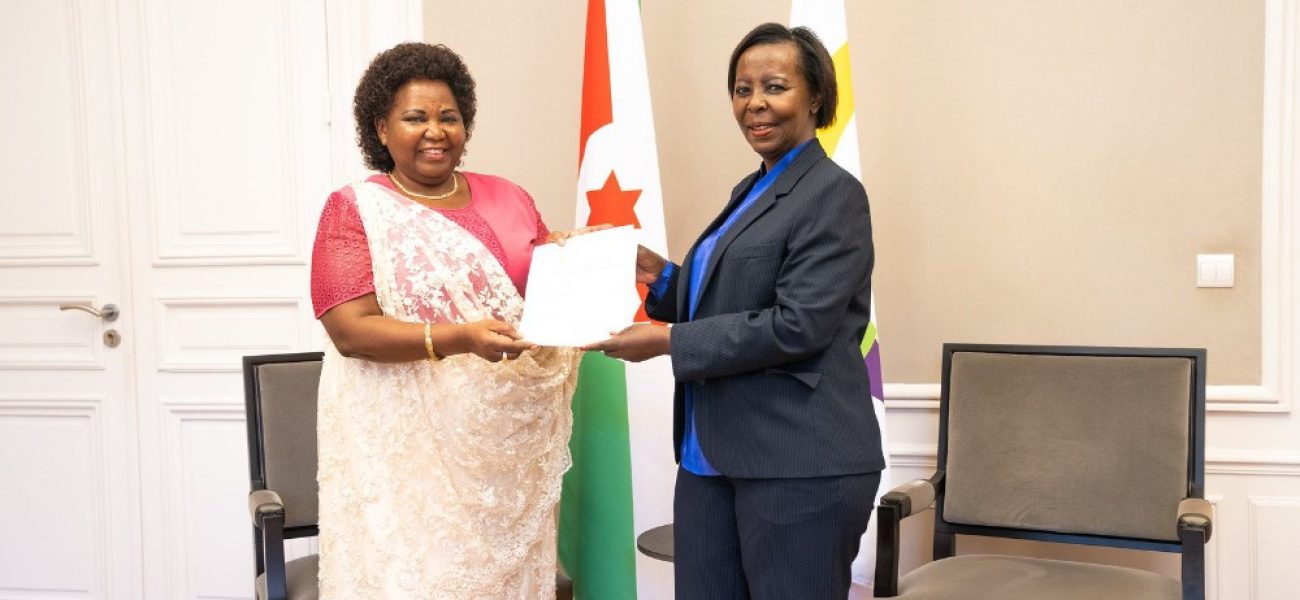
The recall came shortly after Njebarikanuye was received by Mushikiwabo on June 2 at the headquarters of the Francophonie organization, where she formally presented her credentials as Burundi’s representative to the institution.
According to a statement released by the OIF, Njebarikanuye, who also serves as the representative of the President of Burundi to the Permanent Council of the Francophonie (CPF), officially submitted the documents authorizing her new role.
The organization stated: “The Secretary-General of La Francophonie, Louise Mushikiwabo, received Mrs. Spès-Caritas Njebarikanuye, Ambassador of Burundi to France and Representative of the President of the Republic to the Permanent Council of La Francophonie (CPF), who presented her credentials in her native language.”
The OIF further explained that discussions focused on strengthening cooperation around Burundi’s national priorities and the Francophonie agenda, particularly literacy programs and gender equality initiatives.
While Burundi has not publicly explained the reasons behind the ambassador’s sudden recall, the timing of the move has generated widespread speculation among diplomatic observers.
Relations between Rwanda and Burundi have experienced repeated tensions over the past several years, with both governments at different times accusing each other of actions that threaten national security. Burundi has also deepened political and security cooperation with the Democratic Republic of Congo, a country that has been involved in longstanding disagreements with Rwanda over instability in eastern Congo.
For that reason, some analysts believe the meeting between Njebarikanuye and Mushikiwabo may have attracted scrutiny within sections of Burundi’s political establishment. However, no official confirmation has been provided by authorities in Bujumbura.
The development is unfolding at a particularly sensitive moment for the Francophonie organization. Mushikiwabo, who has led the OIF since 2019, is preparing to seek another term during elections expected at the end of 2026.
Among the figures expected to challenge her is Juliana Amato Lumumba, daughter of Congolese independence leader Patrice Lumumba. She has been nominated by the Democratic Republic of Congo and is widely expected to receive support from Burundi.
As campaigning and diplomatic lobbying gradually intensify ahead of the vote, observers see the upcoming election as more than a contest for leadership of the Francophonie.
It may also become a reflection of broader geopolitical alignments within Central Africa and the Great Lakes region. Whether the ambassador’s recall was linked to internal administrative matters or larger diplomatic considerations remains unclear.
What is certain is that the episode has drawn renewed attention to regional political dynamics and to a Francophonie election that is increasingly shaping up to be one of the most closely watched international contests involving African diplomacy in 2026.