Fresh violence has shaken Somalia’s capital after intense clashes erupted between government forces and armed groups linked to opposition political figures, raising new concerns about the country’s stability and security.
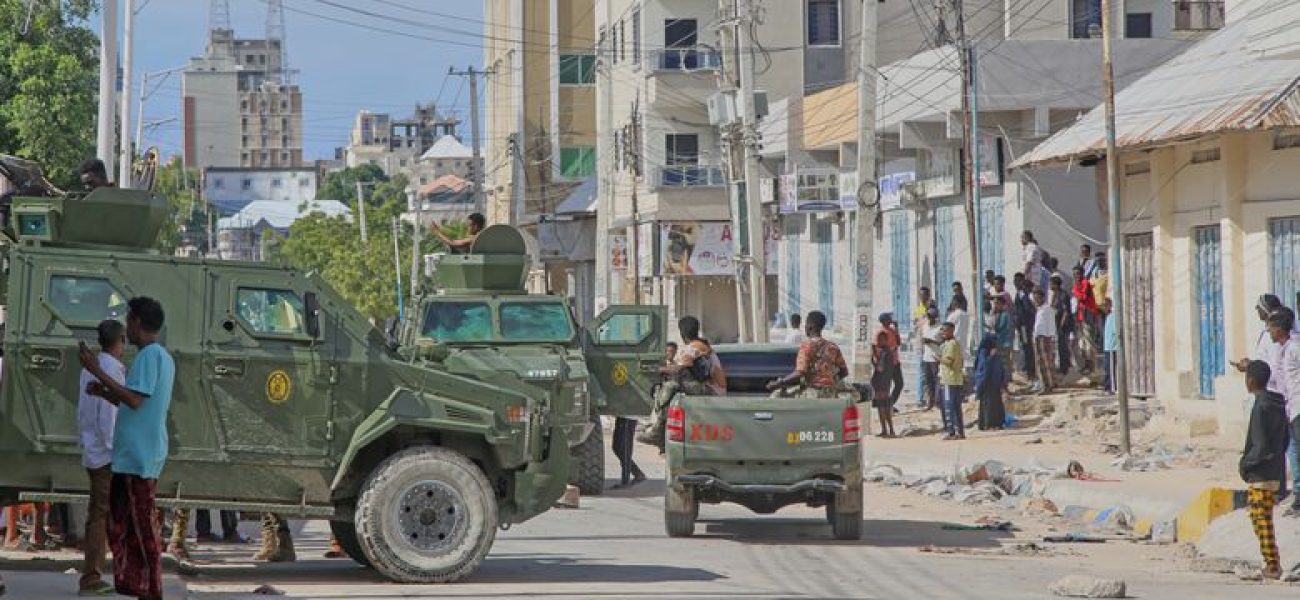
The fighting began late Wednesday night and continued into Thursday, spreading across several districts of Mogadishu, including Howlwadag and Abdiaziz. Residents reported hearing sustained gunfire and heavy weapons fire as armed confrontations intensified in different parts of the city.
The violence forced many civilians to flee their homes in search of safety, adding to fears that the security situation in the capital could deteriorate further.
According to reports from ChimpReports, a media outlet that closely follows Ugandan military operations in Somalia, the clashes involve Somali government forces on one side and groups allegedly linked to prominent opposition leaders on the other.
Among the political figures reportedly connected to the tensions are former Somali President Sheikh Sharif Sheikh Ahmed and former Prime Minister Hassan Ali Khaire. Reports indicate that some of the fiercest confrontations occurred near areas associated with these leaders and around locations where political activities had been planned.
Hassan Ali Khaire accused President Hassan Sheikh Mohamud’s administration of launching what he described as an indiscriminate military operation targeting opposition figures and political rivals.
He warned that he and other political leaders faced serious threats as the security situation worsened.
Witnesses say military vehicles and tanks were deployed across several neighborhoods, creating scenes rarely seen in the capital in recent years. The presence of heavy armor highlighted the intensity of the confrontation and the growing political tensions behind the conflict.
Reports from the ground suggest that some tanks were destroyed or set ablaze during the fighting. Images circulating online appeared to show thick smoke rising from parts of the city as rival sides continued exchanging fire.
The clashes have also reignited debate over Somalia’s military cooperation with Turkey. Opposition figures have accused the government of using military assistance connected to Ankara against political opponents, allegations that authorities have not fully addressed publicly.
The United Nations and other international organizations expressed concern over the safety of civilians caught in the crossfire. They urged all parties to halt hostilities immediately and return to political dialogue to prevent the crisis from escalating.
The latest unrest comes as Somalia continues to strengthen its role within the East African Community (EAC), which it officially joined in December 2023.
President Hassan Sheikh Mohamud signed the accession agreement in the presence of South Sudan’s President Salva Kiir, who was chairing the regional bloc at the time, and Ugandan President Yoweri Museveni.
Somalia’s entry into the EAC was widely viewed as a strategic milestone because of the country’s extensive coastline along the Indian Ocean, offering major opportunities for regional trade, transport, and economic integration.
However, critics of the accession had long argued that Somalia’s persistent security challenges, armed insurgencies, and fragile institutions could complicate its full integration into the bloc.
The violence now unfolding in Mogadishu has once again highlighted those concerns. As civilians continue to flee affected neighborhoods and political tensions deepen, regional leaders and international partners are closely watching whether Somalia can contain the crisis and preserve the stability needed to advance its political and economic ambitions.