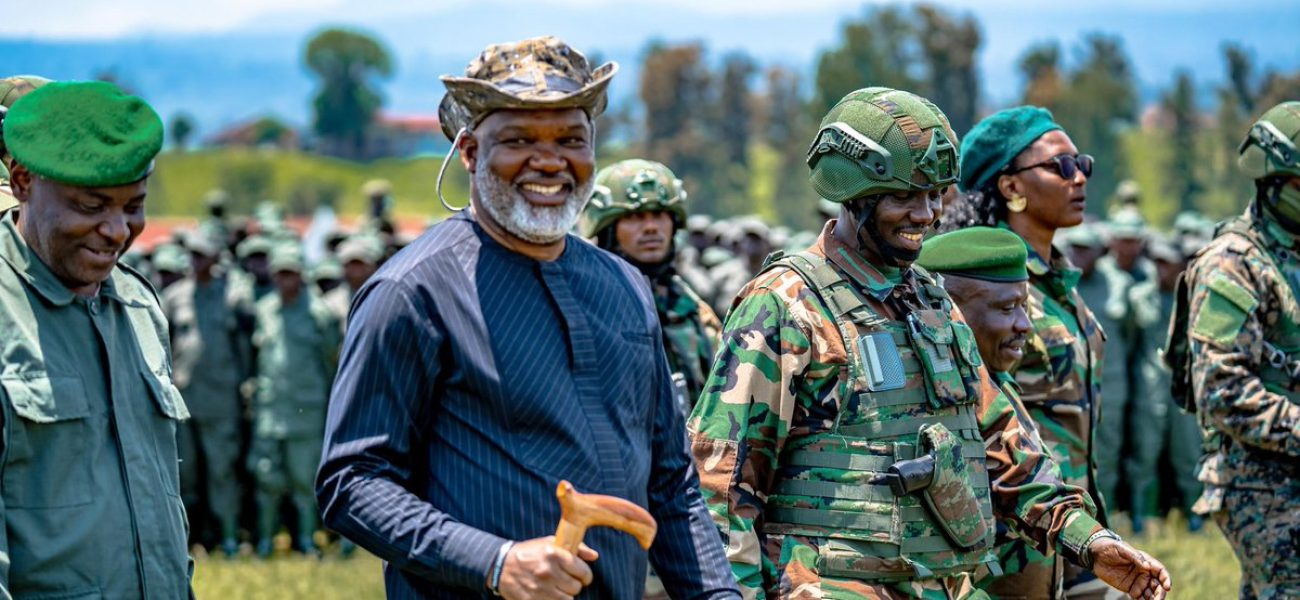
Political tensions in the Democratic Republic of Congo are entering a new and potentially decisive phase as AFC/M23 strengthens its administrative presence across territories under its control while President Félix Tshisekedi confronts growing pressure on multiple fronts.
Although AFC/M23 has not officially declared an independent state, developments on the ground have fueled speculation that the movement is gradually building the foundations of a parallel administration in eastern Congo.
In recent months, AFC/M23 has appointed its own local authorities in key areas under its control. Among the most notable appointments was Katembo Ndaliani Julien as Mayor of Goma, alongside a broader network of administrators responsible for local governance structures.
The coalition also maintains control over strategic infrastructure, including Goma International Airport and several important areas across North and South Kivu. Reports from the region suggest that plans are being discussed for additional political institutions that could further reinforce AFC/M23’s governing capacity.
These developments are unfolding against the backdrop of a continuing standoff between AFC/M23 and the government in Kinshasa. Despite several ceasefire initiatives and diplomatic efforts held in locations such as Doha and Washington, mistrust remains high, with both sides regularly accusing each other of violating agreements.
President Félix Tshisekedi has consistently rejected proposals that would integrate M23 fighters into the national army or grant them positions within the central government, arguing that such arrangements would repeat policies that failed in the past.
Meanwhile, AFC leader Corneille Nangaa recently signaled that dialogue remains possible but warned that military confrontation would also receive a response. Nangaa stated, “If Tshisekedi wants talks, we are ready. But if he wants war, he must accept its consequences.”
The political environment surrounding Tshisekedi has become increasingly complicated. One of the most significant challenges facing his administration is the loss of influence in parts of eastern Congo where AFC/M23 continues to consolidate its presence.
Another major source of controversy is the debate over constitutional reform. Members of the ruling Union Sacrée coalition have promoted changes to the 2006 Constitution, a move that critics believe could eventually create a pathway for Tshisekedi to seek another term in office beyond the current constitutional limits.
The debate intensified after Tshisekedi suggested that if citizens supported such a move, he could consider running again in the 2028 elections. Opposition figures, including Martin Fayulu, have strongly criticized the idea, describing it as a threat to constitutional order and democratic governance.
Public frustration became highly visible on Wednesday, June 3, when opposition groups organized a “ville morte” protest across Kinshasa. Citizens were encouraged to stay home, avoid work, and suspend daily activities in order to demonstrate opposition to any attempt to amend the Constitution for political gain.
Images circulating on social media showed unusually quiet streets, closed shops, empty markets, and reduced traffic across several parts of the capital. Many businesses and public activities appeared largely inactive throughout the day.
Opposition leaders argued that the shutdown was intended to pressure the government into abandoning any plan that could extend presidential term limits or justify delays to the 2028 elections.
Concerns have also increased following statements suggesting that insecurity in eastern Congo could affect the electoral timetable. Critics fear that prolonged conflict could be used as a reason to postpone national elections, raising questions about the country’s democratic future.
At the same time, reports of dissatisfaction among some members of the security forces over salaries and living conditions have added another layer of uncertainty to the national political landscape.
Analysts increasingly view the coming months as critical for the future of the Democratic Republic of Congo. The outcome of peace initiatives, the constitutional debate, and the evolving balance of power in eastern Congo may ultimately determine whether the country moves toward political stabilization or enters an even more turbulent chapter.
For now, AFC/M23 has not formally declared an independent state. However, its continued efforts to establish governance structures, control strategic assets, and expand its influence have intensified debate about the future political map of eastern Congo and the challenges facing President Tshisekedi’s administration.